Bäuerliche Szene am Brienzersee — History & Facts
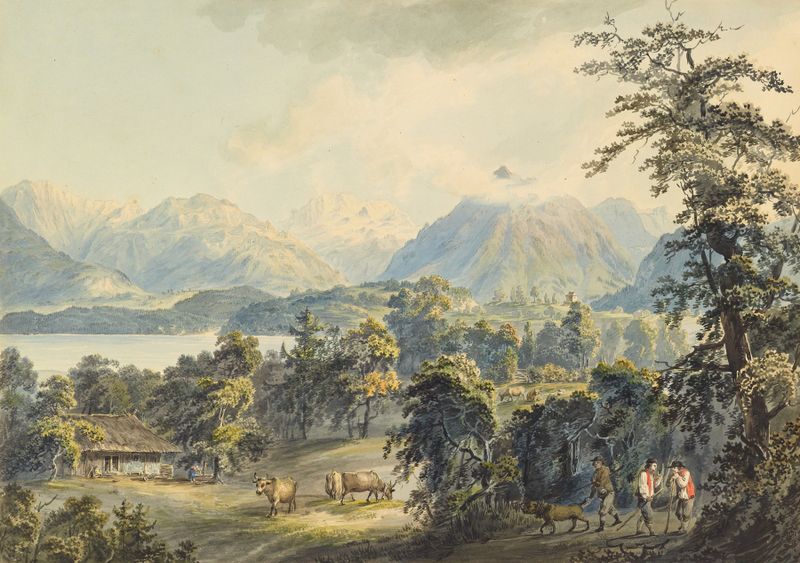
What if silence could speak through light? In the stillness of a pastoral scene, the tension of quietude hangs palpably in the air, whispering secrets of unspoken turmoil beneath its serene surface. Look to the foreground of Bäuerliche Szene am Brienzersee, where rustic figures engage in their daily labors against a breathtaking Swiss backdrop. Notice how the warm hues of the sun-drenched earth contrast dramatically with the cool blues of the lake, creating a visual dialogue that is both inviting and unsettling. The composition draws your eye toward the gentle ripples of the water, reflecting not just the landscape but the emotional weight of the moment, while the sturdy forms of the laborers root the scene firmly in reality. Beneath the idyllic surface lies a profound exploration of human existence—life intertwined with the violence of nature and labor.
The juxtaposition of calmness and the raw power of the lake hints at the struggles faced by those who depend on it. Each figure, grounded yet vulnerable, embodies the resilience required to thrive in a world where harmony is often disrupted by unseen forces. The interplay of light and shadow reveals not only the beauty of the scene but also the underlying tension that suggests the fragility of peace amid the chaos of life. Created during a time of burgeoning Romanticism, this work emerged in an era when artists were increasingly drawn to the interplay of nature and humanity.
Volmar painted this piece during an unspecified period, reflecting both personal introspection and broader societal themes. As the art world grappled with the impacts of industrialization, this painting serves as a poignant reminder of the delicate balance between serenity and violence, both in nature and within human experience.