Ansicht eines Klosters bei Rom — History & Facts
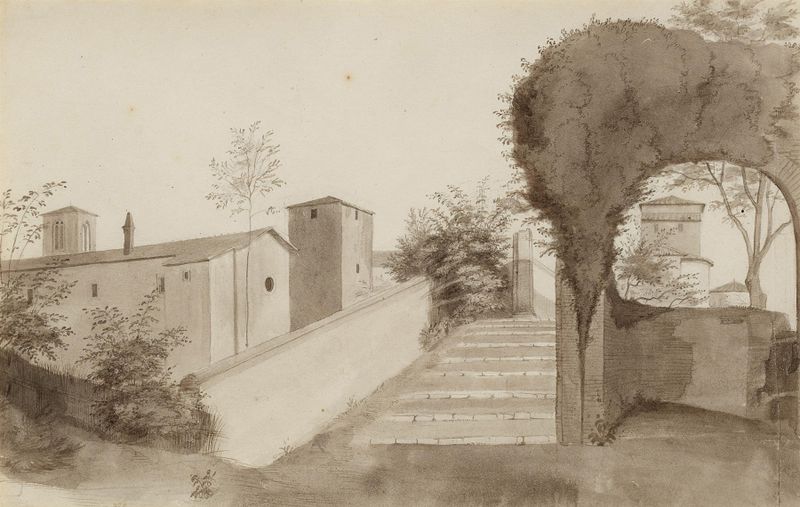
When did color learn to lie? In the world of art, hues can weave tales of longing and despair, yet they also cradle whispers of hope amid the shadows. Focus first on the luminous sky, where soft blues and delicate whites merge seamlessly. Notice how light spills across the landscape, illuminating the tranquil facade of the monastery, standing resolute against a backdrop of verdant hills. The artist employs a serene palette, with gentle greens and earthy browns grounding the scene.
Each brushstroke draws the eye toward the architectural elegance, inviting viewers to linger in the calm embrace of this sacred space. Delve deeper, and you’ll find the juxtaposition of nature and human creation—a reminder of harmony found between the spiritual and the earthly. The monastery evokes a sense of solitude, yet its positioning within the lush landscape hints at a connection to the divine, suggesting that hope thrives even in isolation. The delicate interplay of light and shadow encapsulates a quiet tension, prompting reflections on the resilience of faith amidst life's uncertainties. Friedrich Olivier painted this work in 1821, during a time when Romanticism was flourishing across Europe.
Living in Germany, Olivier was influenced by the idealistic notions of nature as a pathway to spirituality. The painting reflects his commitment to portraying serene landscapes, a response to both personal introspection and the broader cultural shifts of the era, which sought solace in the beauty of the natural world.