
Ansicht Von Auvers-Sur-Oise — History & Facts
What secret hides in the quiet of the canvas? In the serene depiction of a landscape, the weight of loss lingers like a soft echo in the breeze. Focus first on the horizon, where the sun melts into the distant fields, casting a warm golden hue that envelops the scene. Look closely at the gentle undulations of the hills, rendered with delicate brushstrokes that seem to whisper the stories of the land. Notice how the trees stand sentinel, their dark silhouettes contrasting against the vibrant sky, while the subtle interplay of light and shadow invites you to explore the depths of this tranquil moment. Beneath this peaceful exterior lies a tension—a palpable sense of absence.
The barren branches of the trees suggest a time of transition, perhaps a metaphor for loss, as they stretch into the vastness, yearning for something beyond reach. The empty paths meander through the landscape, hinting at journeys once taken, now lost in the passage of time. Each element is a reminder of change, embodying both beauty and melancholy. In 1894, while grappling with personal and artistic challenges, Eugen Jettel painted this work in the picturesque village of Auvers-sur-Oise, a place that resonated with the echoes of Vincent van Gogh’s own tumultuous life.
The art world was shifting, with Impressionism evolving and new styles emerging, yet Jettel's piece stands as a poignant reflection on the themes of solitude and reflection that permeated the era. This painting captures not only the serene landscape but also the intimate dialogue between nature and the human experience of loss.
More Artworks by Eugen Jettel
Browse all →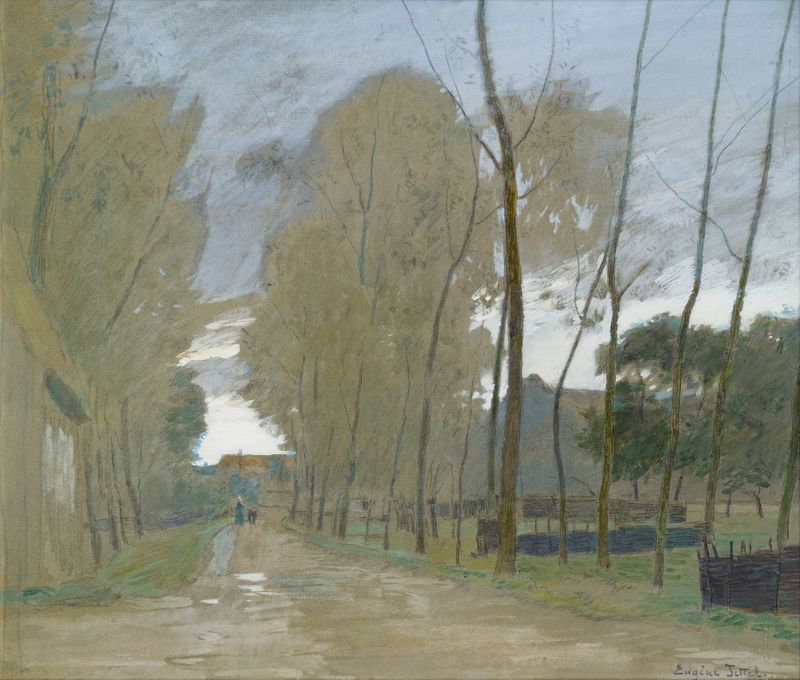
Motiv aus der Bretagne
Eugen Jettel
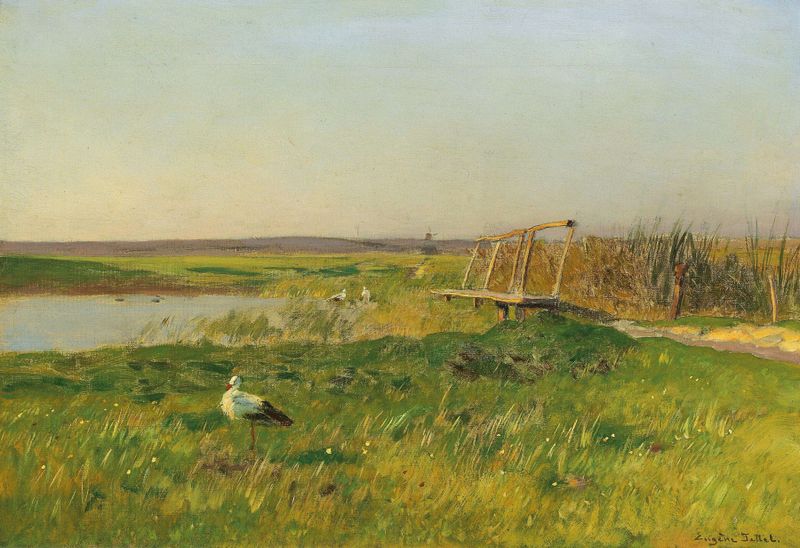
Frühlingslandschaft mit Störchen an einem Weiher
Eugen Jettel

Rinder auf Sommerwiese
Eugen Jettel
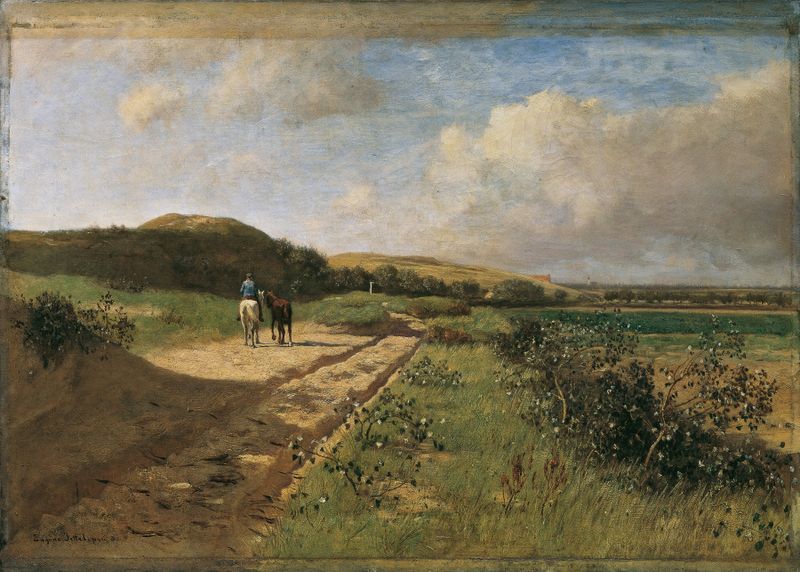
Dünen bei Katwijk
Eugen Jettel
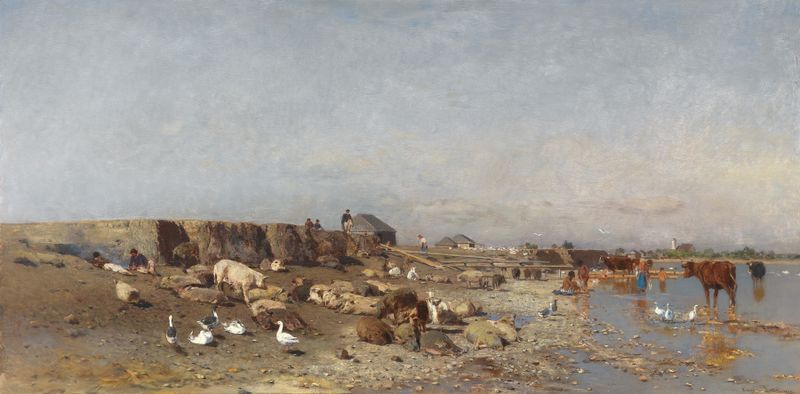
Motiv aus Szered an der Waag
Eugen Jettel
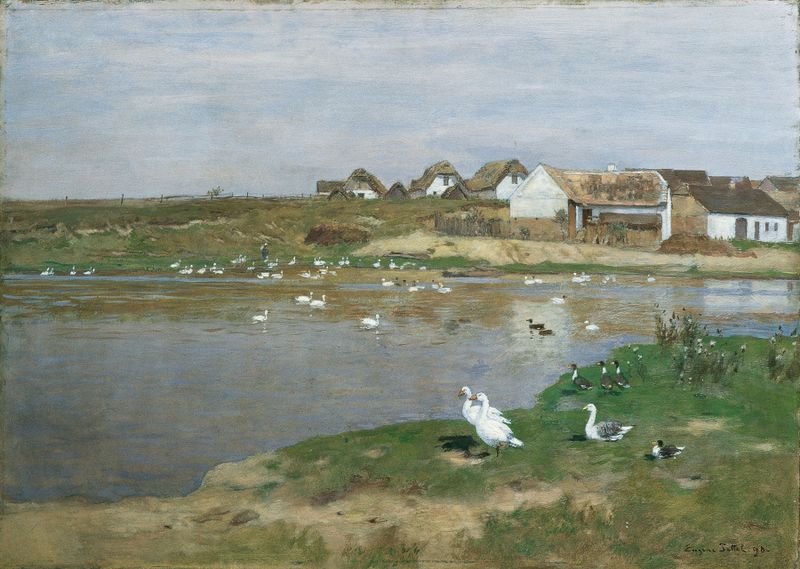
Der Gänseteich in Kotting-Neusiedl
Eugen Jettel

Flusslandschaft Mit Boot
Eugen Jettel

Flusslandschaft mit Kühen
Eugen Jettel

Dorfpartie Strohhütten aus Staatz
Eugen Jettel

Abendlandschaft
Eugen Jettel





