Arcadian Landscape — History & Facts
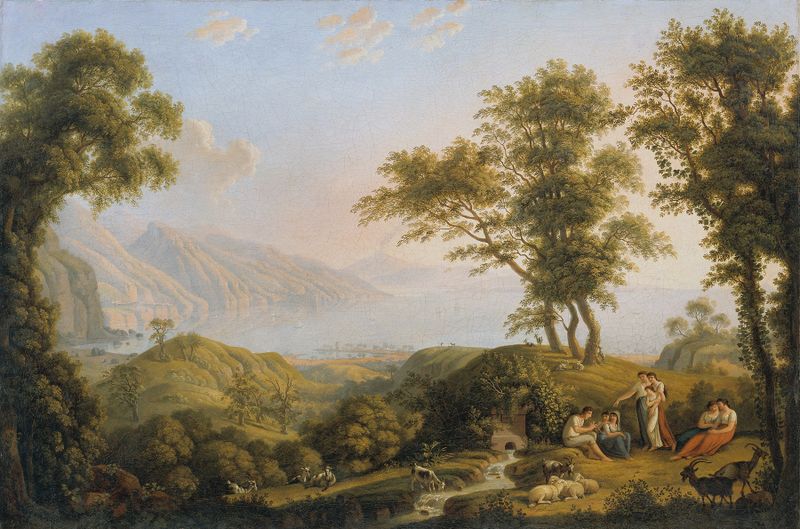
Where does light end, and longing begin? In Arcadian Landscape, an ethereal harmony between nature and emotion unfolds on canvas, inviting reflections on the depths of human yearning. Look to the foreground, where gentle hills undulate like soft whispers beneath a warm, amber sky. The painter's deft brushstrokes create a sense of serenity, accentuated by the delicate interplay of light and shadow. Notice how the sun filters through trees, casting dappled patterns that dance across the ground—a visual melody that beckons the eye to wander deeper into this idyllic world. As you explore further, hidden meanings surface with each glance.
The lush greenery symbolizes hope and vitality, while the distant, muted mountains hint at the unattainable. The serene water reflects not only the sky but the soul's yearning for peace, encapsulating a tension between the beauty of the present and the desire for something beyond reach. These elements coalesce to evoke a poignant sense of nostalgia, as if the landscape itself holds the weight of dreams long cherished yet never fully realized. In 1794, Ludwig Philipp Strack painted this work amid a flourishing of Romantic ideals in Europe, embracing nature's grandeur as a conduit for emotional expression.
The era was marked by a yearning for simpler, pastoral ideals—a stark contrast to the encroaching industrialization of the time. Strack's dedication to capturing this harmonious relationship between humanity and nature reflects not only his personal vision but also a broader cultural movement seeking solace in the natural world.