Arcadian Landscape — History & Facts
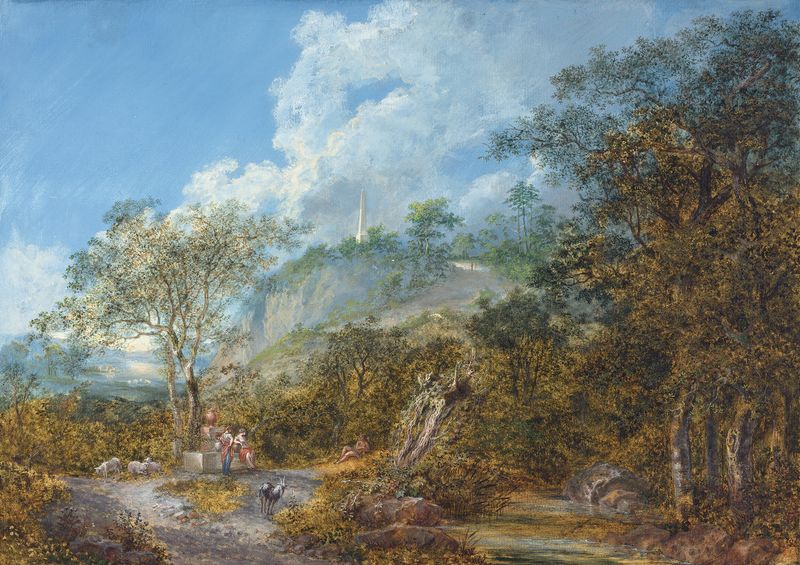
In Arcadian Landscape, the melancholy beauty of a pastoral scene stirs a quiet longing for fleeting moments and lost connections. Look to the center of the canvas, where a soft, verdant valley invites your gaze, cradled between gentle hills under a sprawling sky. The delicate interplay of light and shadow breathes life into the lush greens and warm earth tones, creating an atmosphere that feels almost alive. Notice how the artist employs a delicate palette, with each shade blending effortlessly into the next, inviting an emotional engagement with the landscape that feels both nostalgic and serene. As you explore further, hidden meanings emerge within the composition.
The solitary figures, lost among the trees, evoke feelings of isolation, suggesting an ache for community amidst the beauty of nature. The winding river, reflective yet distant, symbolizes the passage of time — a reminder that moments, like water, flow away silently and irrevocably. Each detail, from the scattered clouds above to the sun-dappled ground, deepens the sense of longing, creating a poignant connection between the observer and the seen. In 1785, Salomon Gessner was immersed in the artistic movement that celebrated the natural world, flourishing in an era of Enlightenment thinking.
Living in Switzerland, he was deeply influenced by his surroundings, and this work reflects a personal understanding of beauty and solitude. During this period, artists were increasingly drawn to themes of nature and emotion, and Gessner’s contributions marked a significant moment in the transition toward Romanticism, as he sought to evoke feelings through the sublime simplicity of the landscape.