Arcadian Landscape with an Obelisk — History & Facts
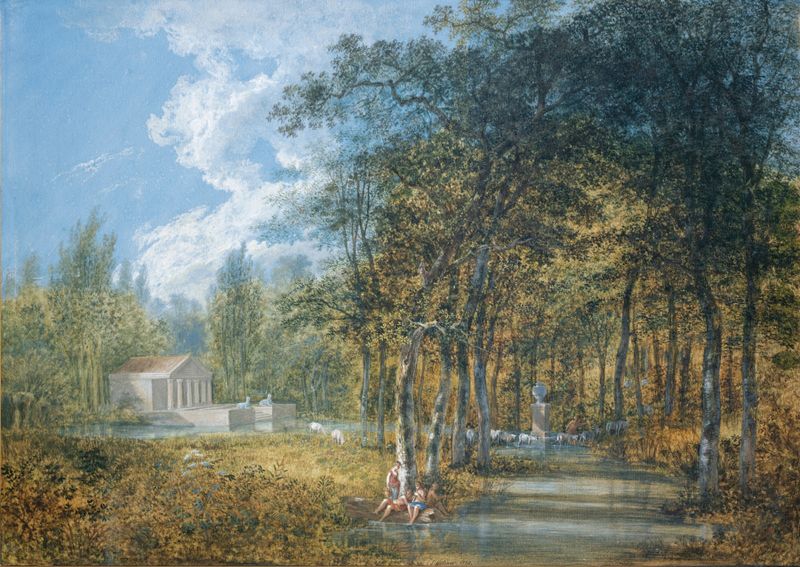
In the soft embrace of nature, a delicate balance exists, whispering both fragility and permanence. Salomon Gessner's exquisite rendering invites us into a serene world where the stillness of the landscape speaks volumes about the transient nature of life. Look to the foreground, where gentle hills undulate beneath a lush canopy of trees, rich greens contrasting beautifully against vibrant splashes of floral color. The obelisk, rising majestically towards the sky, serves as an anchor, guiding your gaze through the composition.
Notice how the light caresses the landscape, illuminating the foliage with warm golden tones, while shadows dance playfully at its base, creating a harmonious interplay between illumination and obscurity. The obelisk embodies not only strength but also the passage of time, casting a shadow that suggests the weight of history. The tranquil water reflects the sky, hinting at the delicate fragility of existence, where colors and light can shift in an instant. Birds in flight add a sense of movement and life, juxtaposing the stillness of the scene with the relentless flow of time, as if to remind us that beauty is often fleeting. Created in 1785, this work emerged during a period of personal introspection for the artist, who was grappling with his identity and the evolving art world around him.
Living in Switzerland, Gessner was increasingly influenced by the Romantic ideals that celebrated nature's beauty and complexity, as artists sought to depict emotional landscapes that resonated with the human spirit. This masterpiece reflects that ethos, showcasing the artist's ability to marry realism with poetic depth.