Arcadian Landscape with several Figures and a Statue of Diana — History & Facts
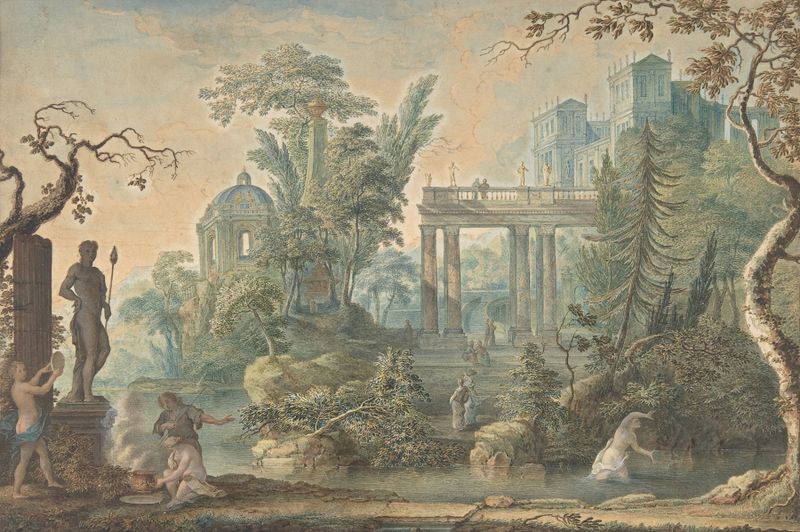
In the quiet of an artist’s mind, loss transforms into a landscape where echoes of presence linger, inviting the viewer to reflect on what remains after departure. Look to the center of the canvas, where the statue of Diana stands gracefully, her form entwined with nature yet isolated in stillness. The figures surrounding her, caught in a moment of leisure, contrast with the solemnity of the statue, highlighting the transient nature of life. Soft pastels blend seamlessly, creating a serene atmosphere, while dappled sunlight filters through the trees, illuminating the scene with a gentle glow that hints at both nostalgia and longing. As you explore the edges of the painting, notice the interplay of shadow and light—each figure captured in a moment of contemplation, their gestures communicating unspoken thoughts.
The lush greenery and serene water reflect an idealized world that belies an undertone of melancholy, suggesting that behind every joyful interaction lies an awareness of impermanence. The juxtaposition of the lively figures against the enduring figure of Diana speaks to the tension between vitality and the silent, watchful presence of loss. In the 18th century, as Arcadian Landscape with several Figures and a Statue of Diana took shape, Gerard Melder was navigating a vibrant world of artistic exploration and philosophical inquiry. Living in a time when landscapes became a canvas for deeper emotion and human experience, he was influenced by the Enlightenment's ideals, which encouraged a focus on nature and humanity's place within it.
This work reflects both the prevailing artistic trends and Melder's personal reflections on the fleeting nature of life and the stories told through art.