Arcadisch landschap met een graftombe — History & Facts
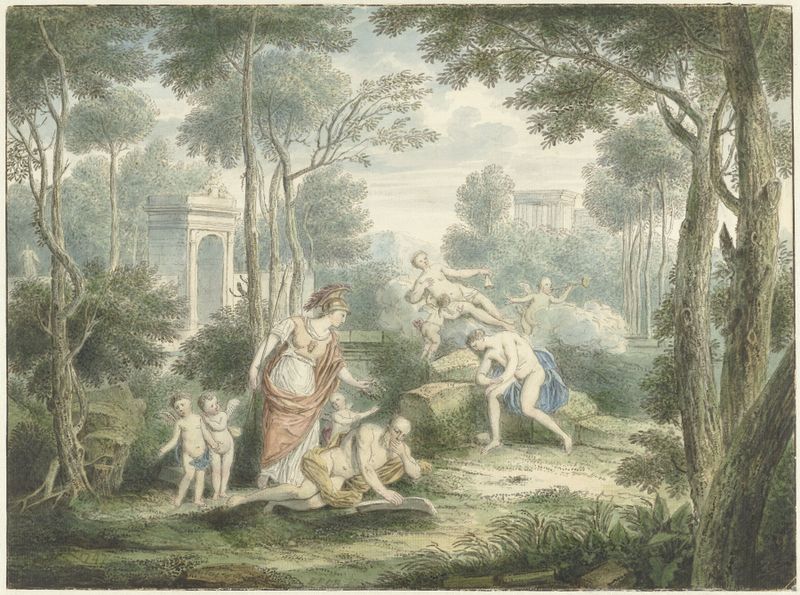
In a world shaped by beauty, the shadows of violence linger beneath the surface, whispering secrets of forgotten stories. Look closely at the foreground; the soft, muted greens of the landscape cradle a somber tomb, its weathered stone almost blending into the earth. The subtle play of light and shadow evokes a sense of reverence, guiding your gaze towards the serene brook that winds its way through the scene. Notice how the artist employs delicate brushwork to create texture in the foliage, suggesting life and decay coexisting, a reminder of mortality’s grip amidst nature’s splendor. Delve deeper into the emotional currents that pulse through the canvas.
The juxtaposition of the tranquil landscape against the stark presence of the grave suggests a poignant dialogue between life and death, beauty and sorrow. Each element, from the distant tree line to the gentle flow of water, seems to harbor an undercurrent of violence—perhaps a conflict unresolved or an echo of loss that colors the idyllic scene. The painting invites contemplation on how one can find solace even in the face of inevitable endings. In 1746, while Dubourg immersed himself in the artistic climate of the Dutch Golden Age, he was deeply influenced by the tranquility of pastoral scenes and the metaphysical questions they posed.
Living in an era marked by both beauty and upheaval, the artist drew upon the contrasting themes of life’s fragility and nature’s resilience, capturing the essence of human experience in a single, haunting image.