Arcadisch landschap met Athene die een oude man kroont en Venus en Adonis — History & Facts
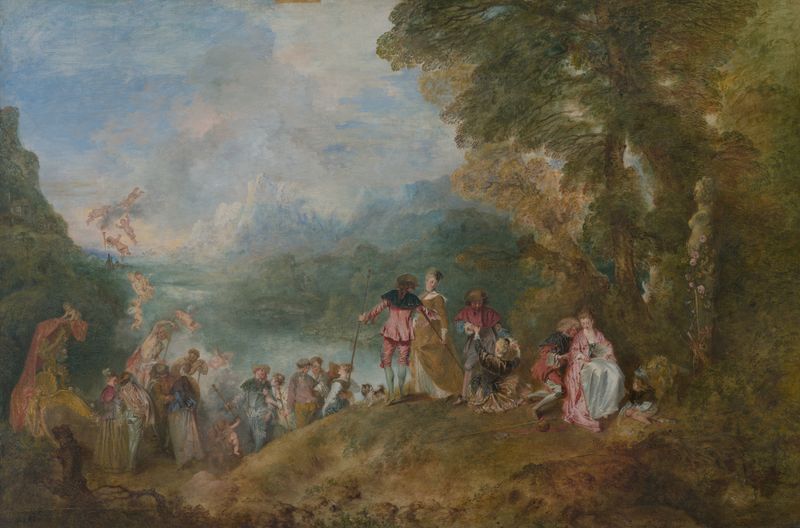
Could beauty survive in a century of chaos? In Arcadisch landschap met Athene die een oude man kroont en Venus en Adonis, serenity reigns supreme amidst the swirling tensions of the 18th century. Look to the left, where the gentle curves of lush hills cradle a tranquil landscape, softly illuminated by a golden light. The ethereal figures of Athena, crowned with laurel, and the tender interaction between Venus and Adonis draw your gaze as they embody harmony. The palette of soft greens and warm ochres enhances this idyllic scene, inviting the viewer to step into a world timelessly captured in its perfection. Yet beneath this serene surface lies a complex interplay of power and vulnerability.
Athena’s position at the forefront, bestowing honor upon the elder, juxtaposes the fragility of the lovers’ moment, hinting at the fleeting nature of beauty. The stillness of the tranquil landscape contrasts sharply with the underlying narrative of human experience—of love, loss, and the reverence of wisdom. Each element in the composition whispers of a deeper truth that underpins the tapestry of existence. In 1747, Dubourg created this work in the context of a Europe grappling with shifting societal norms and philosophical ideas.
The Enlightenment was on the rise, while artists sought to reconcile reason with emotion. Amidst this backdrop, the artist's choice to depict such a peaceful scene speaks to a yearning for harmony in a world rife with discord, capturing a moment where art and life briefly align.