Arcadisch landschap met wandelende mensen — History & Facts
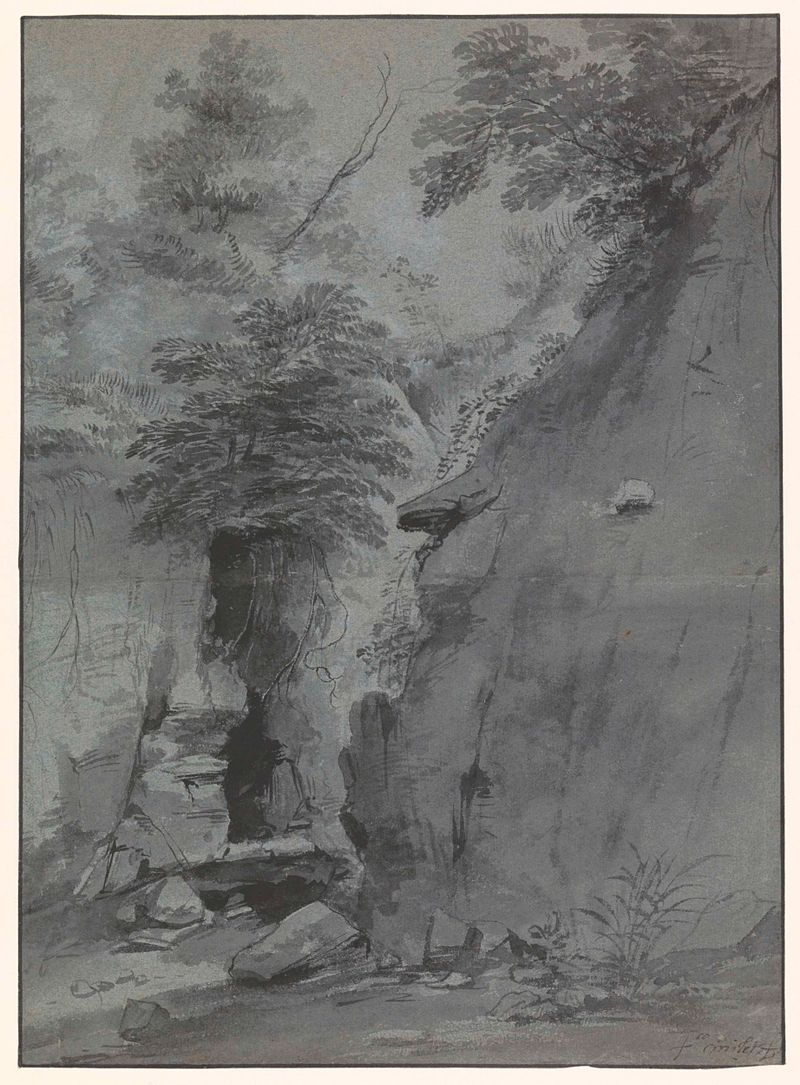
What if silence could speak through light? In the realms of pastoral beauty, it invites us to ponder the divine interplay between humanity and nature. Look to the center of the composition, where a gentle path winds through lush greenery, flanked by figures lost in quiet contemplation. Notice how the soft, muted palette envelops the scene, with earthy tones merging seamlessly into the sky, creating an ethereal atmosphere. The dappled sunlight breaks through the trees, illuminating the figures and highlighting their serene gestures, as if they are partaking in a sacred communion with the landscape. The contrast between the wandering figures and the sprawling nature around them evokes a profound sense of solitude and unity.
Each person, though engaged in their own thoughts, reflects a shared connection to the divine essence of the world around them. The gentle curves of the hills and the fluidity of the water suggest a harmonious relationship, where the mundane and the celestial blend seamlessly. Here, the stillness hints at deeper philosophical questions: what truths lie hidden in silence, and how does nature cradle our souls? During the early 18th century, the artist created this work while navigating the complexities of both his personal life and the evolving art world.
Raised in a time marked by transition, he embraced the Baroque style, yet sought to capture the tranquility of rural life, reflecting a yearning for connection with the divine through simple, everyday scenes. His explorations in this period represent a shift towards celebrating the sublime in the ordinary, revealing a contemplative spirit at work.