Kloof tussen rotswanden — History & Facts
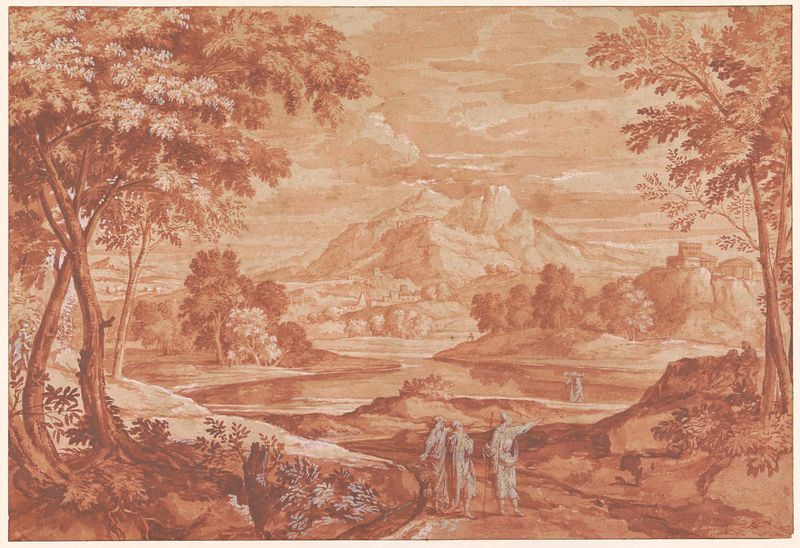
Where does light end, and longing begin? In the chiaroscuro of Kloof tussen rotswanden, the boundaries dissolve, inviting viewers to ponder the intersections of fate and existence. Focus first on the interplay of shadow and illumination. Notice how the stark cliffs tower in the background, casting deep shadows that cradle the delicate figures below. The soft, ethereal light spills through the narrow crevice, creating a luminous path that draws the eye toward the horizon.
The palette, a blend of earthy browns and vibrant greens, reflects both tranquility and the untamed essence of nature, suggesting a world at once serene yet fraught with unseen challenges. Within this rugged landscape, the viewer might find a narrative of struggle and hope. The figures, small against the immense rocks, embody the human spirit confronting nature's vastness. Their postures convey a sense of striving and resilience, while the light illuminating their path symbolizes destiny's guiding hand.
The juxtaposition of the solid, unyielding cliffs and the fleeting, ephemeral glow of light evokes a tension that resonates with the universal quest for purpose. During the years from 1676 to 1723, Millet created this work while navigating the shifting tides of the art world, immersing himself in themes of nature and humanity. Living in an era defined by a burgeoning appreciation for emotion in art, he sought to capture the raw beauty and complexity of existence. This painting reflects his deep understanding of both light and shadow, a testament to his legacy as a pioneer of the Baroque style.