
Architectural Study — History & Facts
What if silence could speak through light? In the delicate interplay of shadow and illumination, a haunting fragility emerges, revealing the essence of architectural beauty. Look to the forefront of the canvas, where the meticulously detailed structures rise like dreams captured in time. The crisp lines and soft shades invite the viewer’s gaze upward, drawing attention to the intricate facades and their subtle textures. Notice how the light falls upon the surfaces, enhancing the ethereal quality of Daguerre’s work—each beam seems to breathe life into the architecture, accentuating its grandeur while simultaneously invoking a sense of transience. Beneath the surface, this study encapsulates the tension between permanence and impermanence.
The grand silhouettes of the buildings, though strong and enduring, are set against a backdrop that hints at decay and the passage of time. Each element, from the shadows lurking in the corners to the soft glow illuminating the archways, serves as a reminder of the fragility of human creations, challenging the viewer to ponder their place in history and the inevitability of change. In the 1820s and 1830s, Daguerre was deeply engaged in pioneering the art of photography, capturing the world with unprecedented clarity. Working in France during a period of rapid industrialization and artistic innovation, he was motivated by a desire to merge art with science.
This work reflects not only his fascination with architectural forms but also the transitional state of society as it embraced both modernity and the ephemeral nature of existence.
More Artworks by Louis Jacques Mandé Daguerre
Browse all →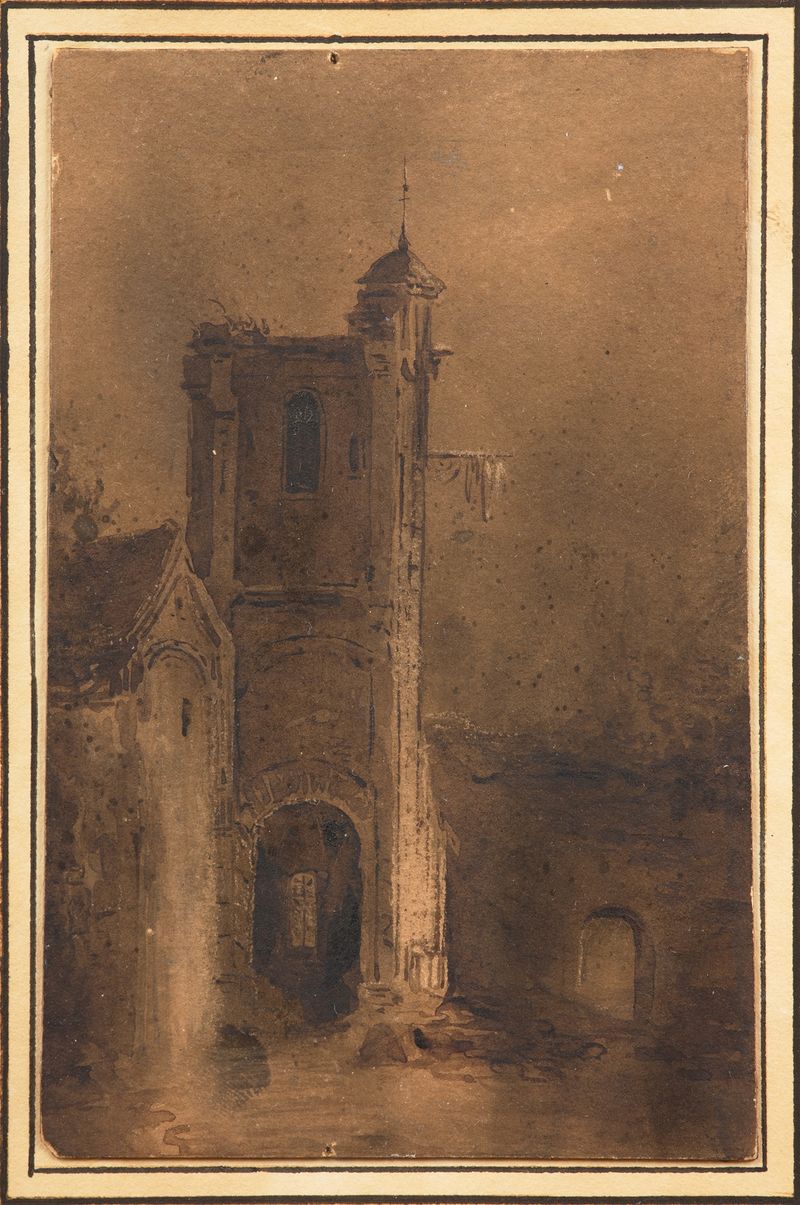
More Architecture Art
Browse all →
The statue of Liberty
Frédéric Auguste Bartholdi

View of Houses in Delft, Known as ‘The Little Street’
Johannes Vermeer

View of Houses in Delft, Known as ‘The Little Street’
Johannes Vermeer

The Cathedral in Rouen. The portal, Grey Weather
Claude Monet

The yellow house
Vincent van Gogh

The Church in Auvers-sur-Oise, View from the Chevet
Vincent van Gogh