
Light effect on a gothic tower — History & Facts
What secret hides in the quiet of the canvas? The ethereal play of light dances across the stonework, inviting us to explore the divine geometry of the gothic tower. Look to the left, where the tower's intricate spires reach upward, their tips almost caressing the heavens. Notice how the light falls upon the weathered stone, illuminating textures that speak of centuries, while shadows cling to the recesses, hinting at untold stories. The palette, a harmony of muted grays and soft blues, accentuates the solemnity of the structure, creating an ambiance that feels both reverent and haunting. Beneath the surface lies a dialogue between the spiritual and the earthly.
The stark contrast of light and shadow evokes an emotional tension, suggesting the duality of existence — the divine aspirations of humanity against the reality of decay. Each detail, from the delicate carvings to the sweeping arches, whispers of the sacred and the transient, urging the viewer to reflect on their own place within this vast tapestry of time. In the early 19th century, the artist embraced the burgeoning art of photography while painting this piece, influenced by the Romantic movement's fascination with light and nature. Although the exact date remains unknown, Daguerre's exploration of luminescence marked a pivotal moment in both his career and the evolution of visual art.
During this time, he was simultaneously pioneering the daguerreotype process, forever changing the way we capture and perceive the world around us.
More Artworks by Louis Jacques Mandé Daguerre
Browse all →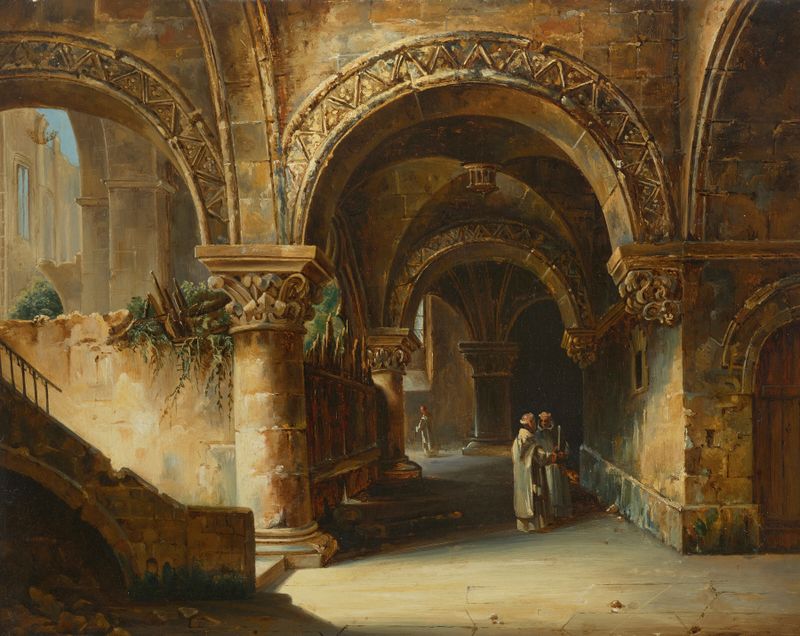
More Architecture Art
Browse all →
The statue of Liberty
Frédéric Auguste Bartholdi

View of Houses in Delft, Known as ‘The Little Street’
Johannes Vermeer

View of Houses in Delft, Known as ‘The Little Street’
Johannes Vermeer

The Cathedral in Rouen. The portal, Grey Weather
Claude Monet

The yellow house
Vincent van Gogh

The Church in Auvers-sur-Oise, View from the Chevet
Vincent van Gogh