At Claygate, Surrey — History & Facts
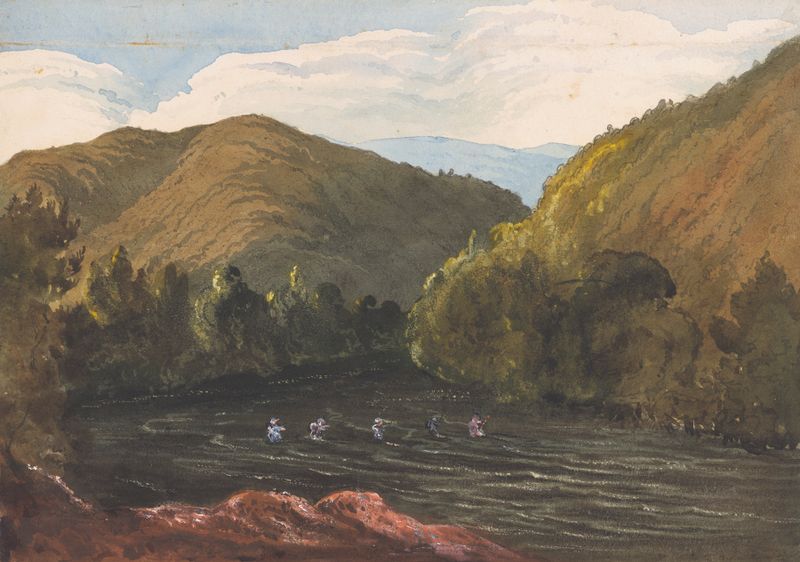
Where does light end, and longing begin? In the stillness of At Claygate, Surrey, a subtle melancholy lingers, inviting the viewer to contemplate the spaces between presence and absence. Focus on the horizon, where golden light meets the soft contours of rolling hills. The delicate play of sunlight filters through the branches of nearby trees, casting intricate shadows on the path below. The muted palette, with its harmonious greens and soft browns, evokes a sense of tranquility yet whispers of something deeper—a yearning that dances just out of reach. As you explore further, notice the solitary figure in the distance, walking along the winding trail.
Their presence is both grounding and isolating, an embodiment of introspection amid nature's embrace. The gentle undulations of the landscape mirror the emotional terrain—moments of clarity interrupted by the shadows of solitude, a tension captured in the artwork's composition. Painted in 1899, during a time when Sir William Fox was deeply engaged in the English landscape tradition, this piece reflects the era's shift towards capturing the nuances of light and atmosphere. While the world around him was rapidly modernizing, Fox found solace in the tranquil beauty of rural settings, often portraying the disquiet of individuals within expansive natural environments.
This painting stands as a testament to that pivotal moment in art history, revealing the artist’s sensitivity to both beauty and the loneliness that can accompany it.