On the Rhine — History & Facts
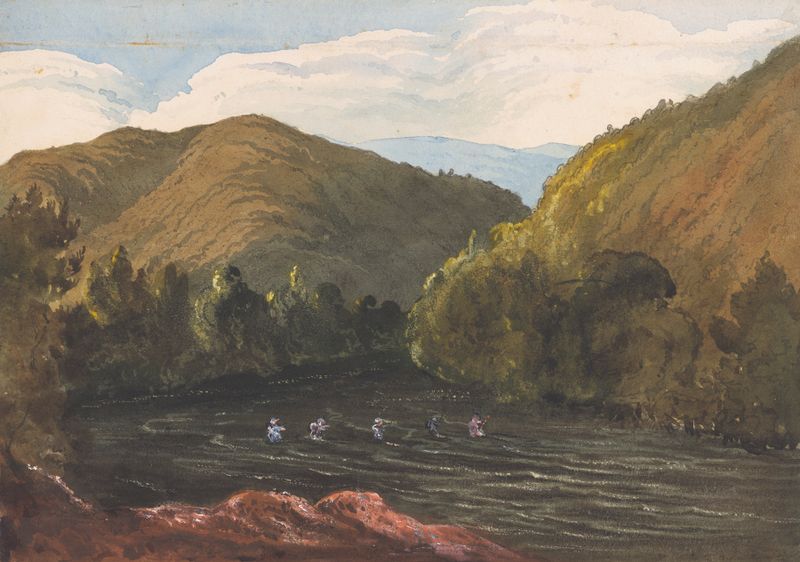
What secret hides in the quiet of the canvas? In a world brimming with noise and chaos, the stillness of this painting invites contemplation and reflection on the profound truths lurking beneath the surface of life. Look to the left at the river, shimmering under the gentle caress of light. Its graceful curves thread through the landscape, inviting the eye to journey beyond the horizon. Focus on the soft colors that merge seamlessly; the blues and greens are tinged with an ethereal glow, evoking a sense of tranquility.
The finely detailed trees and distant hills provide a subtle backdrop, while the delicate brushwork hints at the artist's mastery, orchestrating a harmonious balance between nature and humanity. The interplay of light and shadow encapsulates the tension between serenity and mystery. Notice the lone figure on the bank, a solitary silhouette lost in thought—what thoughts wander through their mind as they gaze across the water? This contrast between the stillness of the landscape and the emotional weight of the figure introduces an intimate narrative, prompting viewers to search for deeper meanings in both tranquility and solitude. In the 1830s, amidst the flourishing Romantic movement, Sir William Fox painted this work during a period marked by a deepening appreciation for nature and its sublime qualities. Living in England, he was influenced by the picturesque landscapes of the time, as well as the burgeoning interest in expressing personal emotions through art.
This piece reflects not only his skill but also the broader artistic shift toward capturing the essence of human experience in relation to the natural world.