At Rotorua — History & Facts
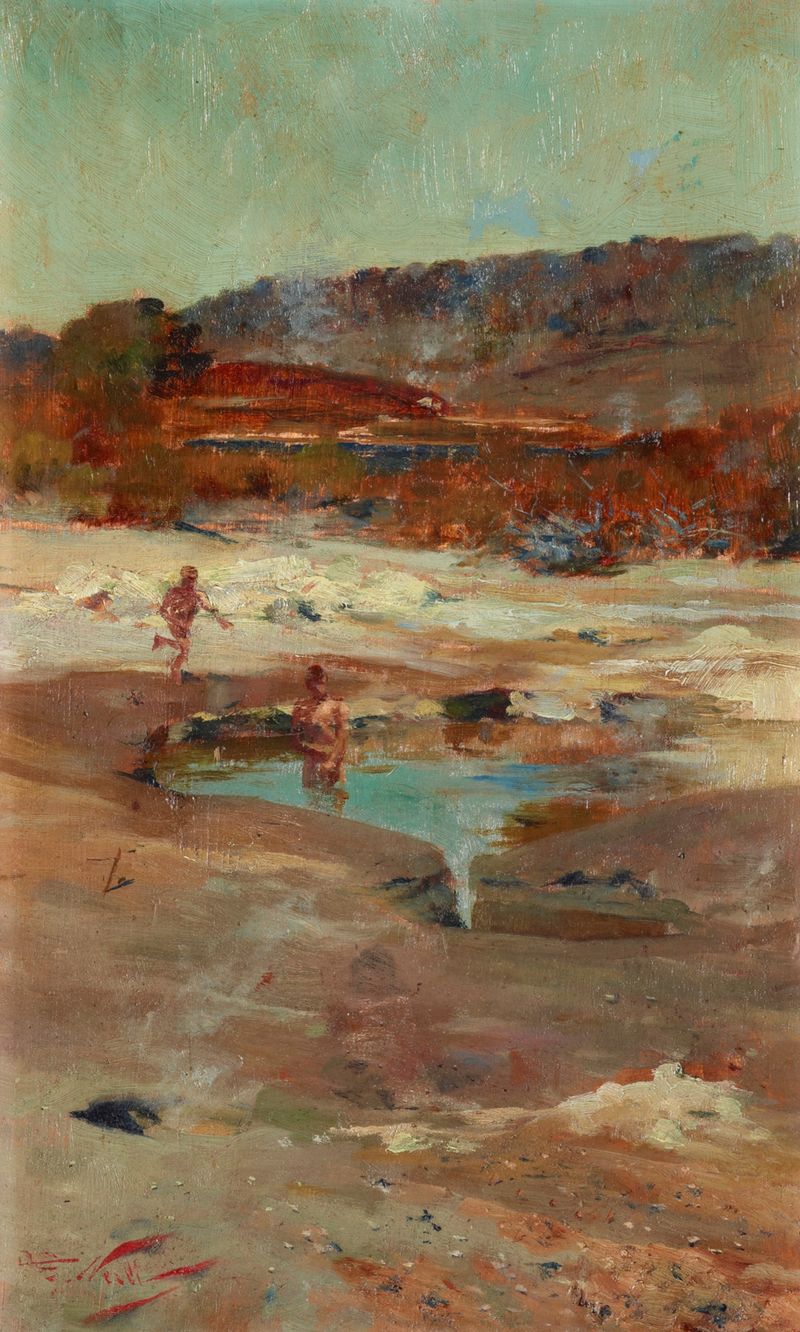
Did the painter know this moment would outlive them? In a fleeting instant, tranquility unfolds, captured forever beneath a veil of soft brushstrokes and gentle hues. Look to the right at the serene figures seated by a still, shimmering lake, framed by lush greenery. Notice how the light falls upon the water, reflecting not just the surrounding landscape but also the quietude of the moment. The composition draws the eye inward, creating a harmonious balance between the vibrant flora and the tranquil water, evoking a sense of stillness and contemplation. Hidden within this serene tableau lies a duality; the enchantment of nature contrasts with the ephemeral nature of human existence.
The figures, though immersed in their peaceful surroundings, are symbols of fleeting moments, emphasizing the inexorable passage of time. Subtle details, like the ripples on the water or the warmth of the sun filtering through leaves, illustrate the delicate relationship between humans and nature, and the serenity they can evoke. Girolamo Nerli created this evocative work during a time when he was exploring themes of natural beauty and harmony in art. Although the exact date is unknown, it likely falls within the early 20th century, a period marked by an increasing interest in impressionism and the emotional resonance of landscapes.
Living in Australia, Nerli embraced the unique light and colors of the region, striving to capture moments that resonate with serenity and stillness amidst a rapidly changing world.