At the Edge of a Village — History & Facts
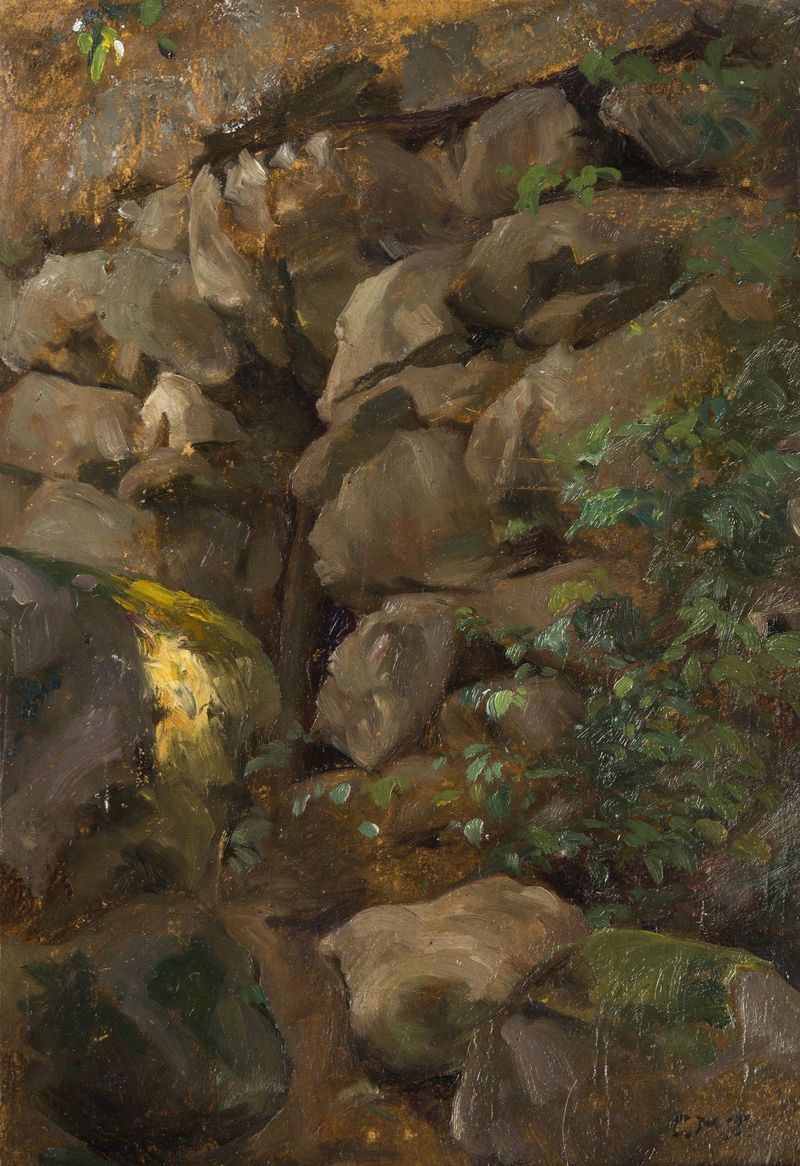
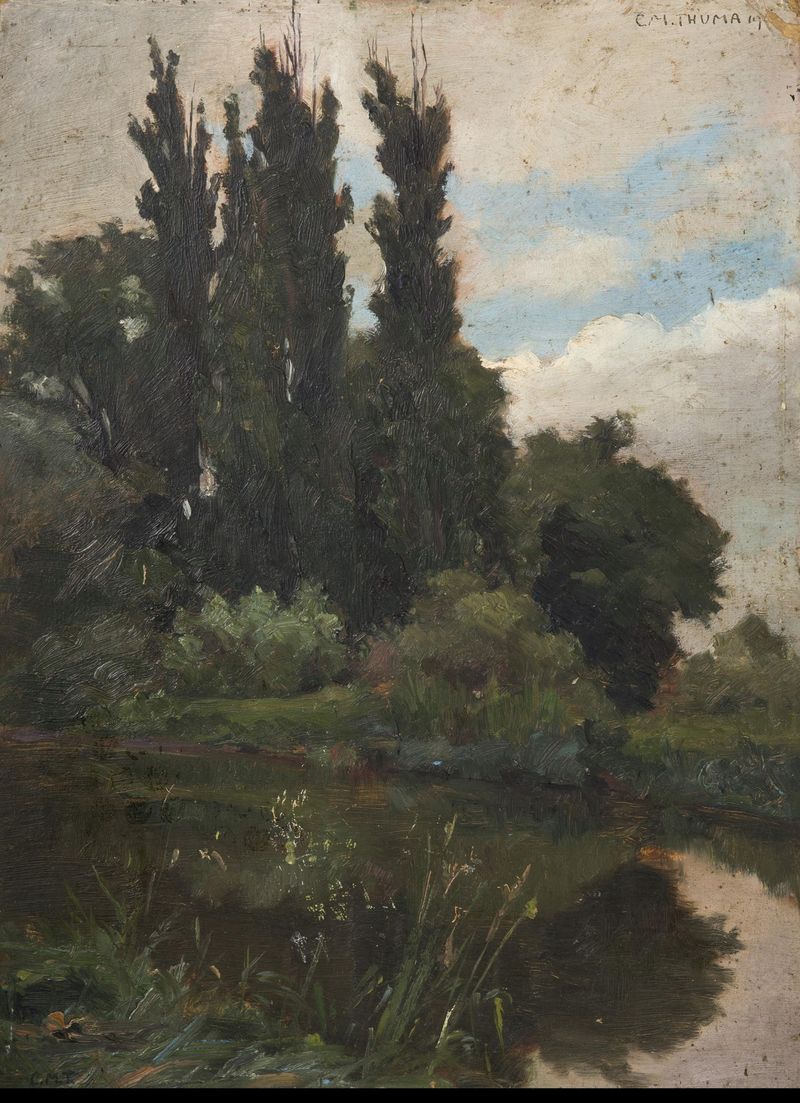
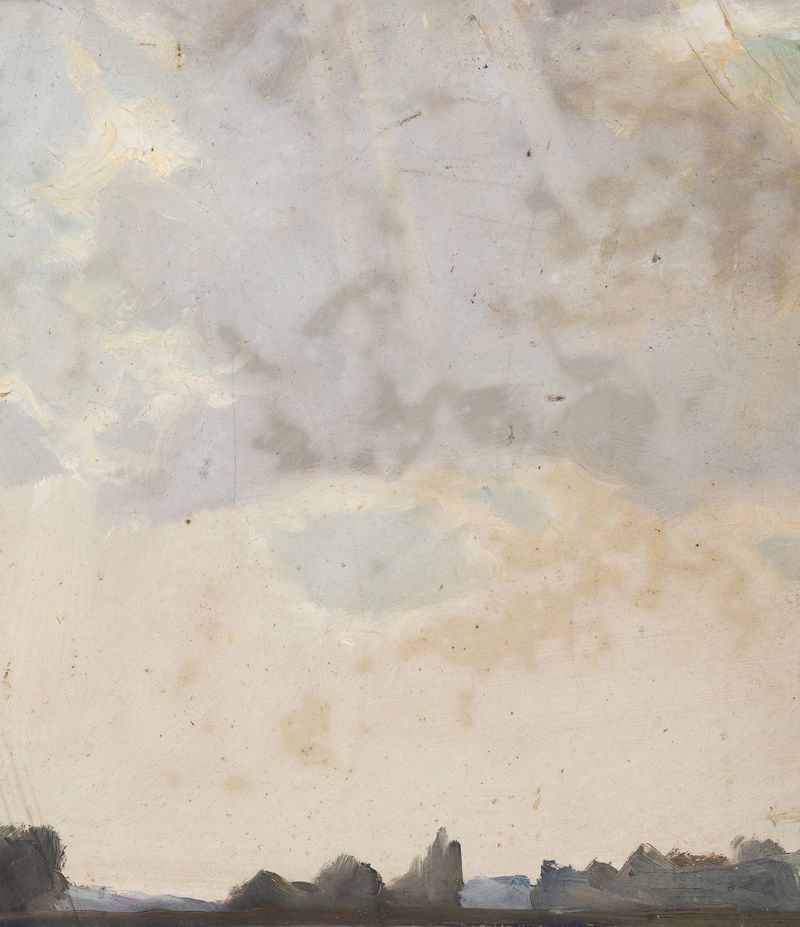
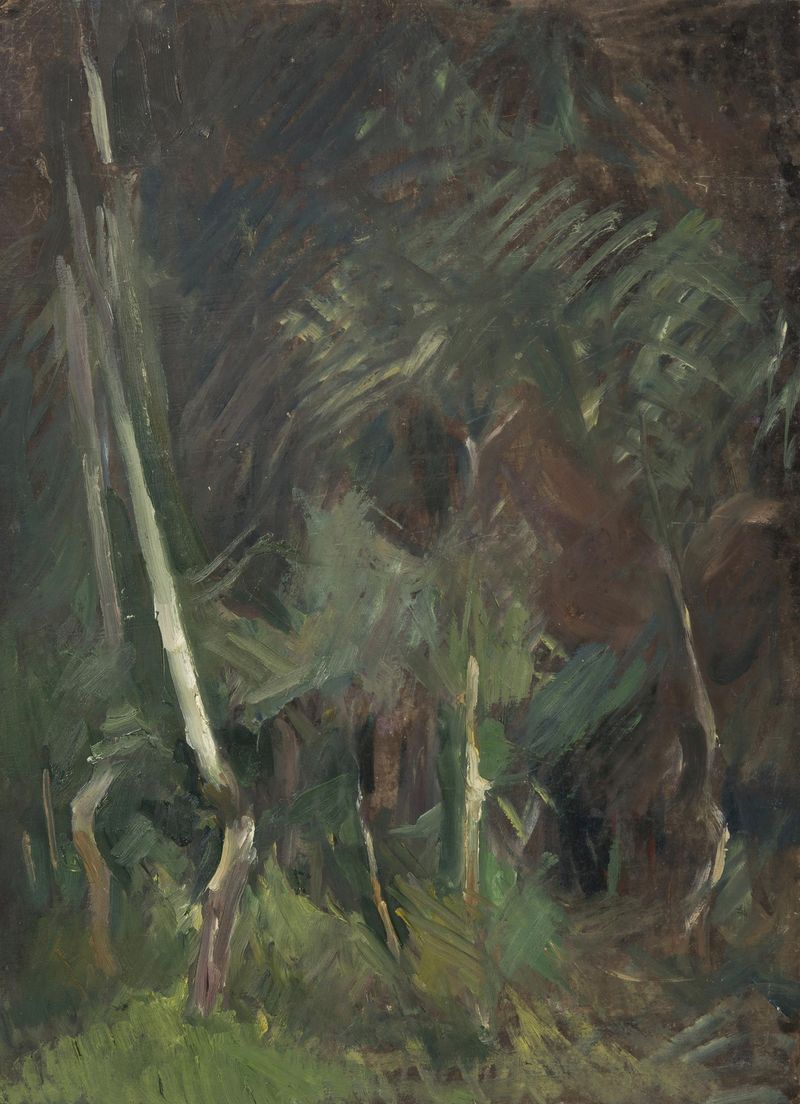
Is this a mirror — or a memory? In At the Edge of a Village, the viewer is gently invited to ponder the boundaries that separate the past from the present, the seen from the unseen. Focus on the lush green space that spills across the canvas, a vibrant contrast to the muted hues of the village structure nestled beside it. The artist skillfully employs broad, sweeping brushstrokes that convey both movement and stillness, drawing the viewer’s eye towards the periphery of the settlement. Notice how the light dances across the foliage, flickering like unspoken thoughts, while shadowy corners hint at secrets held within the village's walls. Delve deeper into the subtleties present in the landscape: the slight blurring of the village edges suggests a transient state, caught between reality and memory.
The juxtaposition between the bright, verdant foreground and the darker, more structured background evokes a sense of transformation, as if the very fabric of the village is on the cusp of change. This tension invites contemplation about what lies beyond the known, encouraging the viewer to explore their own interpretations of familiarity and distance. Created during an unrecorded moment in the artist's life, this work reflects a broader artistic movement towards impressionism and emotional depth in the late 19th to early 20th century. In this period, many artists began to embrace the transient nature of light and atmosphere, shaping their surroundings into expressions of personal and collective memory.
The simplicity of the village scene belies the complexity of transformation and identity, resonating with the spirit of an evolving artistic landscape.