Study of Trees — History & Facts
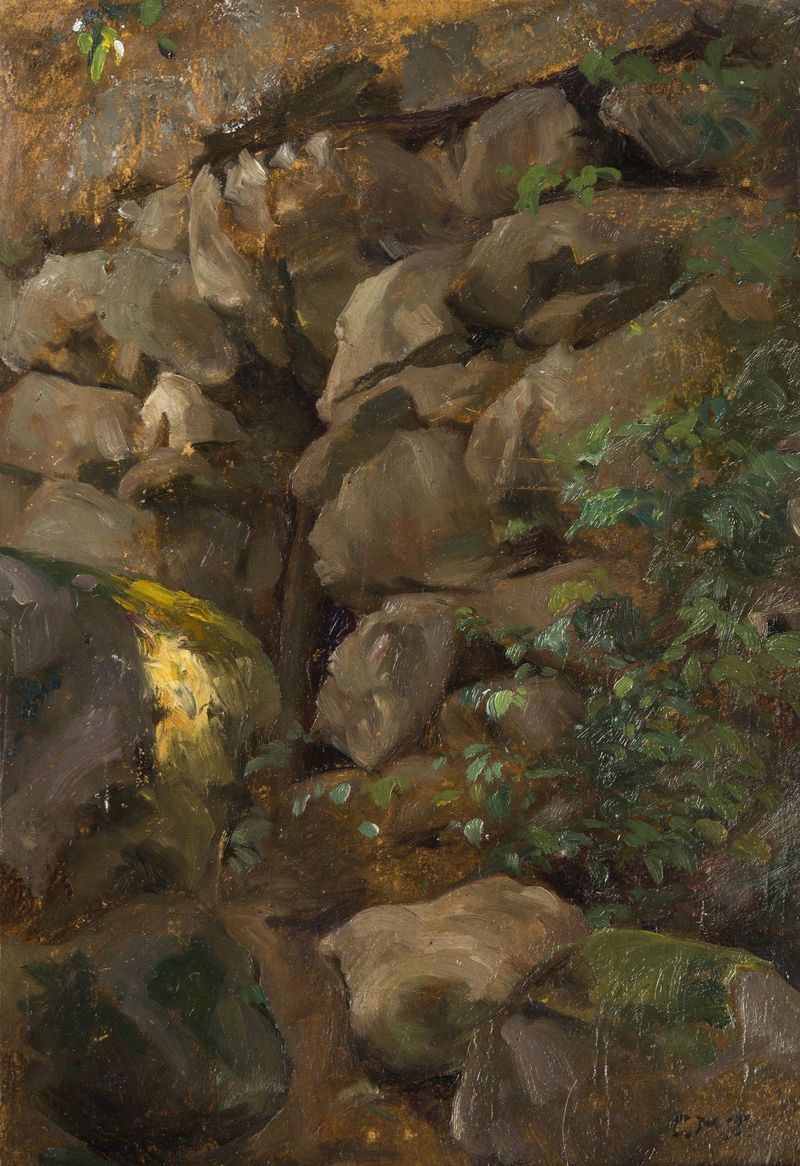
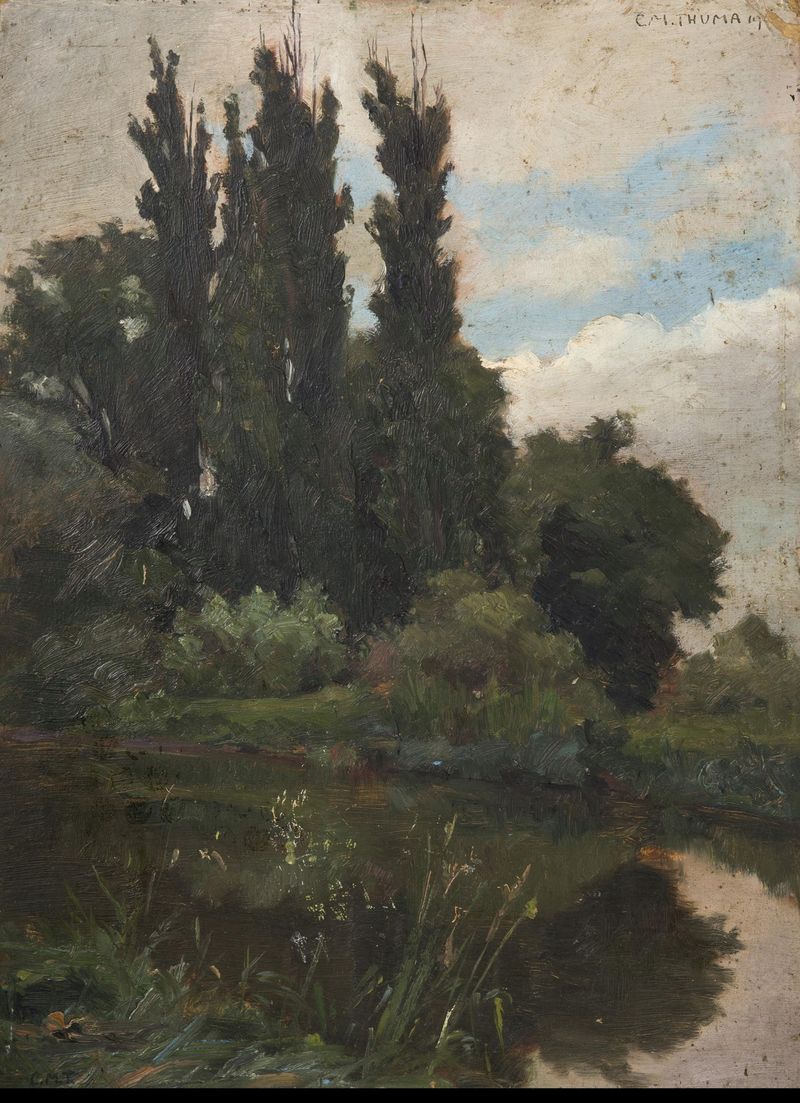
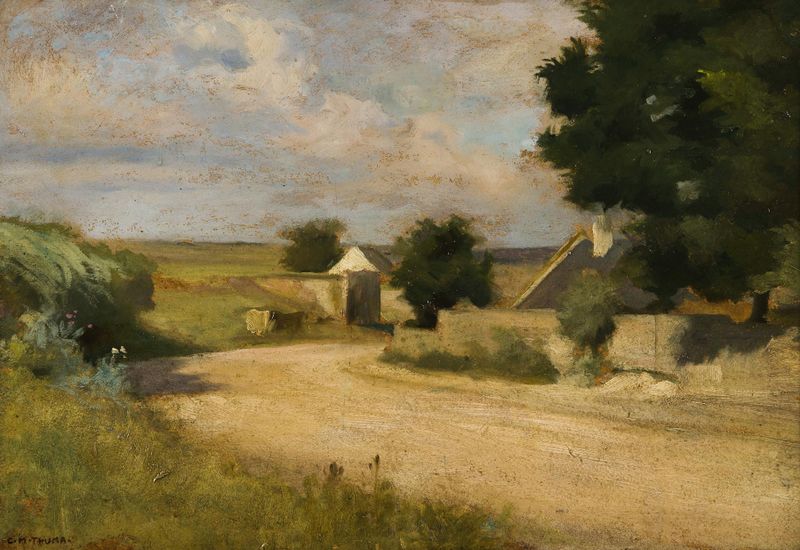
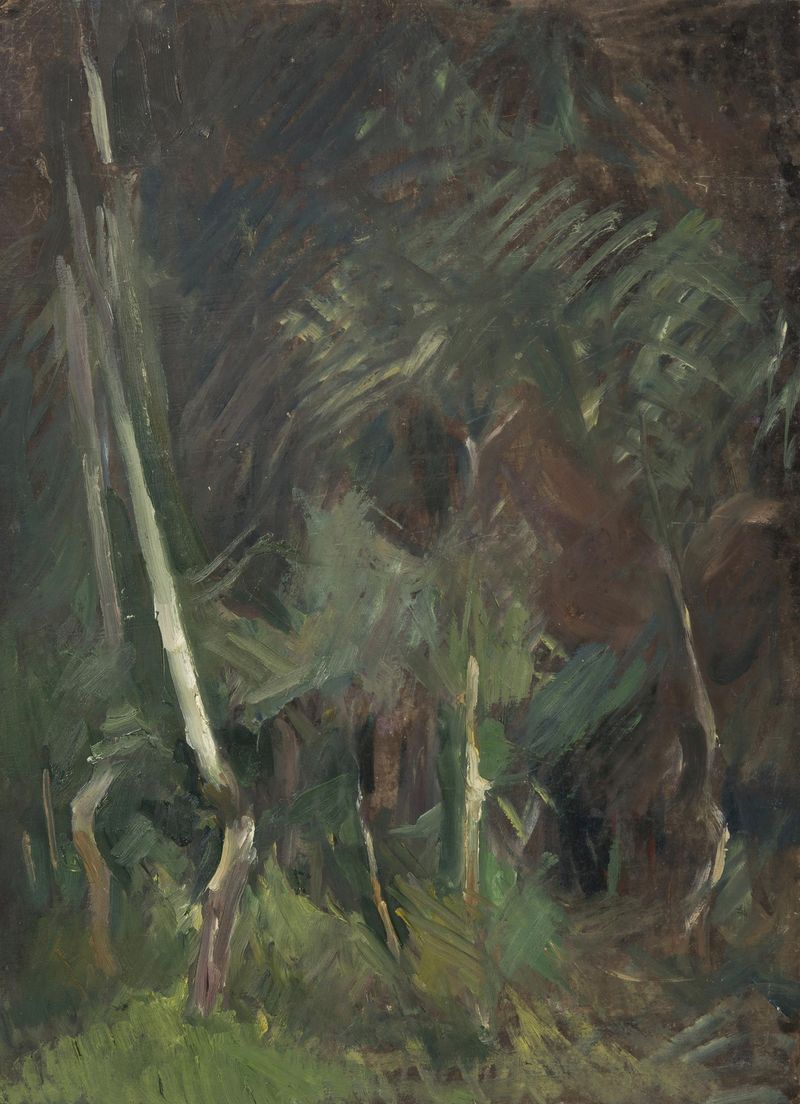
In the stillness of a forest, whispers of revolution linger between the trees, echoing the struggles and triumphs of nature’s quiet resilience. Each trunk stands witness to stories untold, bearing the weight of time and the promise of renewal. Look to the center where the gnarled branches intertwine, creating a dense canopy that filters soft, dappled light onto the forest floor. The hues of green and brown are rich with texture, inviting the viewer to explore the layers of foliage.
Notice how the play of light and shadow creates a dance of contrast, emphasizing the strength of the trees against the delicacy of their surroundings. Thuma’s deft strokes breathe life into each bark and leaf, showcasing not just the trees, but the very essence of what they symbolize. Yet, there’s an underlying tension in this depiction. The rigid lines of the trunks suggest steadfastness, while the lighter brushwork around the leaves introduces a sense of movement—perhaps the winds of change stirring beneath the surface.
The balance between the solidity of the wood and the ephemeral nature of the leaves reflects humanity's struggle for permanence in a world often defined by flux. Each element of the scene resonates with the potential for transformation, mirroring the revolutionary spirit of art itself. During the period when this work was created, Thuma was immersed in the evolving landscape of 19th-century European art, a time marked by a growing interest in realism and the natural world. Influenced by the Romantic movement, he sought to capture both beauty and rawness, reflecting a society on the verge of significant change.
His connection to the environment expressed not only an appreciation for nature but also a yearning for progress, resonating with the revolutionary ideas circulating in the world around him.