At the Forest’s Edge — History & Facts
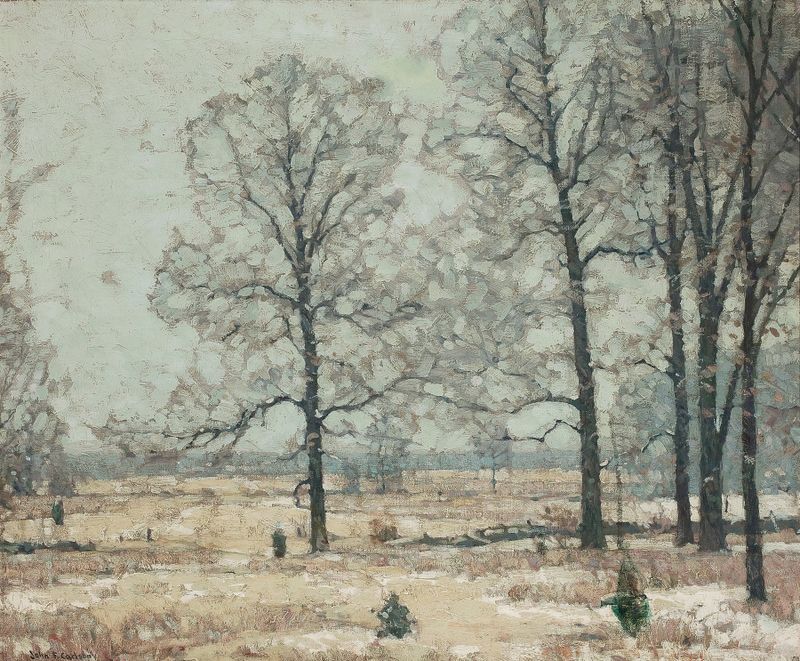
Did the painter know this moment would outlive them? In At the Forest’s Edge, the interplay of light and shadow captures a serene yet timeless encounter between man and nature, echoing the whispers of a world in harmony. Look to the left at the dappled sunlight filtering through the leaves, casting a mosaic of warmth across the forest floor. The soft brushstrokes create a textured canopy overhead, while the subtle greens and browns evoke the lushness of the wilderness. The composition draws you toward the edge of the forest, where the vibrant colors invite exploration, suggesting both comfort and mystery in the hidden depths beyond. Each element holds significance: the light illuminating the delicate foliage symbolizes the transient beauty of life, while the darker shadows hint at the unknown lurking just out of sight.
The trees stand as silent sentinels, their towering forms representing strength and resilience against the passage of time. This tension between light and dark invites contemplation on the ephemeral nature of existence and our connection to the world around us. In creating this work, Carlson captured the essence of early 20th-century America, a time when the movement towards the naturalistic portrayal of landscapes flourished. Though the exact date of this painting is unknown, it likely emerged during a period when he was deeply influenced by the beauty of the northern woodlands and the growing appreciation for American landscapes in the art world.