Woods in Winter — History & Facts
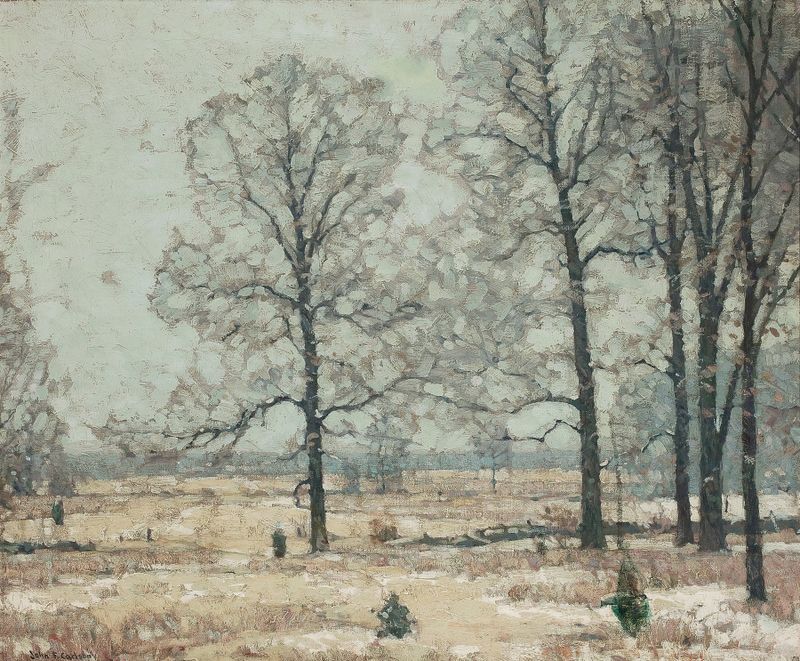
In the stillness of a winter landscape, grief intermingles with the beauty of nature’s starkness, reminding us of what has been lost. Look to the foreground, where the delicate interplay of white snow and dark tree trunks creates a haunting contrast. The artist’s technique captures the crispness of winter air, with each brushstroke rendered in a way that invites the viewer to breathe in the scene. Notice how the cool blues and soft grays of the shadows are counterbalanced by the warm tones in the undergrowth, suggesting life even in the coldest of seasons — a vivid portrayal of resilience amidst sorrow. As you move through the painting, consider the deeper emotions evoked by the barren branches reaching skyward.
There’s an echo of isolation and longing, as if these trees bear witness to untold stories of love and loss. The heavy snowfall blankets the ground, symbolizing the weight of memories that both nurture and encumber the soul. This duality invites reflection on the cyclical nature of grief — where beauty and sorrow coexist, intertwined yet distinct. John Fabian Carlson created Woods in Winter in 1912 during a period of personal reflection and artistic growth.
Living in the early 20th century, he was influenced by the emerging American Impressionist movement, which sought to capture the essence of life through light and color. This work encapsulates a moment in the artist's life where he grappled with the depths of emotion conveyed through nature, marking a significant evolution in his approach to landscape painting.