
At the Oasis — History & Facts
Can beauty exist without sorrow? In the hushed embrace of an oasis, the interplay of light and shadow unveils a serene yet poignant tableau that invites reflection on the duality of existence. Look to the center of the canvas, where a tranquil pool mirrors the azure sky, its surface gently rippling. The surrounding palm trees sway delicately, their shadows casting intricate patterns on the sandy ground. Notice how the artist employs a rich palette of earthy tones, juxtaposed with vibrant greens, to create a sense of peace, yet hints at the underlying tension in the work.
The interplay of light in this scene serves not just to illuminate but to emphasize the transient beauty of the moment. Hidden within the serene beauty lies a deeper emotional resonance. The oasis, while a symbol of refuge and respite, can also be seen as a temporary escape from the harsh realities beyond. The elongated shadows suggest the passage of time, hinting at the inevitable retreat of tranquility in the face of life's challenges.
Every element, from the gentle curve of the water to the rustling palms, speaks to the bittersweet nature of solace, urging viewers to ponder the complexities of joy and sorrow interwoven in our lives. Created in an undetermined time, the artist was likely influenced by the romantic ideals of the era, seeking to capture the essence of nature’s beauty amid the turmoil of society. At this point in art history, the exploration of landscapes was gaining prominence, reflecting both personal introspection and a collective yearning for peace in an increasingly chaotic world.
More Artworks by Georges Washington
Browse all →
The Watering Place
Georges Washington
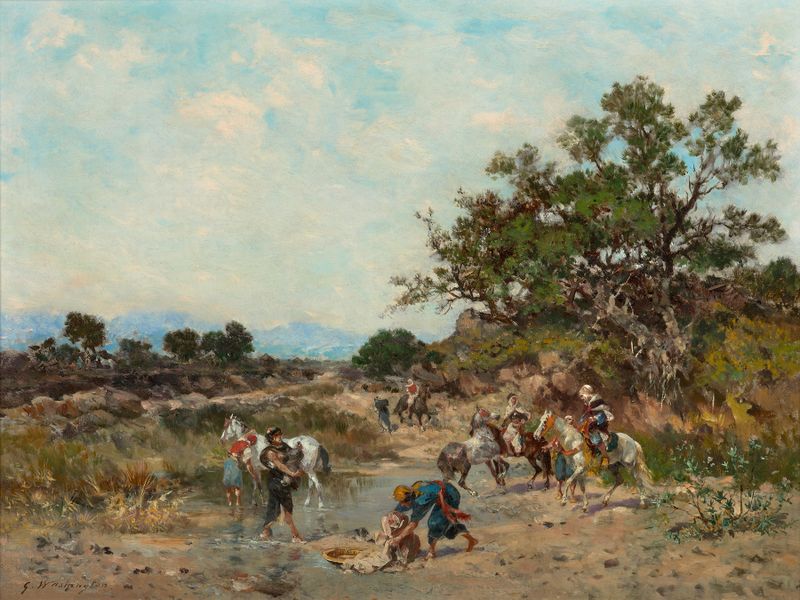
Au bord de l’Oued
Georges Washington
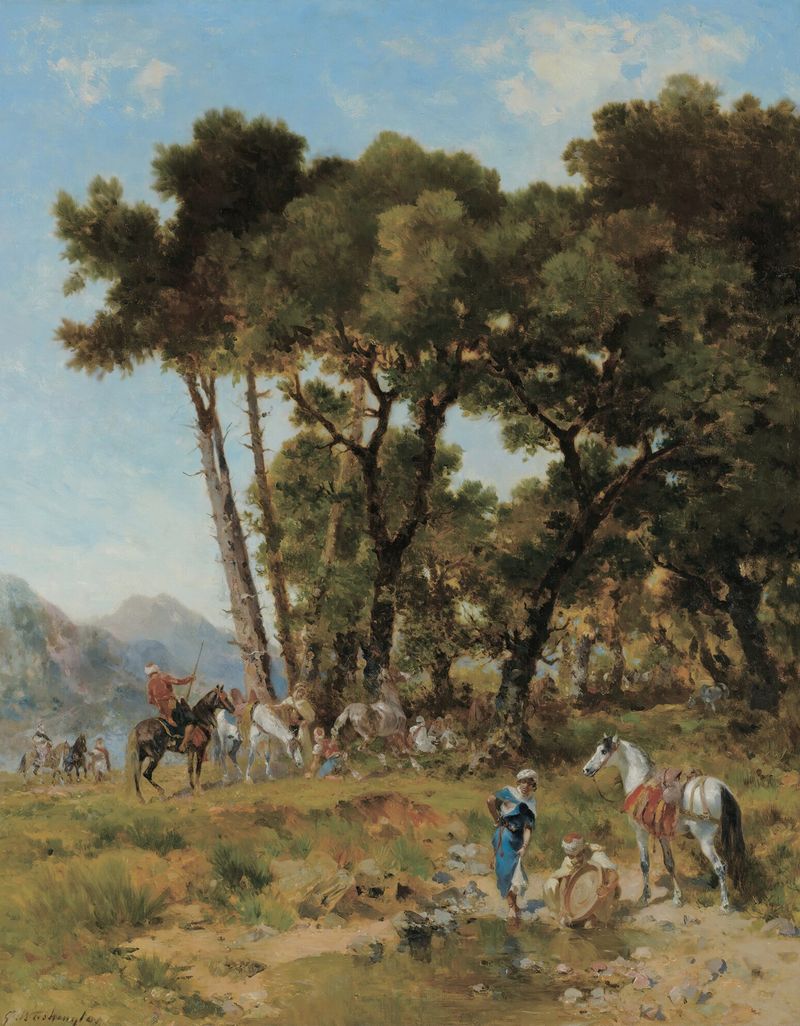
Halte Dans Les Montagnes
Georges Washington
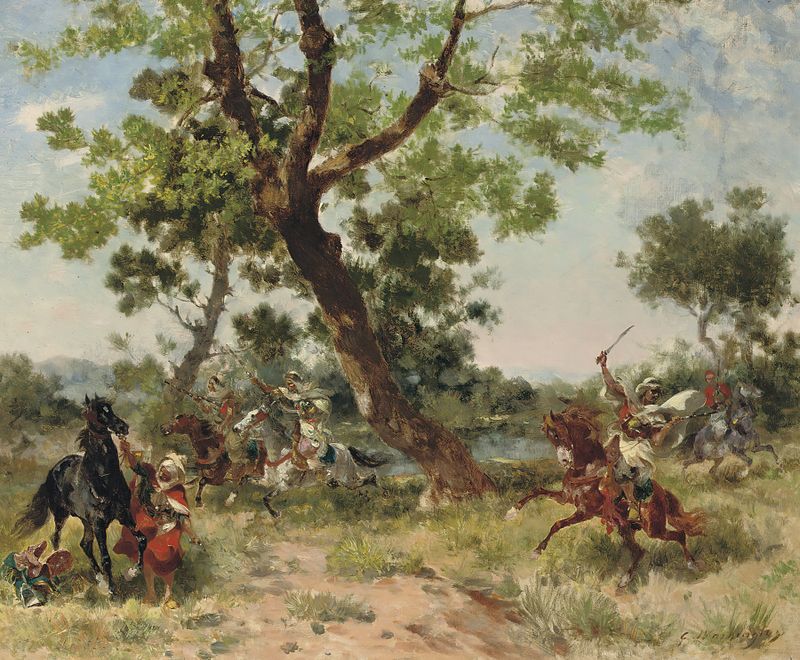
A Raiding Party
Georges Washington

La Rencontre des Cavaliers
Georges Washington
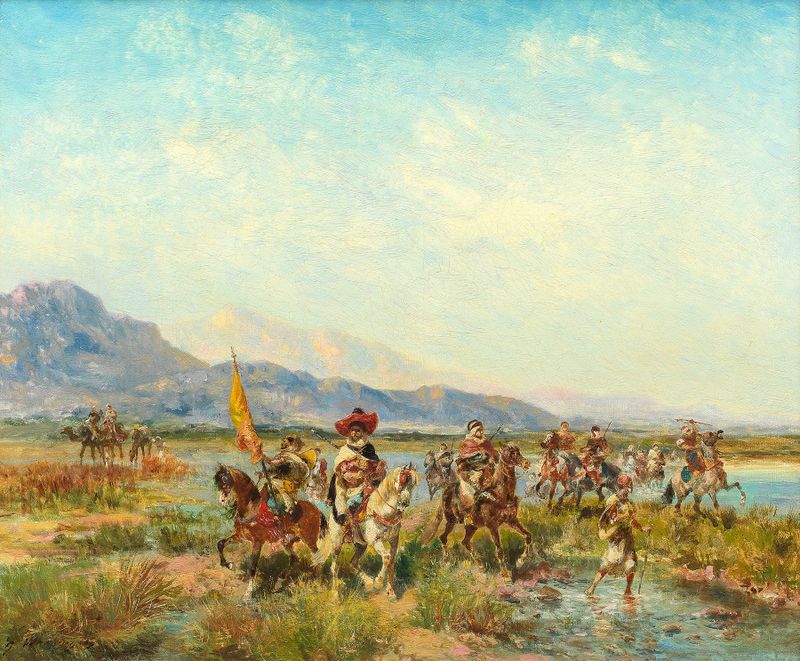
Horsemen fording a river
Georges Washington
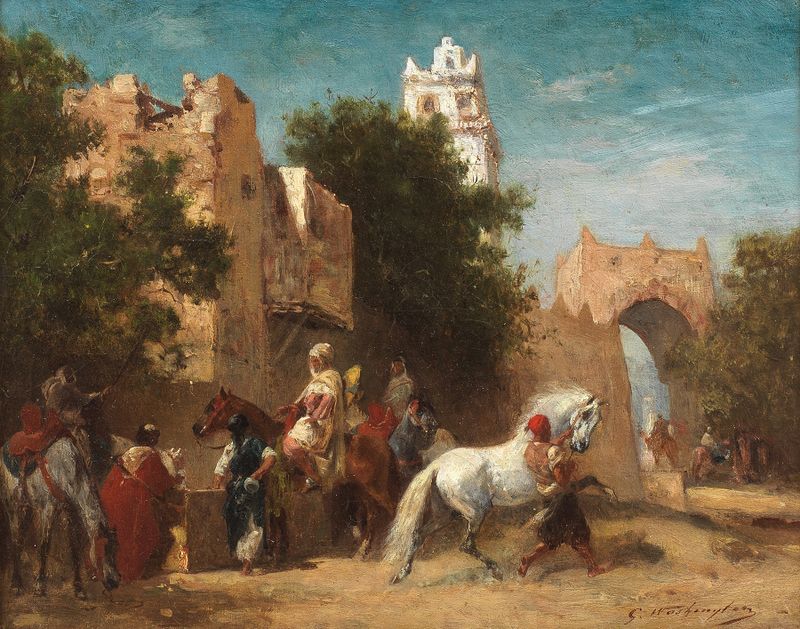
A halt at the city walls
Georges Washington

La Chasse
Georges Washington
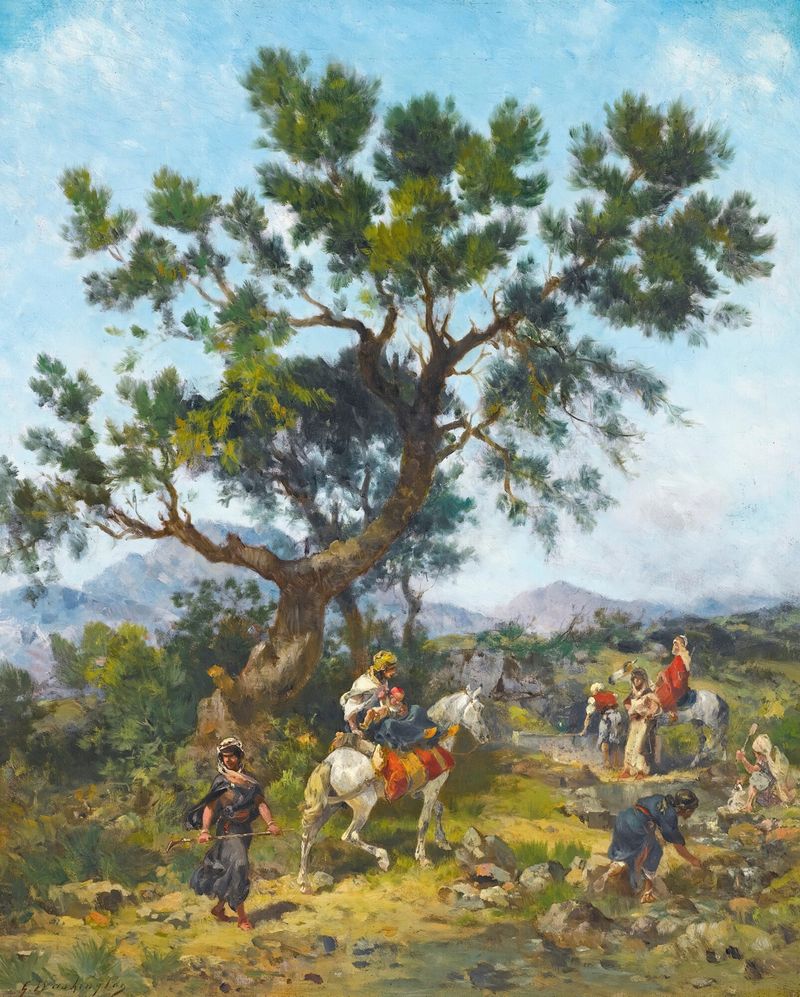
Cavaliers Au Repos
Georges Washington
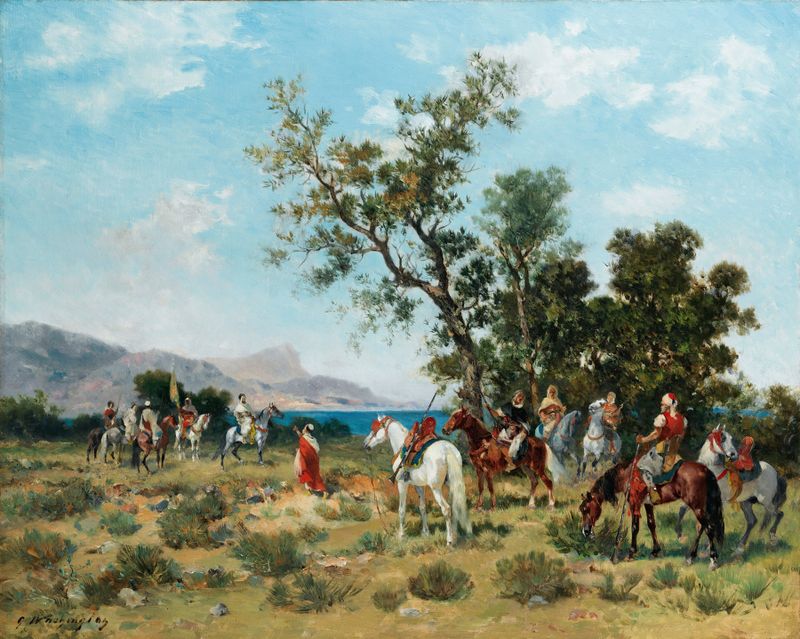
La Rencontre des Cavaliers
Georges Washington





