At the River's Bend (On the River II) — History & Facts
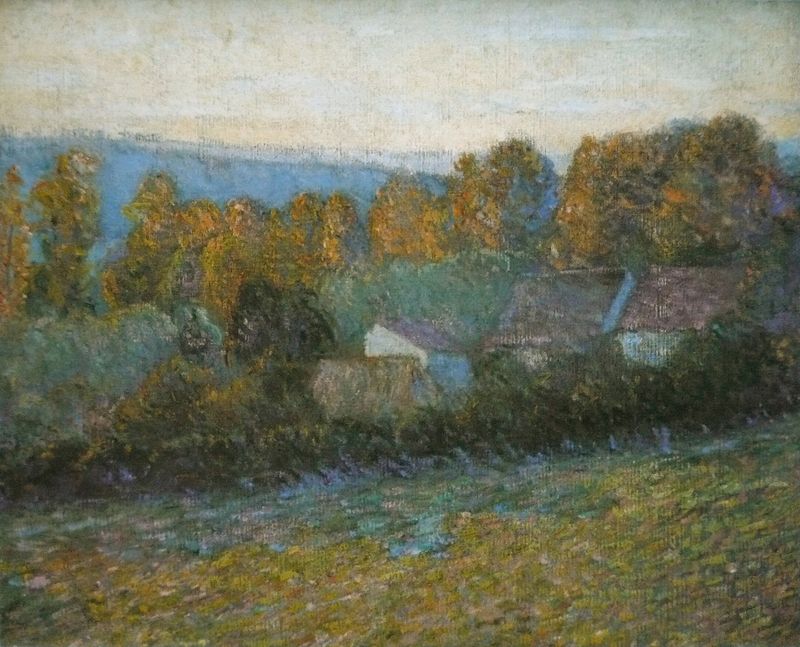
This reflects an obsession with fleeting moments, a yearning to grasp the ephemeral threads of existence. What do we cling to in the face of time’s relentless flow? Look closely at the luminous interplay of blues and greens in the water, where soft strokes create rippling reflections. Your gaze should first be drawn to the horizon, where the gentle curve of the river’s bend hints at an unseen journey, inviting exploration.
The brushwork is both delicate and deliberate, a testament to the artist's skill in capturing light as it dances across the surface, revealing depth and movement within stillness. As you delve deeper, notice the way shadows play among the trees, creating an almost haunting contrast between light and dark. Here, the vibrant colors suggest a sense of peace, yet the swirling forms seem to echo a hidden turmoil beneath the tranquility. This tension reflects the artist's emotional landscape—an obsession with nature’s beauty and its impermanence, urging the viewer to confront their own relationship with the passage of time. Created in 1895, this piece emerged during a pivotal moment in Lilla Cabot Perry's life, as she was establishing her identity within the American Impressionist movement.
Living in Paris and influenced by contemporary European artists, she sought to blend her personal experiences with broader artistic trends, ultimately capturing the essence of her surroundings in a way that spoke to both her inner desires and the evolving world of art.