At the water’s edge — History & Facts
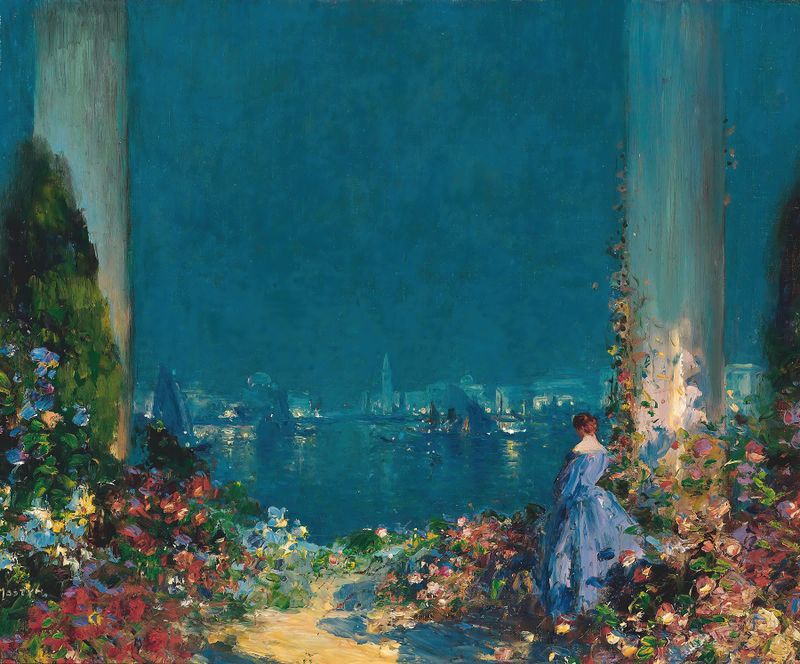
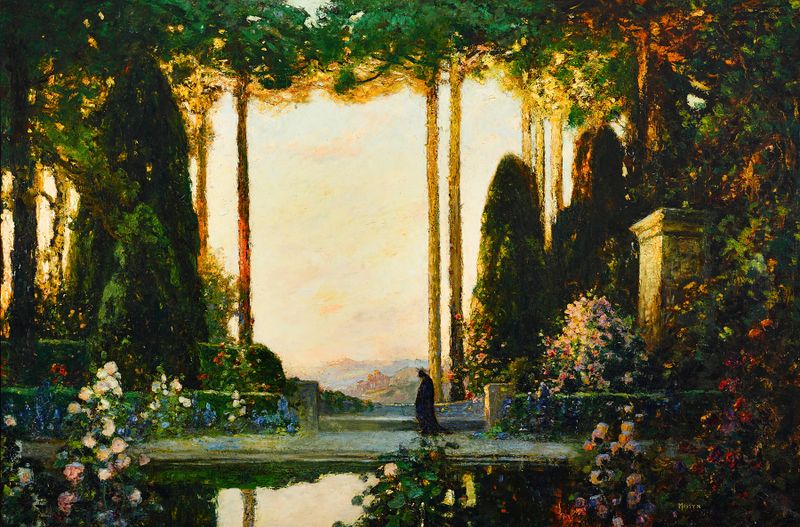
In the stillness of nature, the truth emerges, hidden within the gentle caress of water and light. It holds the weight of memories unsaid, a poignant reminder of the serenity and chaos that coexist in our lives. Look to the foreground, where the delicate ripples of a tranquil lake shimmer under a soft light. The subtle palette of blues and greens draws you in, inviting your eyes to explore the interplay between water and sky.
Notice how the artist has captured the fleeting moment of reflection—a dance of colors swirling upon the surface, representing both reality and illusion, as the landscape bends and merges into itself. Yet, it is the figures in the background that stir a deeper contemplation. Their silhouettes speak of quiet longing and introspection, perhaps searching for solace or clarity. The contrast between the vibrant colors of nature and the muted tones of their presence reveals an emotional tension—a yearning for connection, not only with each other but with the world around them.
Each brushstroke evokes a bittersweet nostalgia, hinting at truths that are often left unspoken. Thomas Edwin Mostyn painted this work during a time when the art world was shifting toward Impressionism, embracing the effects of light and atmosphere. As he explored the edges of reality and perception, he found himself in the lush landscapes of England, drawing inspiration from the beauty that surrounded him. In this moment, amid the transition in art and personal exploration, he sought to encapsulate the essence of truth that lingers at the water’s edge.