An enchanted garden — History & Facts
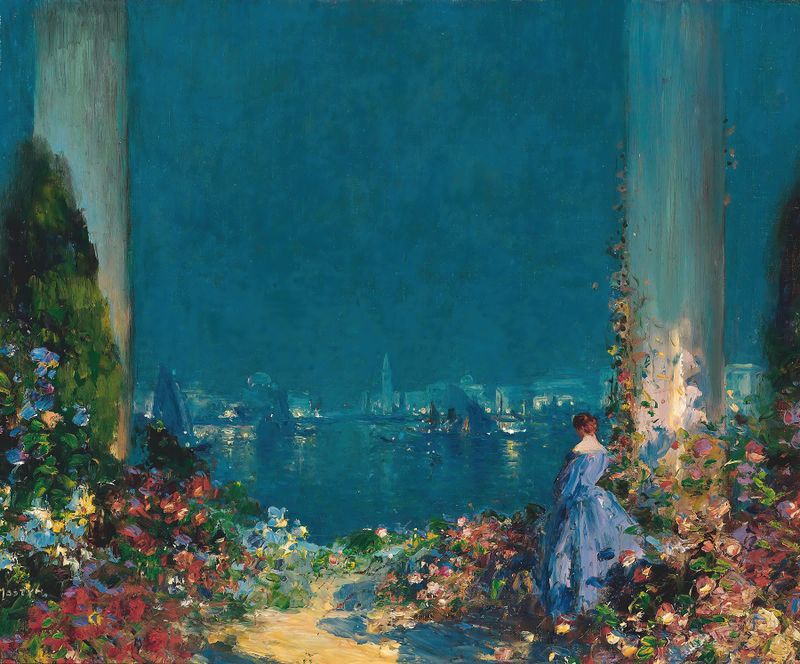
A soft mist hangs in the air, entwining the vibrant greens and golds of the garden. Wisps of sunlight filter through the leaves, casting dappled shadows that dance playfully across the petals below. A couple meanders along a winding path, their fingers brushing against the blossoms, lost in quiet reverie as the world around them fades into a harmonious hush. Look to the right at the cascading blossoms, each petal meticulously rendered in hues of lavender and soft pink, beckoning the viewer to inhale their sweet fragrance.
Notice how the light falls upon the figures, accentuating their delicate gestures as they interact with the enchanting flora. The artist’s brushstrokes create a lush tapestry of foliage, drawing the eye deeper into the garden, while the vibrant color palette evokes feelings of warmth and tranquility. Within this idyllic scene lies a poignant juxtaposition—the fleeting nature of beauty against the permanence of the landscape. The couple symbolizes the delicate yet lasting imprint of love, suggesting that moments of joy are both ephemeral and enduring.
The garden serves as a metaphor for legacy, a sanctuary where memories are cultivated and cherished, echoing the vibrancy of life even in their absence. In 1923, Thomas Edwin Mostyn created An Enchanted Garden during a time when he was solidifying his reputation as a notable landscape painter in Britain. Influenced by the shifting trends of the post-war era, he sought to capture a serene escape from the tumult of modern life, celebrating nature's beauty and the emotional connections it fosters. The work reflects both his personal journey and the broader artistic movement that sought solace in the simplicity of the outdoors.