Au bord de l’étang Lacanau — History & Facts
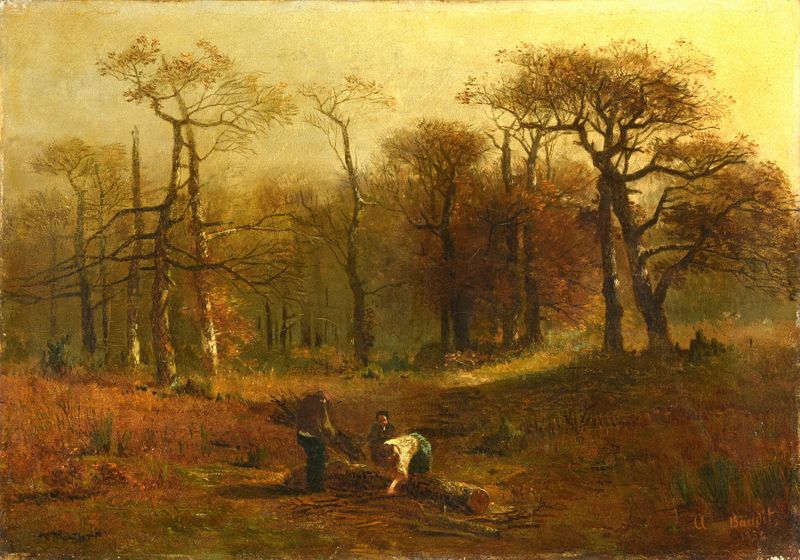
Can beauty exist without sorrow? In the quietude of Au bord de l’étang Lacanau, a delicate tension between longing and tranquility unfolds. This work invites reflection on the bittersweet nature of existence, where moments of serene beauty often coexist with an underlying sense of yearning. Look towards the foreground, where a shimmering pond mirrors the gentle strokes of the sky above. Notice how the painter employs a palette of soft blues and greens, blending seamlessly to evoke a sense of harmony.
The subtle play of light as it dances on the water creates an ethereal glow, drawing your eye to the stillness that envelops the scene. In the distance, wisps of foliage frame the composition, guiding the viewer's gaze into the lush, verdant depths of nature. The emotional landscape of this piece reveals itself through the figures at the water's edge—perhaps lost in thought or a moment of quiet introspection. Their stillness suggests a yearning, a desire for connection with nature and oneself.
Each brushstroke conveys a whisper of melancholy, transforming the idyllic setting into a sanctuary where beauty is inextricably intertwined with the ache of longing. In 1878, when this work was completed, Jean Amédée Baudit was part of a growing movement of artists seeking to capture the essence of nature in its purest form. Living in France during a time of societal change, he was influenced by the Romantic ideals that celebrated emotion as a catalyst for artistic expression. This painting encapsulates that spirit, reflecting both personal and collective resonance with the natural world.