Coupée dans un bois — History & Facts
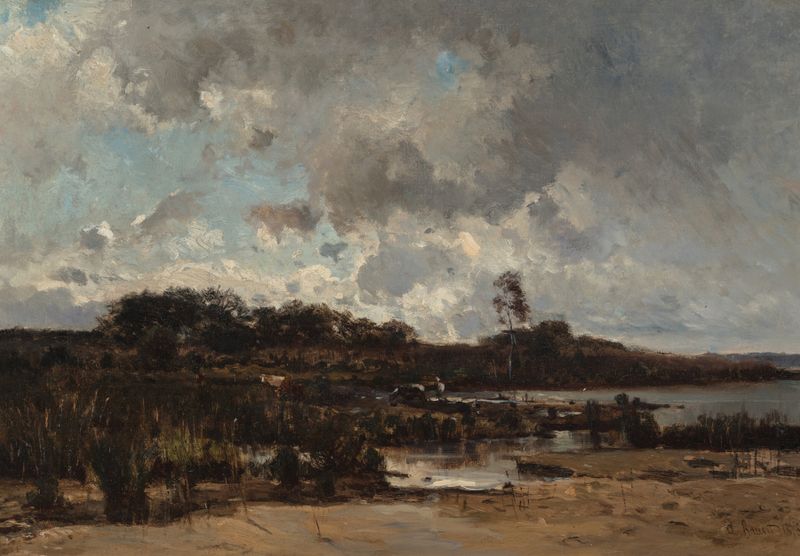
In the delicate interplay of light and shadow, fragility emerges as the essence of existence, whispering tales of vulnerability and transience. Look to the left, where soft greens mingle with gentle browns, drawing the eye into a lush woodland glade. The artist’s technique reveals a masterful blend of chiaroscuro, illuminating the textured bark of a tree while casting the surrounding foliage in serene half-light. The subtle play of color—muted yet deeply resonant—adds to the sense of serenity, inviting the viewer into a world where nature’s stillness reigns. As you absorb the scene, consider the contrasts at play: the solidity of the trees juxtaposed with the ephemeral dance of light filtering through the leaves.
Each contour and shadow speaks to the fleeting moments of life, echoing the fragility that defines our human experience. The quietude of the woods tempts reflection, hinting at deeper emotional currents of solitude, peace, and the existential weight of our temporal existence. Jean Amédée Baudit created Coupée dans un bois between 1854 and 1855 while living in France, a time marked by burgeoning Romanticism in the art world. As artists sought to capture the sublime beauty of nature in contrast to industrialization, Baudit was drawn to intimate depictions of the natural world.
This painting embodies a moment of introspection, reflecting both his personal journey and the broader cultural landscape that reverberated with a yearning for connection and purity amidst change.