Au cap d’Antibes — History & Facts
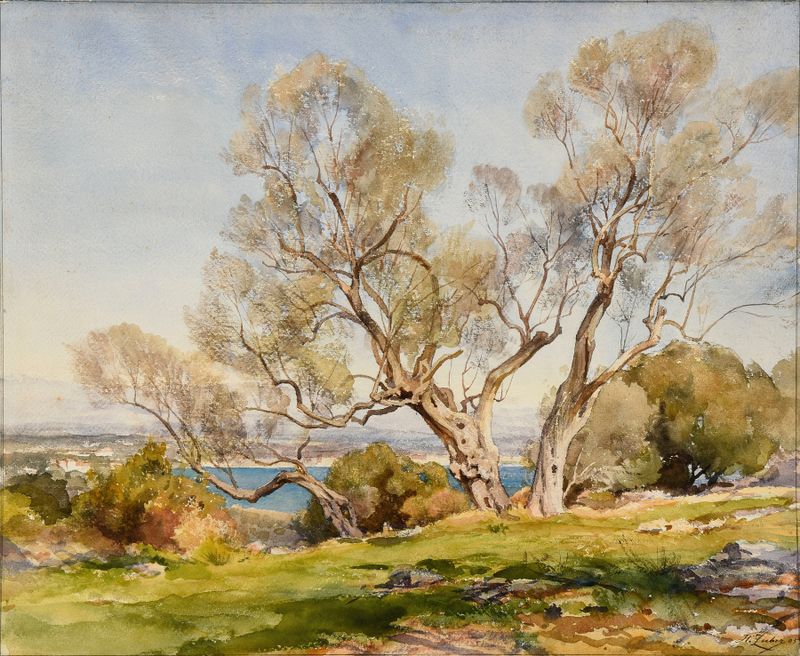
In Au cap d’Antibes, the painter captures a moment where the essence of life is distilled into a single frame, inviting introspection and revelation. Look to the left at the shimmering expanse of the Mediterranean, where the cerulean waves dance beneath the soft embrace of sunlight. Notice how Zuber's brushwork captures the delicate interplay between light and shadow on the water's surface, creating a sense of movement that feels almost palpable. The coastal landscape, with its lush greenery and weathered rocks, draws the eye inward, revealing hidden pockets of stillness and beauty. Beyond the vibrant hues lie deeper emotional currents.
The contrast between the lively, sunlit foreground and the serene, contemplative background evokes a tension between joy and solitude. The figures, seemingly engaged in quiet reflection, stand as a metaphor for the human condition — caught between the allure of the vibrant world and the search for inner peace. Each detail, from the gentle swell of the waves to the distant mountains, speaks of a longing for connection that transcends time. In 1905, Jean-Henri Zuber was deeply immersed in the vibrant art scene of France, a period marked by the influence of Impressionism and the burgeoning of modernist ideas.
He painted Au cap d’Antibes during a time of personal exploration and artistic growth, drawing inspiration from the stunning landscapes of the French Riviera. This work reflects his pursuit of capturing fleeting moments of beauty, resonating with the evolving dialogue about art’s role in society.