
Auf dem Höllentalgletscher (mit Blick auf die Zugspitze) — History & Facts
Who listens when art speaks of silence? In the serene expanse of Auf dem Höllentalgletscher (mit Blick auf die Zugspitze), beauty unfolds in a quiet dialogue between nature and observer. Focus your gaze on the majestic peaks that rise in the distance, their icy summits glinting under a soft blue sky. The foreground, layered with undulating snow, invites you to trace the intricate patterns left by the wind, as subtle greys blend seamlessly into whites, creating a harmonious, almost ethereal palette. Notice how the light plays delicately across the surface, illuminating the contours and casting gentle shadows, inviting a sense of depth and tranquility. Delve deeper, and you may discover the contrast between the serenity of the glacial scene and the tumultuous world beyond its embrace.
Each brushstroke suggests a fleeting moment of stillness, a stark reminder of the transience of beauty. The expanse of the glacier symbolizes both isolation and connection, as if the artist captures not just a view, but a feeling of longing for the sublime. In this way, the painting evokes a contemplative silence, urging the viewer to reflect on their own place within the vastness of nature. Created between 1900 and 1920, this work emerged during a time of profound transformation in Europe, as artists sought to express the raw beauty of their surroundings amidst social change.
Rudolf Reschreiter, influenced by the Romantic tradition, painted this landscape while exploring the Alps, a period in which the natural world was often both a muse and a refuge for many artists confronting the complexities of modern life.
More Artworks by Rudolf Reschreiter
Browse all →
Die Meilerhütte im Wettersteingebirge (von Westen aus gesehen)
Rudolf Reschreiter
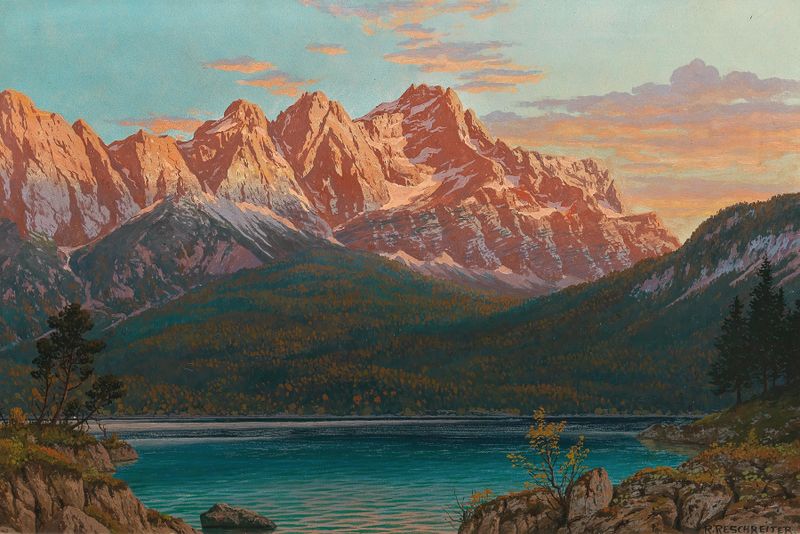
Föhnabend, Eibsee mit Zugspitze
Rudolf Reschreiter
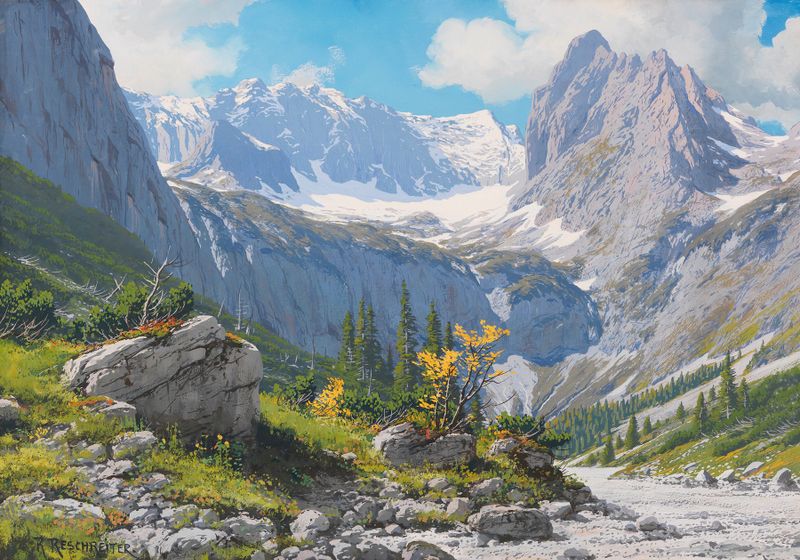
Blick von der Höllentalangerhütte zum Höllentalgletscher und den Riffelwandspitzen
Rudolf Reschreiter
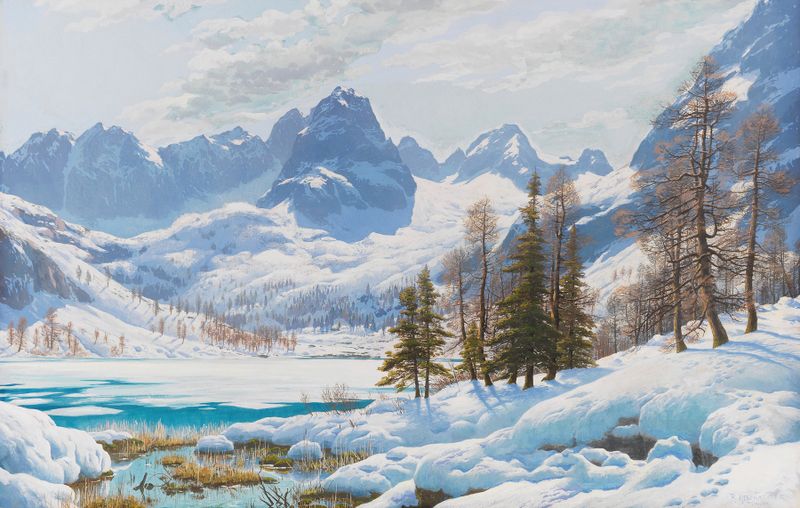
Seebensee bei Ehrwald
Rudolf Reschreiter

Die Meilerhütte im Wettersteingebirge (von Osten aus gesehen)
Rudolf Reschreiter

Der Zugspitzgipfel mit Wetterwarte und Münchner Haus
Rudolf Reschreiter

Blick von der Höllentalangerhütte zum Höllentalgletscher und den Riffelwandspitzen
Rudolf Reschreiter
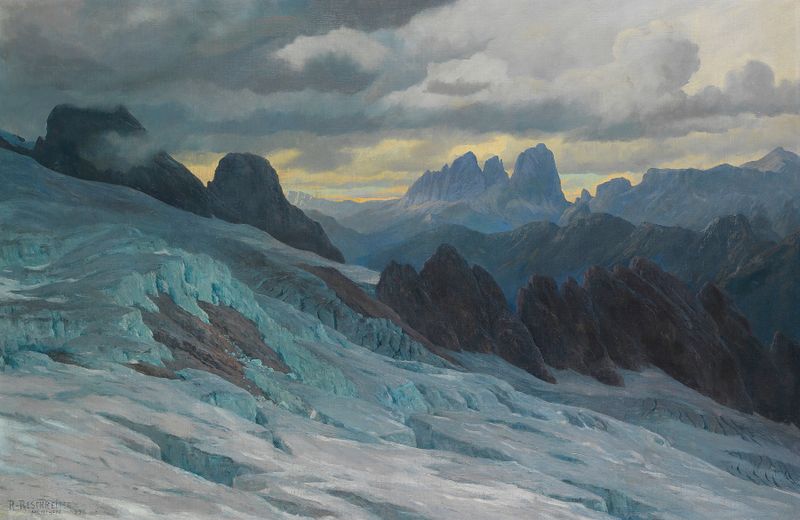
In den Dolomiten
Rudolf Reschreiter

Morgenstimmung am großen Ahornboden (Karwendelgebirge)
Rudolf Reschreiter
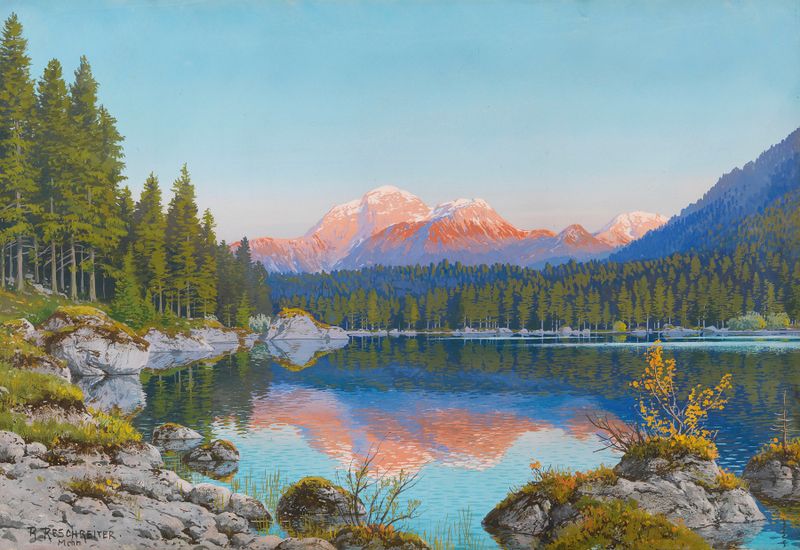
Hintersee und Hoher Göll
Rudolf Reschreiter





