
Die Meilerhütte im Wettersteingebirge (von Westen aus gesehen) — History & Facts
In the heart of desolation, one might find an unexpected solace in emptiness, where the absence of noise allows for introspection. Look to the center of the canvas, where a solitary hut nestles against the rugged backdrop of the Wettersteingebirge. The muted earth tones of the structure contrast with the crisp, jagged peaks that rise sharply towards the sky. Notice how the artist employs soft brushstrokes to evoke a sense of stillness, the light dappling over the landscape, hinting at a moment caught between day and night.
Shadows stretch languidly across the foreground, inviting the viewer to wander through the scene with a quiet curiosity. The interplay of light and shadow unveils deep emotional tensions, suggesting both solitude and refuge. The hut, seemingly uninhabited, symbolizes isolation, yet its sturdy form offers protection against the vastness of the mountains looming overhead. The surrounding landscape, while majestic, conveys a sense of emptiness, reflecting the internal struggles of human existence.
Here, space and form are conversing in a language of their own, inviting contemplation. In 1898, Rudolf Reschreiter crafted this piece during a period marked by a burgeoning interest in realism and naturalism in art. Working in Bavaria, he was influenced by the picturesque yet imposing scenery of the Alps, which was a source of inspiration for many artists of the time. The rise of the Impressionist movement also encouraged a deeper exploration of light and atmosphere, elements that Reschreiter adeptly captured in this evocative landscape.
More Artworks by Rudolf Reschreiter
Browse all →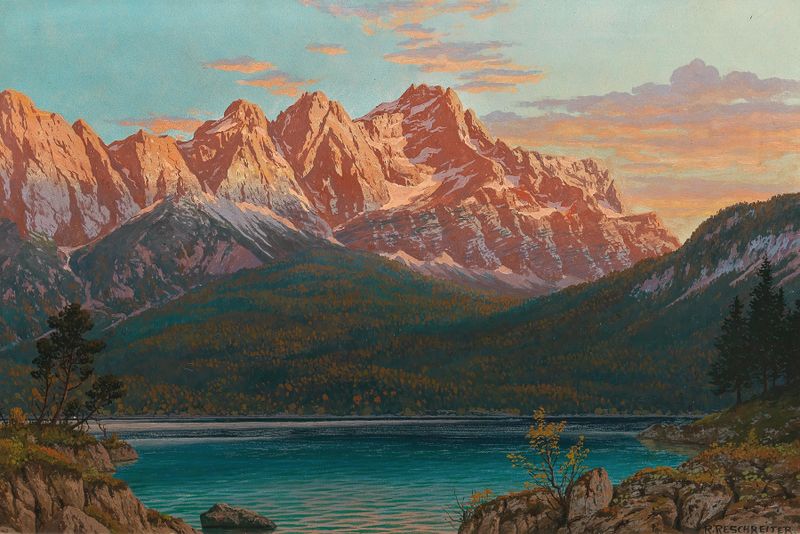
Föhnabend, Eibsee mit Zugspitze
Rudolf Reschreiter
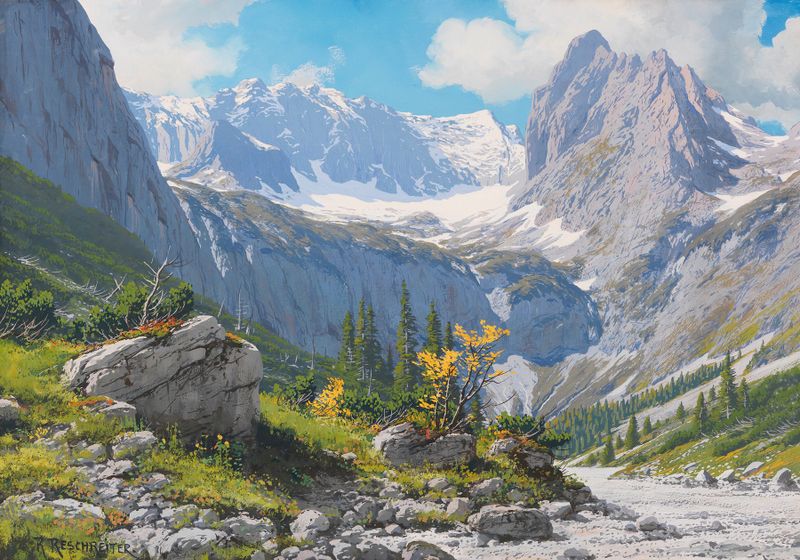
Blick von der Höllentalangerhütte zum Höllentalgletscher und den Riffelwandspitzen
Rudolf Reschreiter
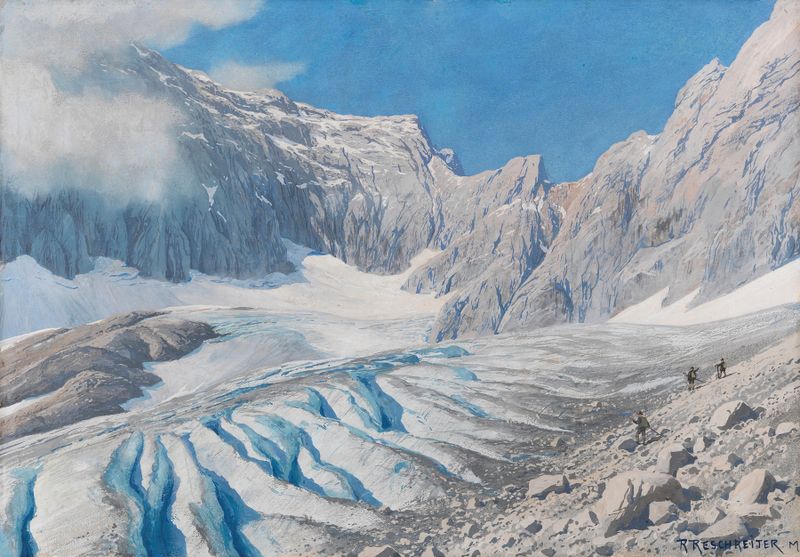
Auf dem Höllentalgletscher (mit Blick auf die Zugspitze)
Rudolf Reschreiter
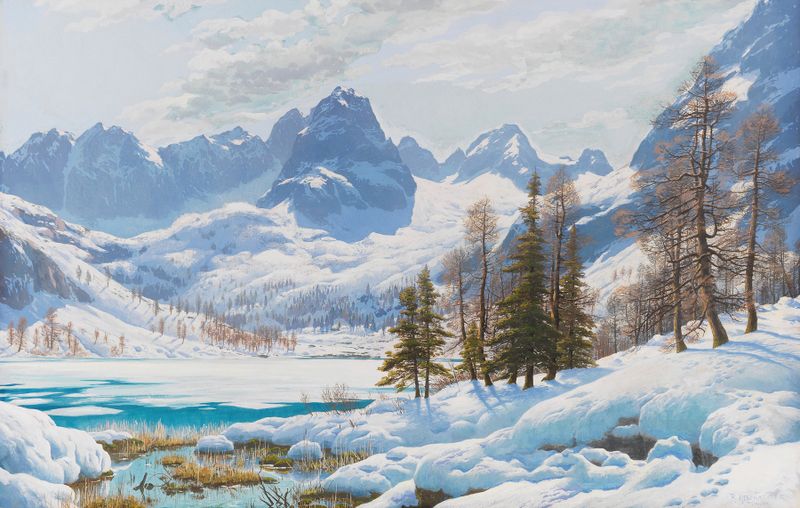
Seebensee bei Ehrwald
Rudolf Reschreiter

Die Meilerhütte im Wettersteingebirge (von Osten aus gesehen)
Rudolf Reschreiter

Der Zugspitzgipfel mit Wetterwarte und Münchner Haus
Rudolf Reschreiter

Blick von der Höllentalangerhütte zum Höllentalgletscher und den Riffelwandspitzen
Rudolf Reschreiter
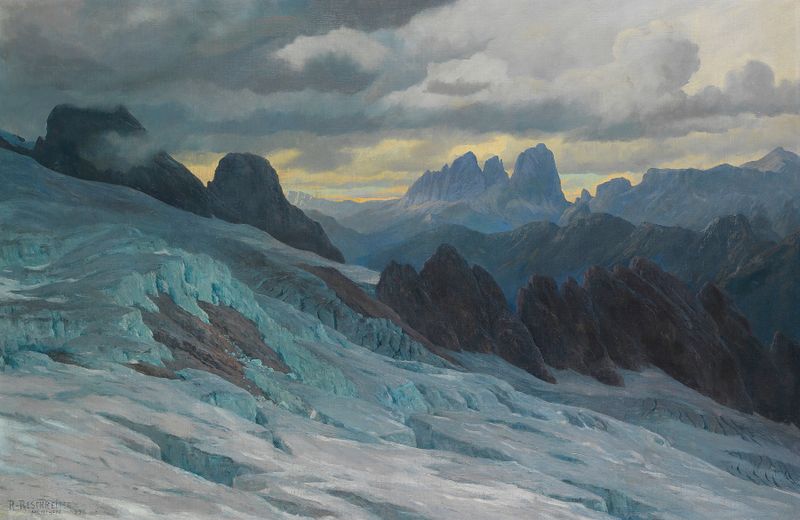
In den Dolomiten
Rudolf Reschreiter

Morgenstimmung am großen Ahornboden (Karwendelgebirge)
Rudolf Reschreiter
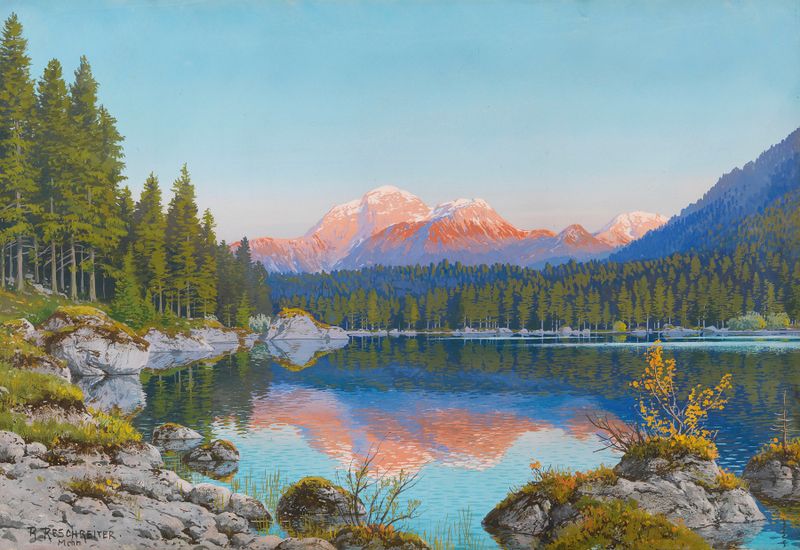
Hintersee und Hoher Göll
Rudolf Reschreiter





