
Auf der Landstraße — History & Facts
What if beauty was never meant to be finished? In Auf der Landstraße, a fleeting moment captures the essence of a quiet journey, where the shadows dance alongside the traveler, forever altering the landscape of perception. Look to the right at the gentle curve of the dirt road, leading the eye into the distance. The soft hues of green grass and earthy browns blend seamlessly, while dappled sunlight filters through the trees, casting intricate patterns on the path below. Notice how the light falls upon the lone figure, draped in a warm, muted palette that harmonizes with their surroundings, emphasizing their solitude amidst nature’s embrace.
The composition invites contemplation, as vibrant brushstrokes breathe life into every detail—the rustling leaves, the distant hill, and the whispers of wind. Yet beneath this serene image lies a tension between solitude and connection. The traveler, although physically present, seems to inhabit a world of introspection, suggesting a search for deeper meaning. The shadows loom larger than life, hinting at the possibilities beyond the visible path, while the trees, stoic and unwavering, serve as guardians of memory and time.
In this juxtaposition, the painting evokes a sense of longing, as if the journey itself may lead to more than a destination. Eugen Jettel painted Auf der Landstraße in 1898 during a period of artistic exploration and transformation in Vienna. With the advent of Impressionism, artists sought to capture the ephemeral qualities of light and atmosphere, breaking away from traditional representation. During this time, Jettel, influenced by the changing landscape of art, embraced this new approach, immersing himself in the beauty of the natural world and its shadows, forever marking a transition in his own artistic journey.
More Artworks by Eugen Jettel
Browse all →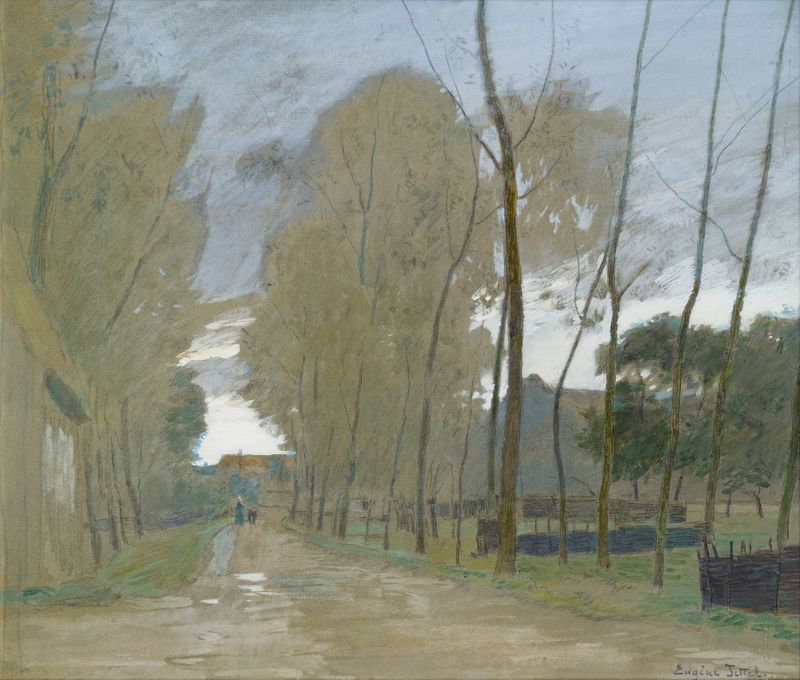
Motiv aus der Bretagne
Eugen Jettel
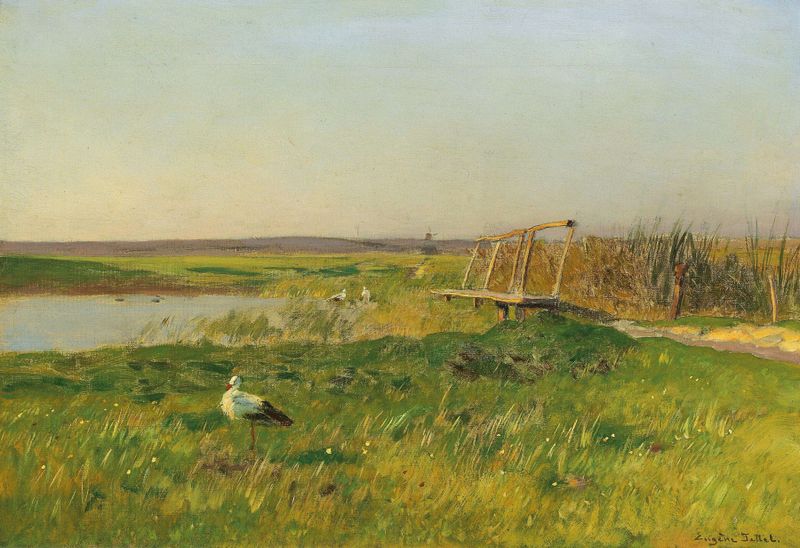
Frühlingslandschaft mit Störchen an einem Weiher
Eugen Jettel

Rinder auf Sommerwiese
Eugen Jettel
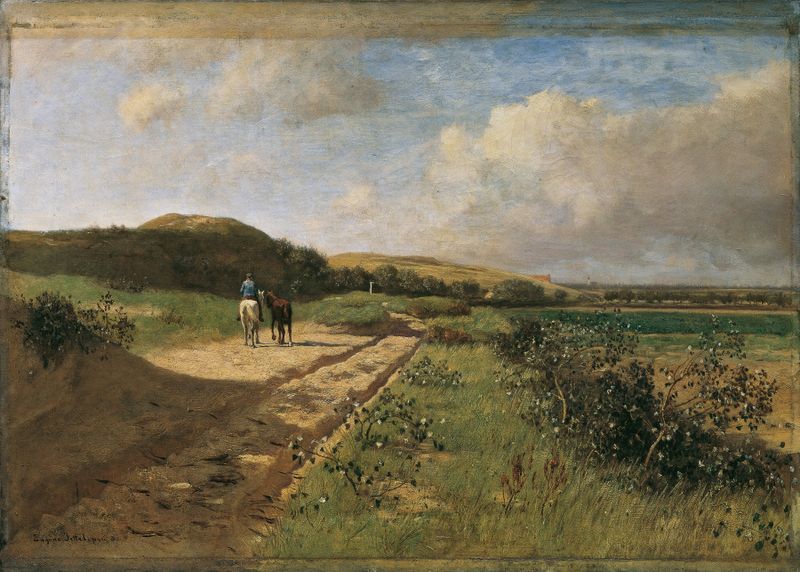
Dünen bei Katwijk
Eugen Jettel
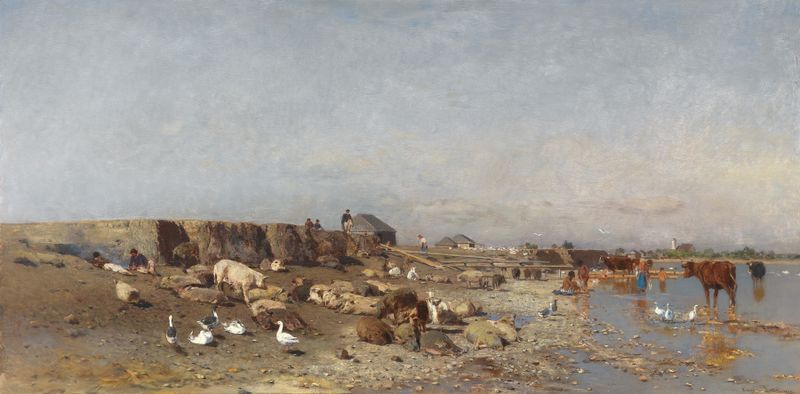
Motiv aus Szered an der Waag
Eugen Jettel
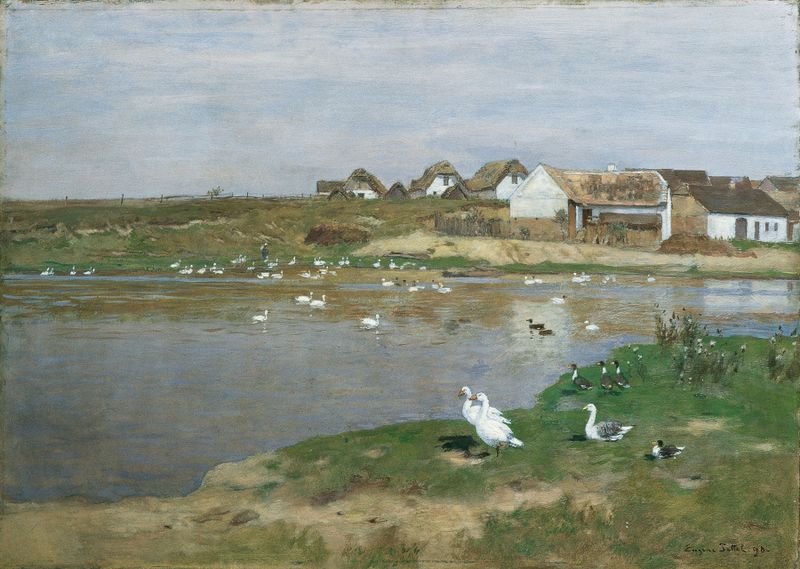
Der Gänseteich in Kotting-Neusiedl
Eugen Jettel

Flusslandschaft Mit Boot
Eugen Jettel

Flusslandschaft mit Kühen
Eugen Jettel

Dorfpartie Strohhütten aus Staatz
Eugen Jettel

Abendlandschaft
Eugen Jettel





