Auf der Landstraße — History & Facts
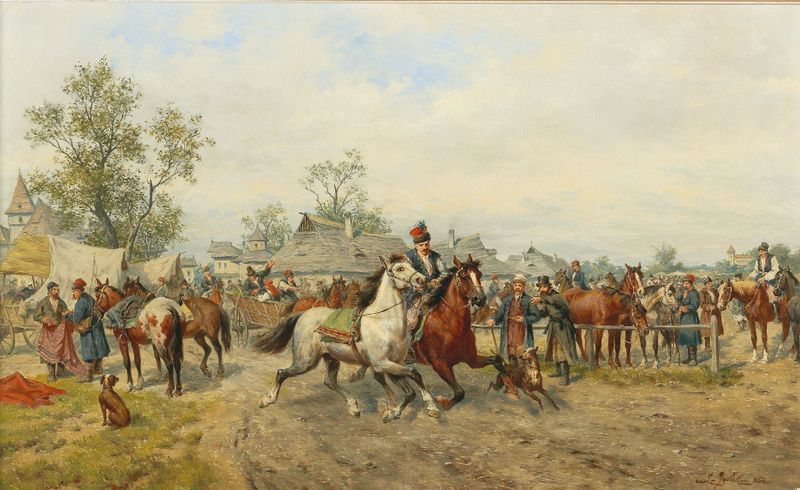
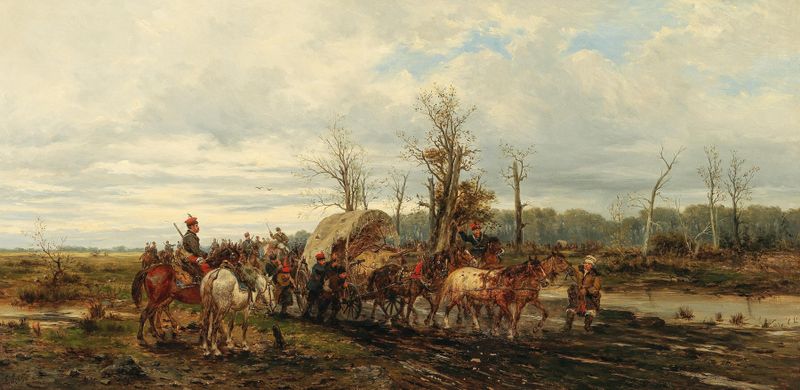
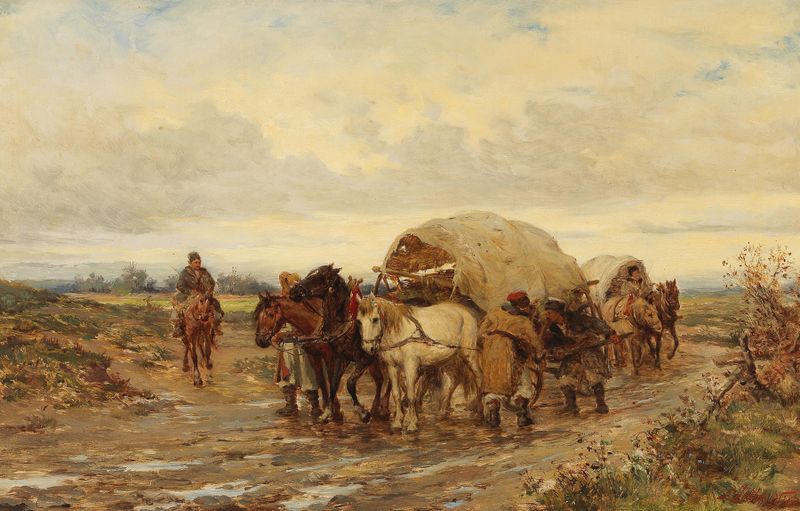
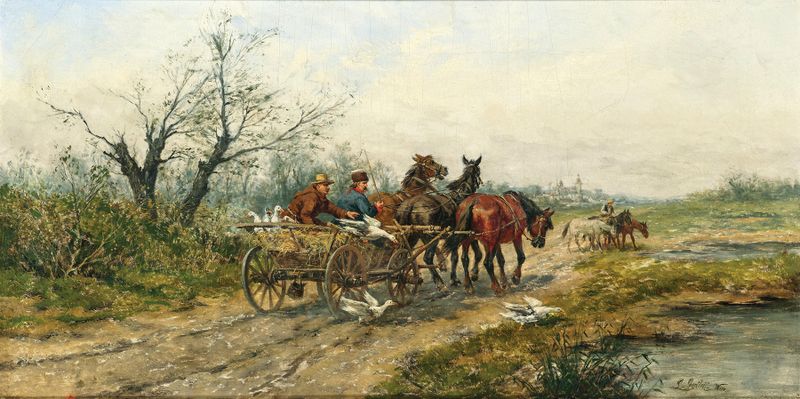
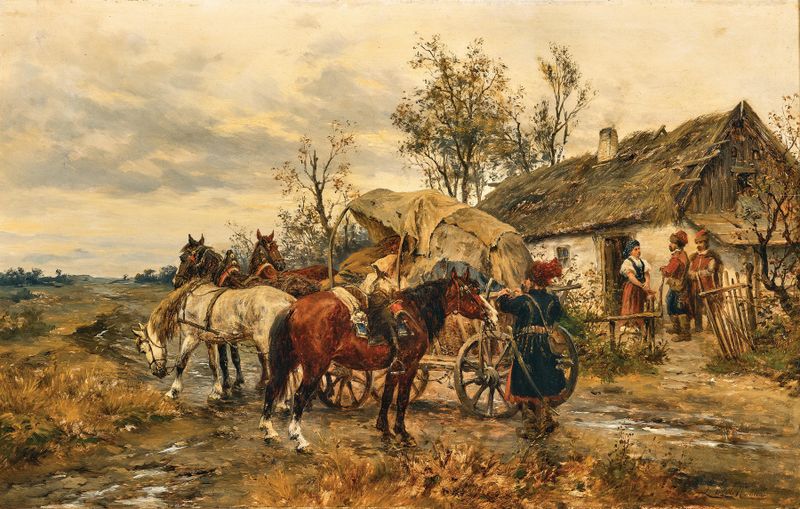
In the stillness of art, layers of truth and legacy unfold, revealing the silent dialogue between the past and present. Every brushstroke invites contemplation, whispering stories of those who came before us while hinting at the emotional weight of what is yet to come. To explore this piece, look closely at the path that winds through the center, leading your gaze toward a distant horizon. Notice how the earthy tones blend harmoniously, a muted palette that evokes both nostalgia and longing.
The artist’s choice of texture allows the landscape to breathe; the strokes suggest life in the trees and grasses, capturing a moment suspended in time. Shadows play delicately across the scene, enhancing the depth, while soft light bathes the ground, inviting the viewer to ponder the journey that lies ahead. Hidden within the seemingly simple composition are profound contrasts. The tension between the well-trodden path and the wildness of nature around it speaks to the balance between civilization and the untamed world.
The intermittent hues of green and brown symbolize the often-overlooked beauty of the everyday, beckoning us to reflect on our own legacies. Each element converges to create a moment that is at once fleeting and eternal, echoing the essence of human existence itself. Ludwig Gedlek painted this evocative work during a time when artistic exploration thrived alongside changing societal values. The piece emerged from his studio in the early 20th century, a period marked by introspection within the art community.
As the world grappled with modernity, Gedlek's artistry quietly captured the essence of place and memory, paving the way for future generations to engage with their own legacies.