Horse Market in Poland — History & Facts
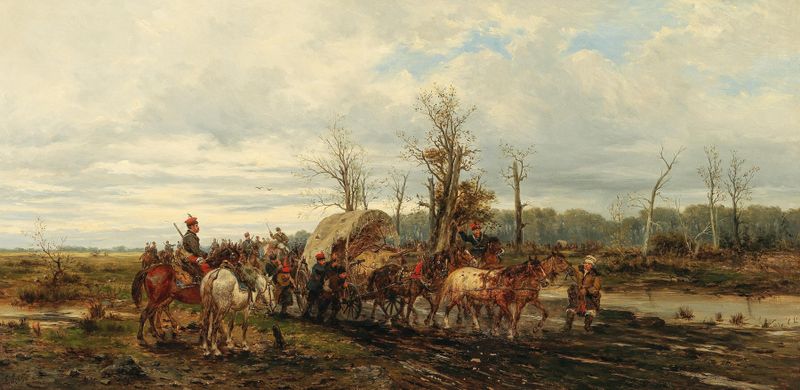
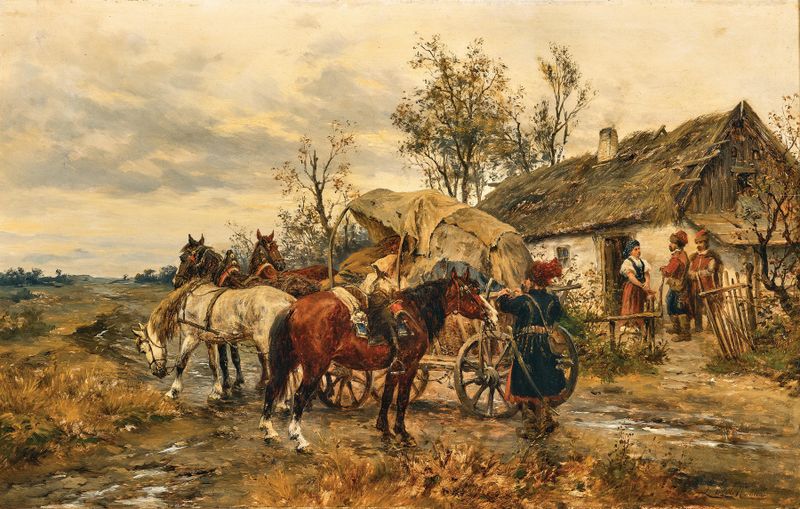
What stories are etched in the fabric of time, waiting to be unveiled through the brushstroke of a master? Look closely at the left side of the canvas where the vibrant colors of the horses burst forth, their powerful forms nearly bursting from the surface. The artist employs a rich palette of earthy browns and deep blues that imbue the scene with vitality, capturing the essence of a bustling market. Notice how the sunlight dances across the horses' coats, creating a shimmering effect that almost suggests movement; it invites you to lean closer and be part of this lively tableau. As you explore further, the juxtaposition of the horses’ energy against the surrounding figures evokes a sense of tension.
The market-goers, clad in traditional garb, appear engulfed in their own world, their expressions ranging from eager to contemplative. This contrast hints at deeper themes of connection and disconnection, urging the viewer to reflect on the passing of time and its impact on human interactions. The seemingly mundane activity of buying and selling horses transforms into a poignant commentary on the fleeting nature of life. Ludwig Gedlek created Horse Market in Poland during a time when Eastern European art was beginning to assert its unique identity amid growing influences from the West.
The exact date is unknown, but it is believed he painted it in the late 19th century, when Poland was navigating her own complex struggles for independence. Gedlek's work reflects not only the cultural richness of his environment but also the greater shifts occurring in the art world, as traditional subjects began to be infused with newfound emotional depth and social commentary.