
Auffliegender Graureiher am Havelufer — History & Facts
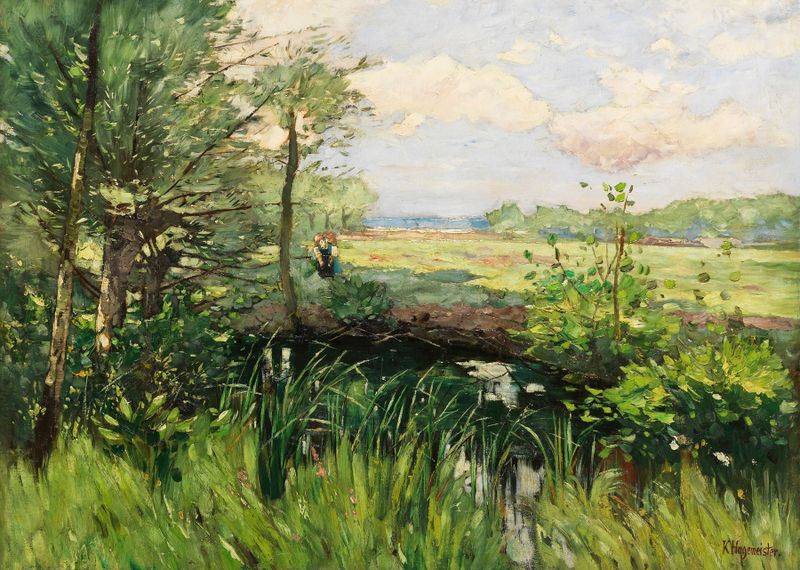
In Auffliegender Graureiher am Havelufer, the artist captures a moment where the delicate balance of nature is underscored by an underlying tension. The image speaks to the fragile beauty of life, intertwined with a distant whisper of violence lurking just beyond the frame. Look to the left where the great heron takes flight, its wings stretched wide in an elegant display of grace. Notice the soft, muted tones of the water reflecting the sky, creating a harmonious backdrop that contrasts sharply with the heron’s striking presence.
The brushwork carries a sense of movement, drawing the eye along the undulating surface of the Havel, while the gentle ripples suggest a disturbance beneath the calm exterior. Yet, beneath the tranquil scene lies a reminder of predation and survival. The heron, both majestic and menacing, embodies the duality of beauty and violence—its ascent is a liberation that also signals its pursuit of sustenance. The surrounding landscape, lush yet shadowed, hints at the untold stories of life and death that play out in the hidden depths of the river, urging the viewer to reflect on the raw reality of existence woven within nature. In 1892, Karl Hagemeister painted this work while residing in Berlin, a time when the art world was embracing Impressionism and exploring the nuances of light and atmosphere.
The rise of modernity and the changing relationship with nature profoundly influenced artists, including Hagemeister, who sought to capture both the sublime beauty and the harsh truths of the natural world, reflecting a time of profound transition in both society and art.
More Artworks by Karl Hagemeister
Browse all →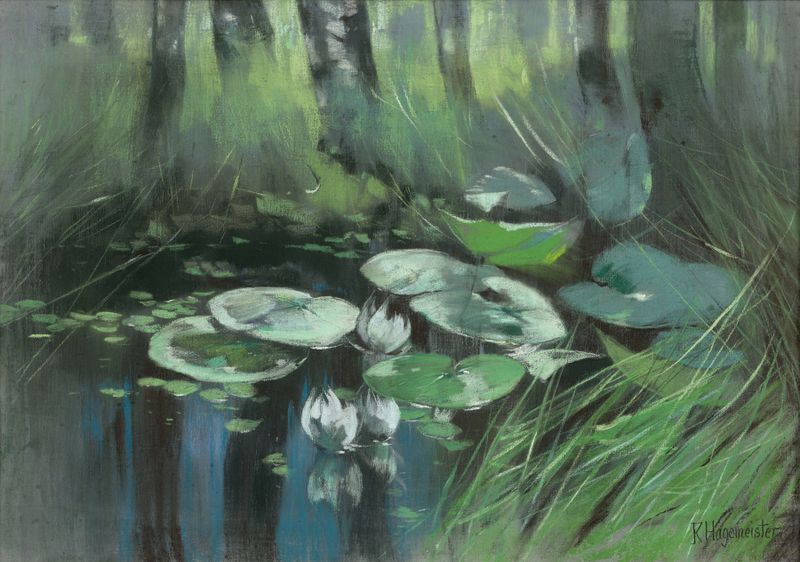
Teich in der Mark mit Seerosen
Karl Hagemeister
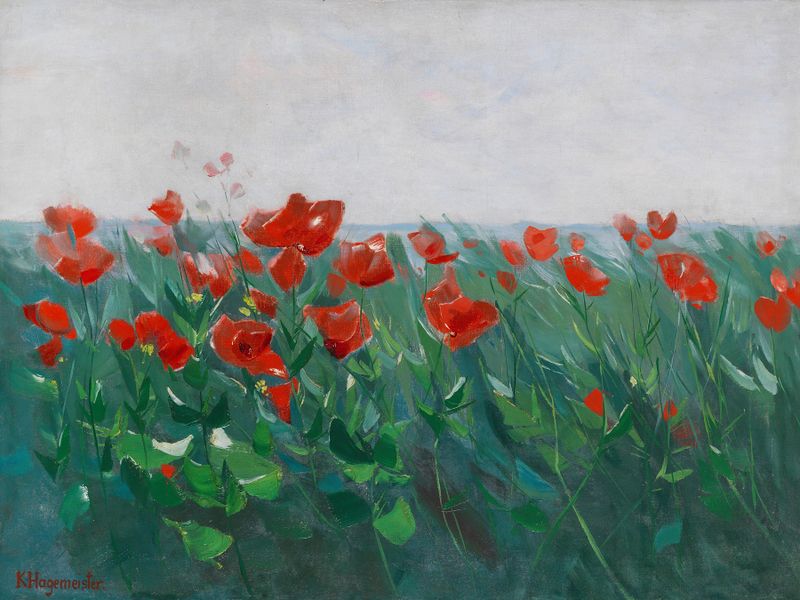
Roter Mohn am Seeufer
Karl Hagemeister

Bauernhaus bei Ferch
Karl Hagemeister
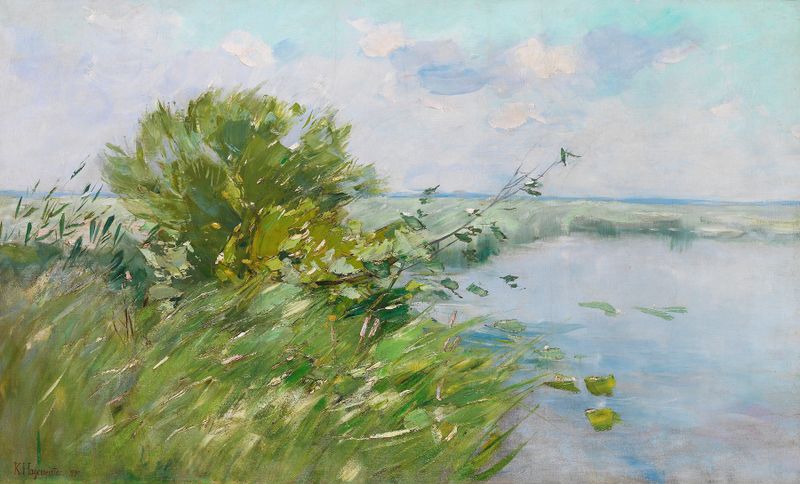
Märkische Seenlandschaft
Karl Hagemeister

Seeufer bei Ferch
Karl Hagemeister
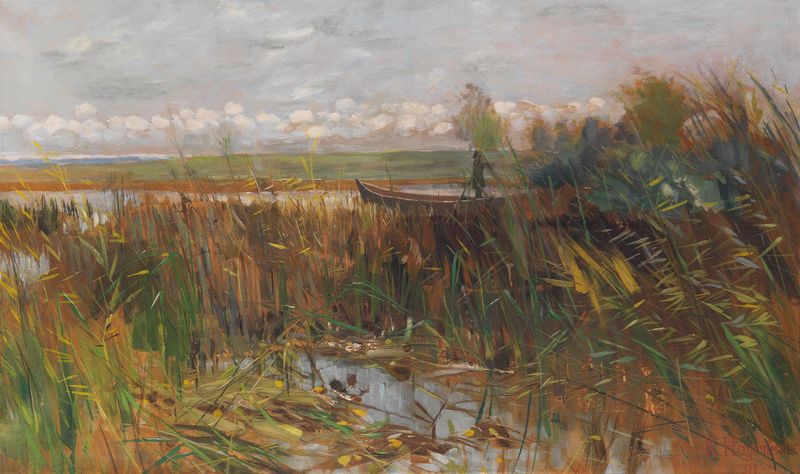
Märkische Seenlandschaft mit Entenjäger im Kahn stehend
Karl Hagemeister
Der Schwielowsee bei Kaputh – Frühling
Karl Hagemeister

Waldweiher
Karl Hagemeister

Waldlandschaft mit Bachlauf (Golmer Luch)
Karl Hagemeister

Sanddornstrauch an der Meeresküste
Karl Hagemeister





