Aulandschaft bei Lundenburg — History & Facts
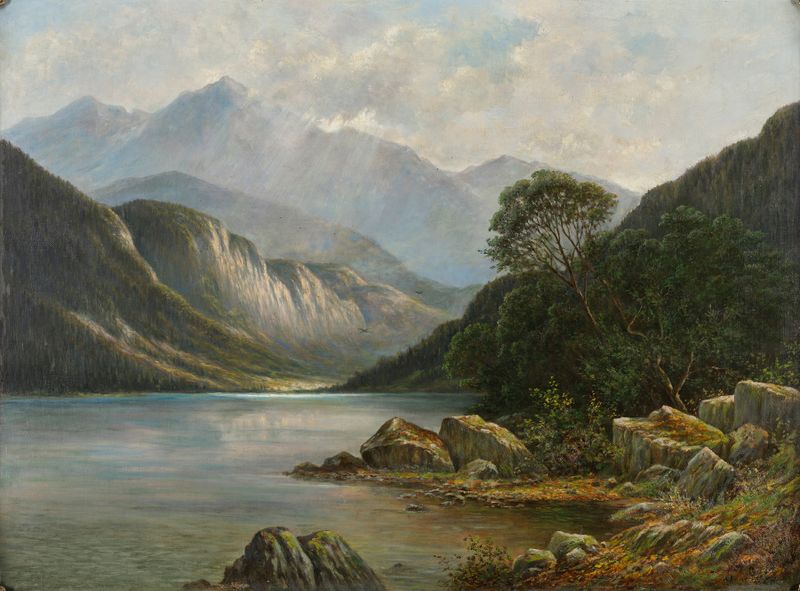
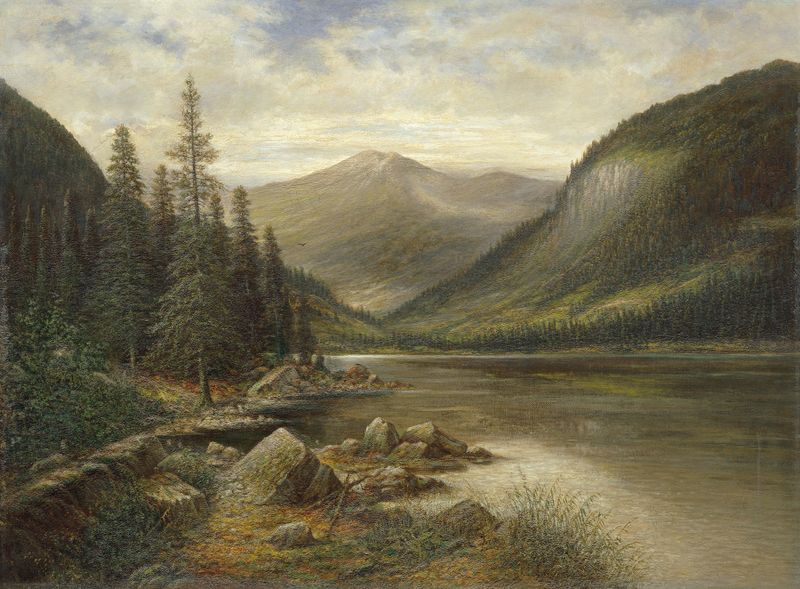
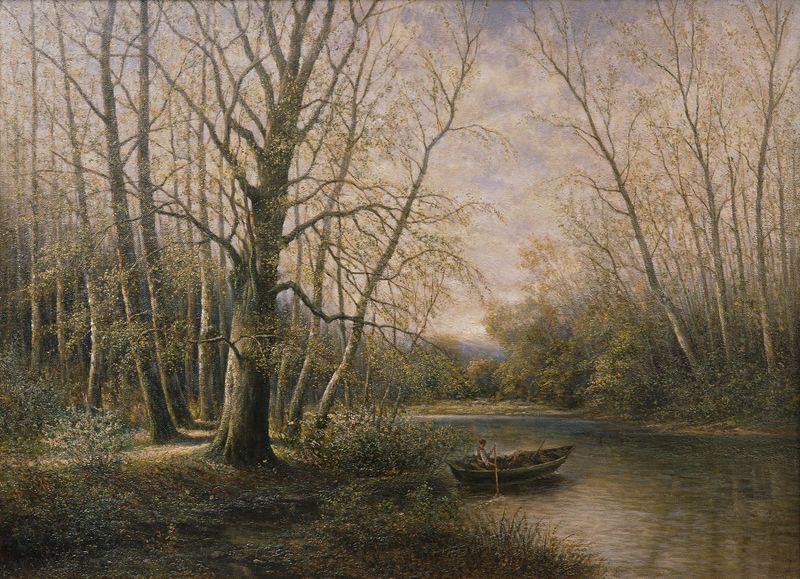
Did the painter know this moment would outlive them? In Aulandschaft bei Lundenburg, we find ourselves in a realm where time stands still, captured under a sky that stretches boldly above a tranquil landscape. Look to the foreground, where soft, rolling hills invite your gaze, their lush greenery punctuated by warm earth tones. Notice how skillfully the brushwork conveys texture in the blades of grass, and how the low sun casts gentle shadows that weave across the land. The interplay of light and shade creates a peaceful rhythm, emphasizing the harmony of nature as it unfolds before us, while the horizon beckons with its distant silhouettes. As you explore further, subtle contrasts emerge—the serenity of the countryside juxtaposed with the looming weight of the clouds overhead.
This lingering tension hints at the fleeting nature of beauty, a reminder that these idyllic moments are both timeless and ephemeral. Each stroke of color reflects a deep reverence for the landscape, evoking a sense of awe that resonates from the canvas. Franz Stephan Paschinger created this work during a period marked by a growing appreciation for the natural world, though the exact date remains elusive. Active in the 18th century, he was part of a broader movement that sought to elevate landscape painting, capturing the essence of the environment in a way that spoke to both personal and collective experience.
The world was evolving, and so was the artist's vision, forever preserving a moment that continued to inspire generations.