Aus Sievering — History & Facts
This thought lingers as one stands before a canvas that reveals the weight of absence more than presence. The allure of emptiness beckons, inviting a deeper contemplation of what lies beneath the surface. Look closely at the center of the piece, where soft, muted golds and browns swirl together, creating a sense of depth. Notice how the painter uses texture to evoke a tactile quality, almost inviting you to reach out and touch the surface.
The layering of hues contrasts starkly with the surrounding void, emphasizing the isolation that permeates the composition. Each brushstroke—delicate yet deliberate—whispers the narrative of a forgotten space, evoking a haunting beauty that resonates with a quiet melancholy. As you absorb the artwork, consider the emotional tension between the lavish golden tones and the stark emptiness that surrounds them. This dichotomy suggests that beauty often masks sorrow; the richness of color juxtaposed with the void hints at the complexity of human experience.
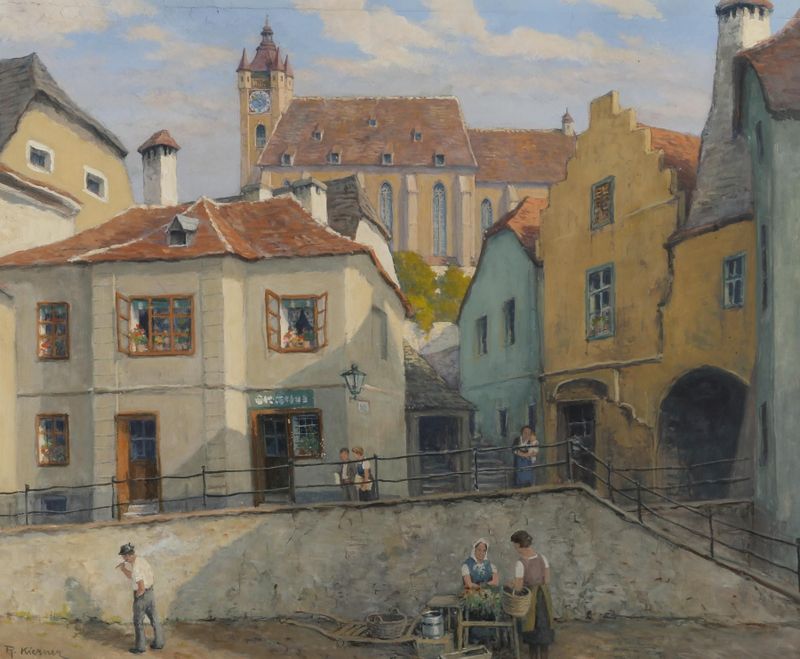
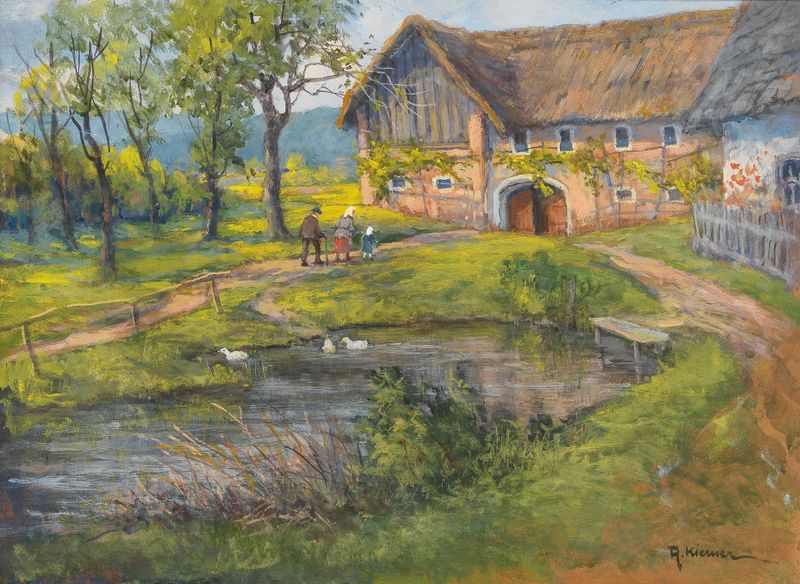
The empty spaces might represent lost moments or unfulfilled desires, inviting viewers to reflect on their own lives and the beauty found in fragility. This piece emerged during a period of personal exploration for the artist, likely created in the early 20th century in Vienna. Kierner was navigating the evolving art movements of his time, responding to the shifts toward expressionism and abstraction. In a world that was rapidly changing, his work reflects a quest for meaning amid chaos, encapsulating the essence of emptiness as both a personal and universal experience.