Autumn landscape — History & Facts
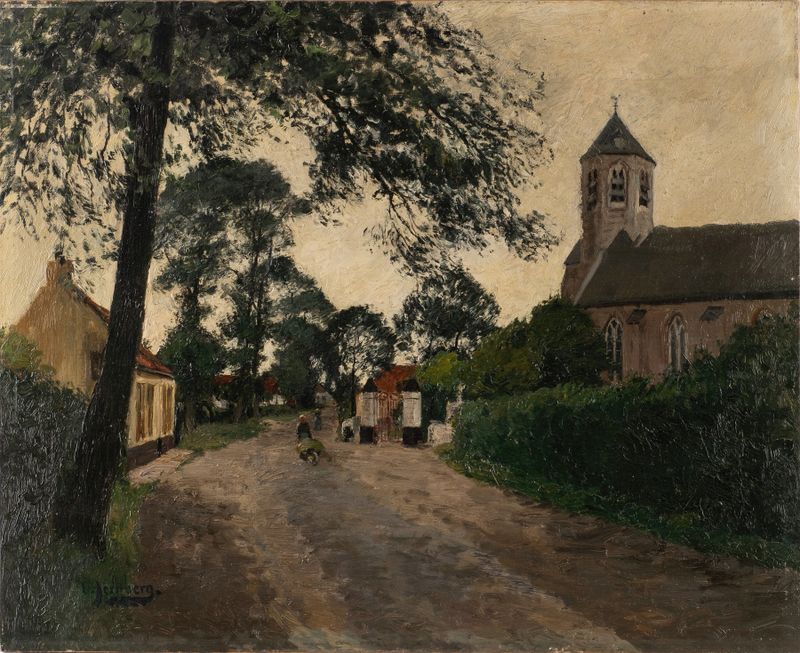
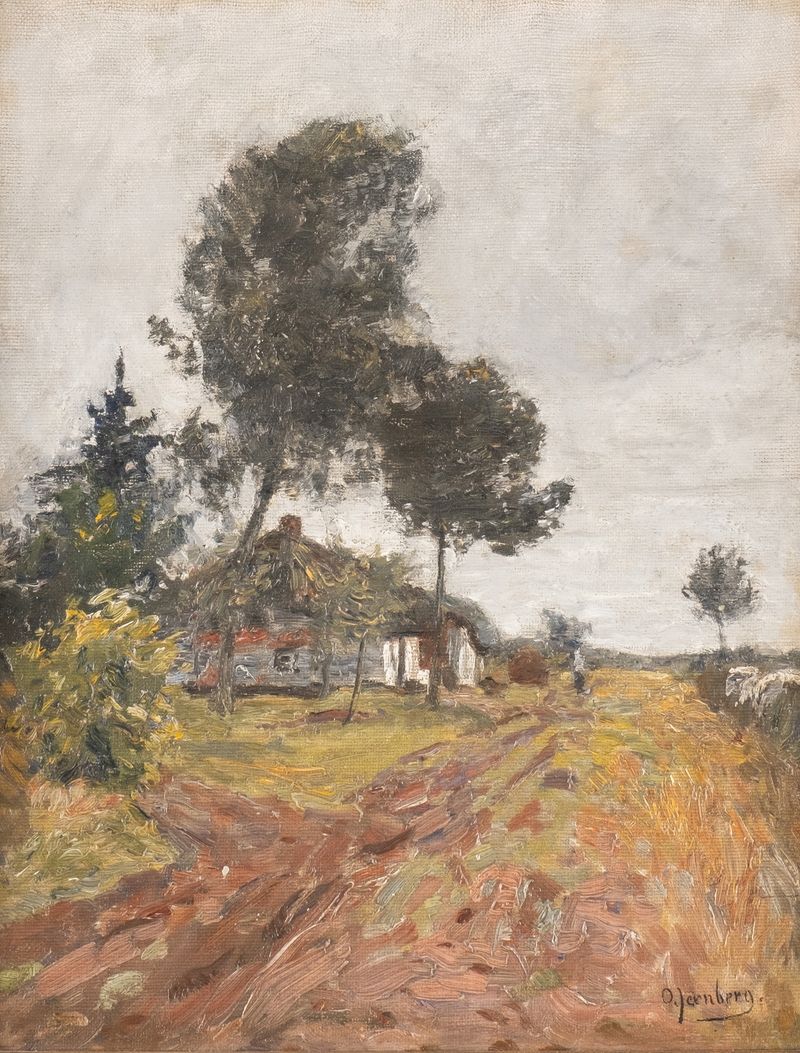
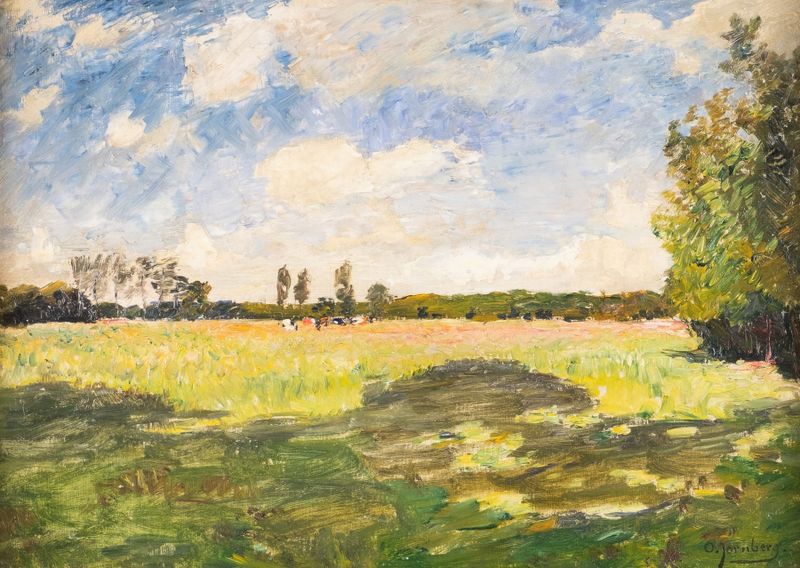
In the quietude of autumn, nostalgia weaves itself through the landscape, inviting a contemplative gaze upon nature's serene transformation. Look to the center of the canvas, where hues of burnt orange and soft ochre mingle, mimicking the leaves falling gently to the ground. Notice how the light dances across the textured surfaces, creating an interplay of shadow and brilliance that evokes the fleeting warmth of the season. The artist employs a gentle palette, harmonizing the browns and golds, which beckons the viewer into a world that feels both familiar and achingly distant. As your eyes wander, subtle details emerge: the solitary tree reaching toward the sky, a symbol of resilience amidst the inevitable cycle of decay, and the distant hills that cradle a sense of quiet longing.
The soft strokes suggest movement, perhaps the whispered conversations of the wind through the branches, infusing the work with a profound sense of reflection. It captures the melancholy beauty of change, reminding us of the transient nature of time and memory. Created during a period of introspection, Jernberg painted this work in the late 19th century, when the arts were evolving, and the Impressionist movement was gaining momentum. His own life was marked by a search for authenticity in expression, influenced by the natural world around him in Sweden.
This artwork stands as a testament to that exploration, a serene moment frozen in time, imbued with the emotional weight of remembrance.