Cottage by the wayside — History & Facts
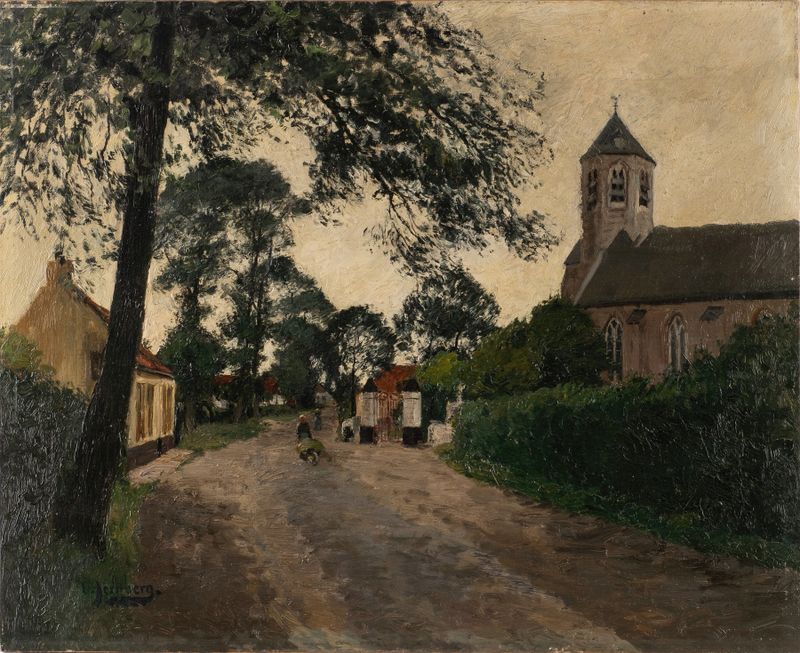
Can beauty exist without sorrow? In Cottage by the Wayside, the dichotomy of peace and chaos unfolds, inviting contemplation of life’s fragile balance. The artwork beckons viewers to explore the serenity of a quaint cottage enveloped in nature, yet hints at the tumultuous emotions that reside just beneath the surface. Look to the left at the cottage, its structure exuding warmth with soft, earthy tones that merge effortlessly with the surrounding foliage. Notice how the light dances upon the thatched roof, creating a gentle contrast against the deep greens and vibrant hues of wildflowers.
The brushstrokes convey a sense of spontaneity, weaving chaos subtly into the composition as if the very act of painting itself is a dialogue between order and disorder. The juxtaposition of the idyllic cottage and the wild, untamed nature surrounding it speaks to the underlying tensions in human existence. Each flower, while beautiful, suggests a struggle for survival, fighting against the encroaching chaos of the natural world. The viewer may sense a pulse of life emanating from the scene, where tranquility and turmoil coexist, prompting reflection on the complexities of beauty and the inevitability of change. August Jernberg painted this piece during a time of artistic exploration in the late 19th century, a period characterized by the rise of naturalism and an appreciation for rural landscapes.
Working in his native Sweden, he sought to capture the harmony of nature, intertwining it with the human experience. At this juncture, the art world was shifting, and artists began to embrace the emotional resonance found in everyday scenes, setting the stage for the deeper inquiries that would follow.