Autumn landscape — History & Facts
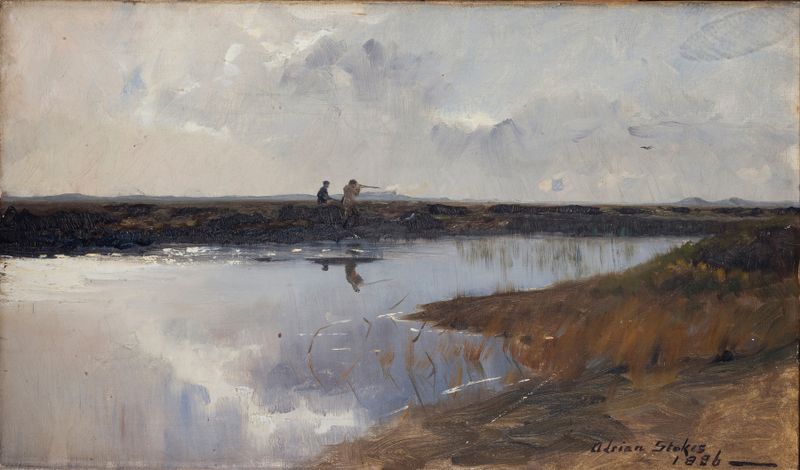
When did color learn to lie? In the quiet embrace of nature, hues seem to dance between reality and illusion, whispering promises of destiny. Look to the left at the rich, warm tones of ochre and sienna that blanket the hills, creating a tapestry of autumn's farewell. Notice how the light filters through the branches, casting delicate shadows and illuminating the leaves with an almost ethereal glow. The composition invites the eye to wander down the meandering path, hinting at journeys untaken, leading into the embrace of the distant horizon.
Stokes' deft brushwork captures not just the landscape, but an alluring atmosphere of change, where every stroke pulses with the heartbeat of the season. Yet, amid this tranquil beauty lies a poignant tension. The vibrant colors may evoke warmth and nostalgia, but they also signal a transition, a reminder of the fleeting nature of time. The sparse, gnarled trees stand as silent witnesses to the inevitability of decay, their elongated shadows reaching out like hands grasping at memories.
This interplay between vibrancy and desolation encapsulates the duality of existence — a celebration of life interwoven with the shadows of what must come to pass. In the late 19th century, the artist discovered his passion for capturing the essence of the English landscape, particularly during the transformative seasons. Painting this piece during an era marked by the burgeoning Impressionist movement, he sought to translate the emotional depth of nature into color and form. The world around him was evolving, mirroring the sentiments of loss and renewal that resonate throughout his work, all while solidifying his place in the art world of that time.