
Autumn Landscape — History & Facts
In the heart of Autumn Landscape, innocence flourishes amidst the vibrant chaos of nature's change. The painting invites us to wander through a world where color transforms the mundane into the extraordinary. Look to the left at the swirling hues of burnt orange and golden yellow, where trees sway gently in the autumn breeze. Notice how the artist skillfully blends these colors to evoke a soft light that bathes the entire scene, creating an ethereal atmosphere.
The brushstrokes, both delicate and bold, guide your eyes across the canvas, inviting you to explore every corner teeming with life and movement. The horizon, painted in muted greens and blues, draws you deeper into this tranquil yet dynamic space. Beneath the surface, layers of meaning intertwine within this landscape. The juxtaposition of warm and cool tones reflects the tension between transition and permanence, the inevitability of change in nature.
This contrast echoes the innocence of childhood, suggesting a fleeting moment of beauty and the bittersweet acceptance of life's cycles. Each brushstroke serves as a reminder that, even in chaos, there is serenity to be found, a glimpse of purity amidst the storm. Created between 1886 and 1887, the artist painted this work during a time when American art was transitioning towards modernism. Living in New Jersey and influenced by European styles, he sought to capture the essence of the American landscape, infusing it with a sense of personal vision and introspection.
Amidst a burgeoning art scene, this piece reflects both a personal journey and the broader evolution of artistic expression.
More Artworks by Louis Michel Eilshemius
Browse all →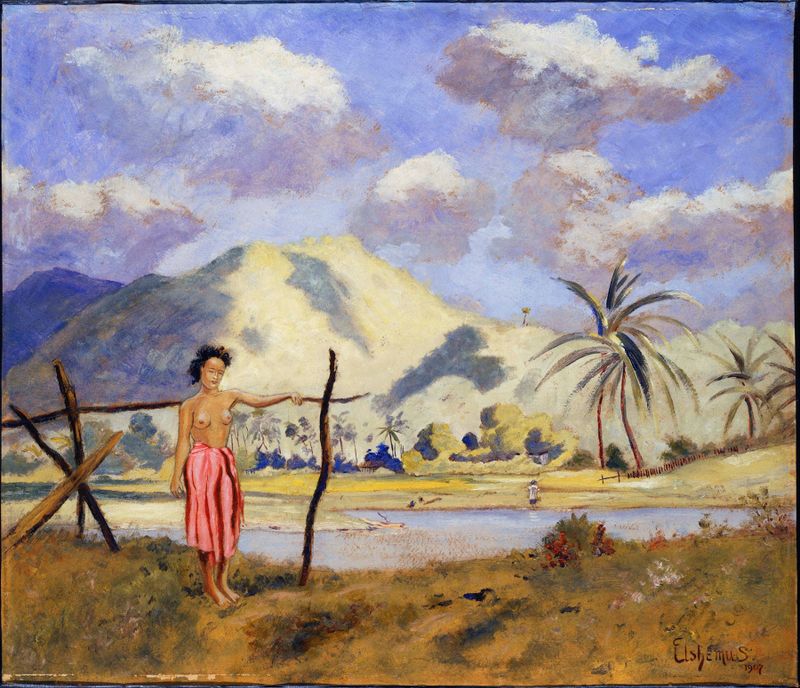
Samoa
Louis Michel Eilshemius
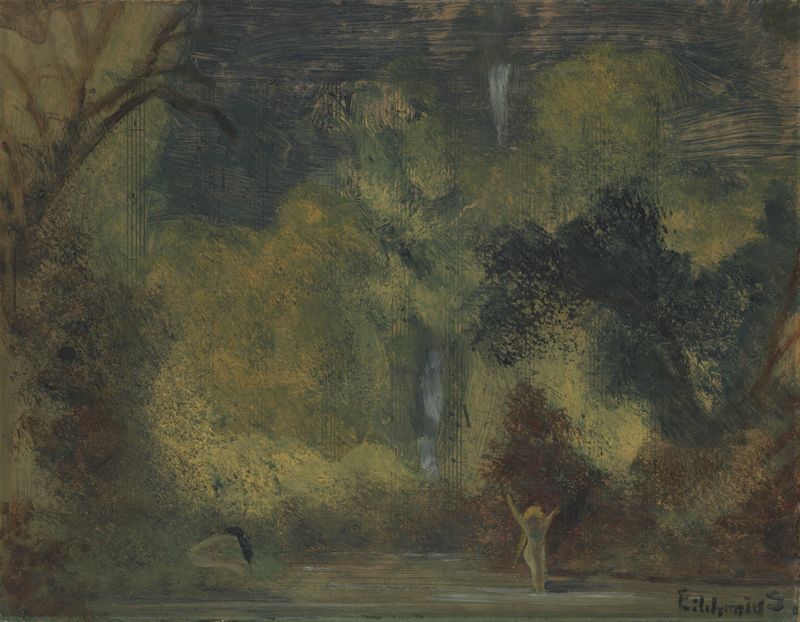
The Pool
Louis Michel Eilshemius

Overhanging Branches
Louis Michel Eilshemius

Fifty-Seventh Street
Louis Michel Eilshemius

Approaching Storm
Louis Michel Eilshemius
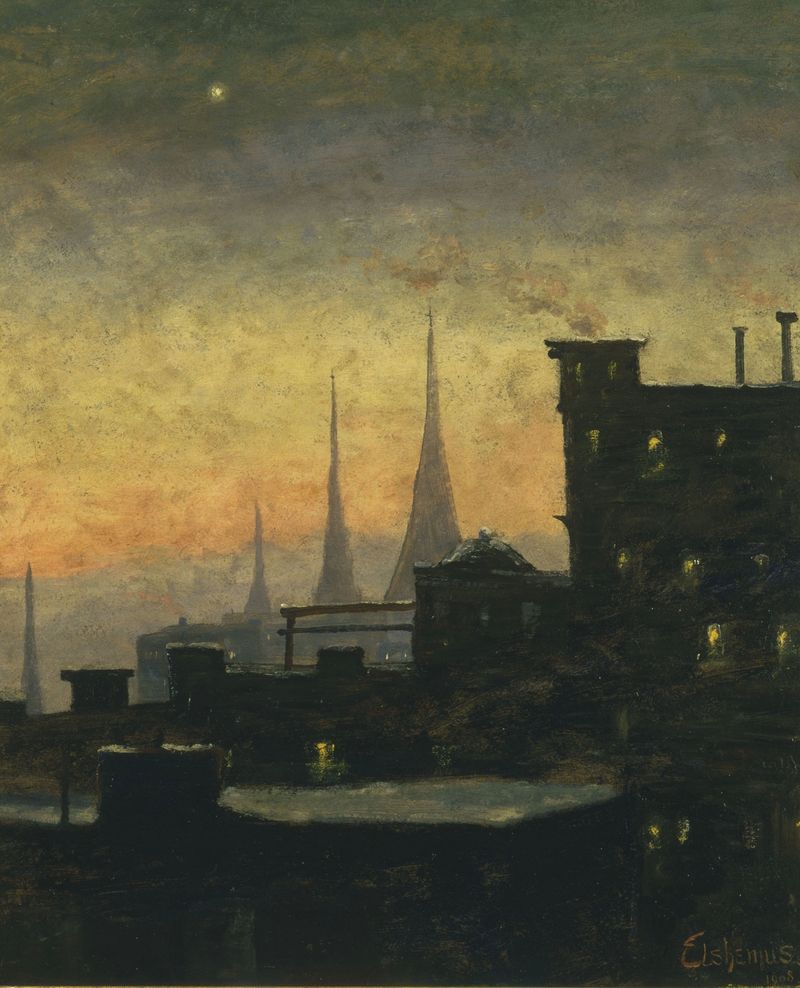
New York Roof Tops
Louis Michel Eilshemius
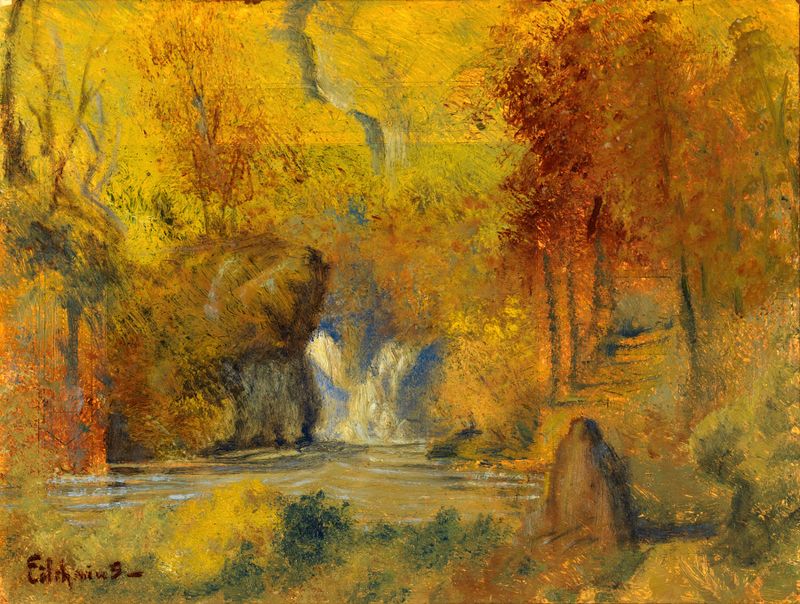
Autumn Landscape
Louis Michel Eilshemius

Sunset with Man Standing on Shore
Louis Michel Eilshemius

New York at Night
Louis Michel Eilshemius

Delaware Water Gap Village
Louis Michel Eilshemius





