Autumn on the river — History & Facts
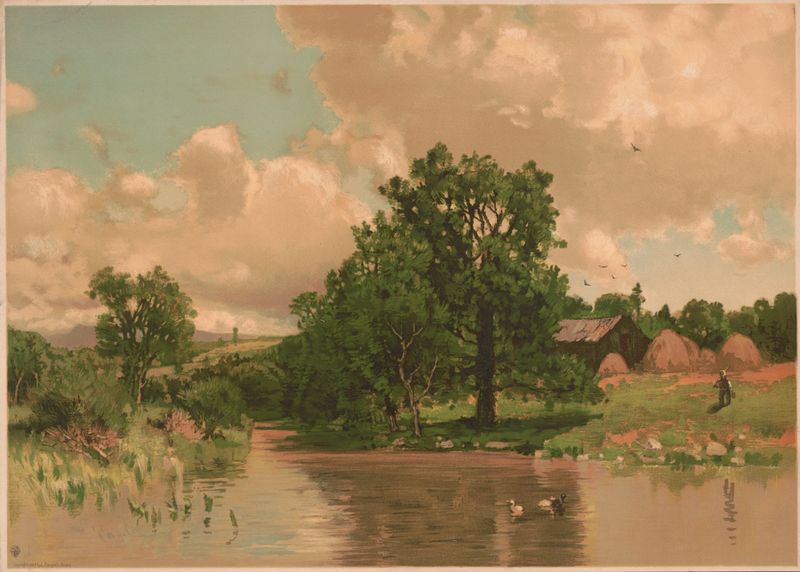
Time flows like the river in this serene landscape, whispering secrets of seasons past and present. Look to the center of the canvas at the gentle curve of the river, reflecting a delicate palette of amber and gold. Notice how the artist employs a soft brushstroke to give life to the rippling water, while the trees, clad in autumnal splendor, stand like sentinels along the bank, their leaves captured mid-fall. The light spills across the scene, creating a warm glow that suffuses the entire composition with a nostalgic air, inviting contemplation. Upon closer inspection, subtle contrasts emerge; the stillness of the water juxtaposed with the vibrant movement of falling leaves evokes a sense of transience, a reminder of moments slipping away.
The soft clouds hint at the fleeting nature of time, while the distant hills, cloaked in hazy blues, ground the scene in a reality that feels both close and infinitely far away. Each element resonates with the idea of change, evoking reflections on the passage of time and the cycles of nature. George Herbert McCord created this work in 1887, during a period when the Hudson River School was at its peak, celebrating the American landscape with an emphasis on realism and atmospheric effects. Living in New York, he was influenced by the growing appreciation for nature and the serene beauty of his surroundings.
As the world around him began to industrialize, his paintings became a profound testament to the enduring power of the natural landscape.