Autumn Ploughing in the Marshland — History & Facts
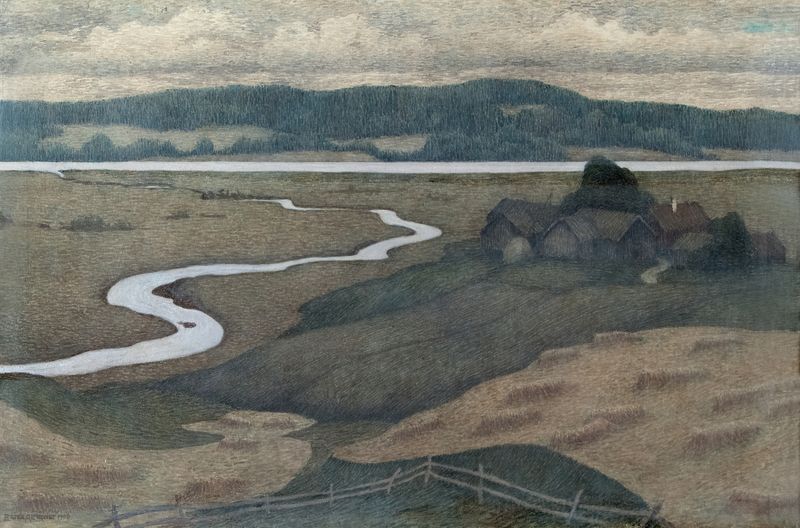
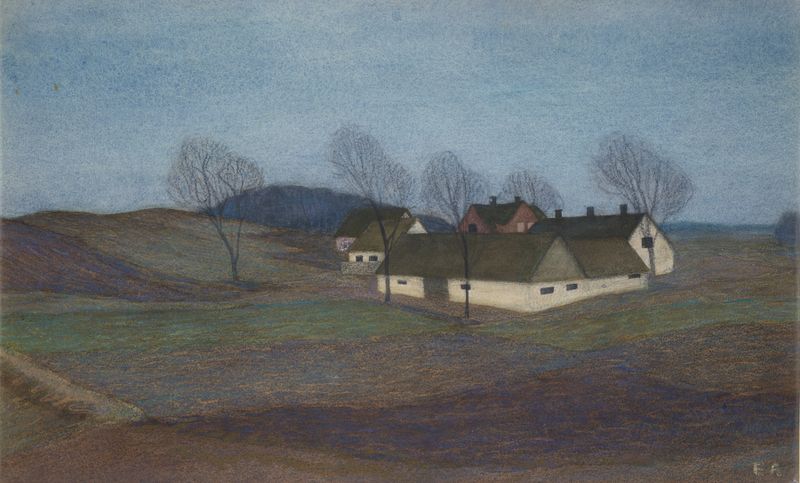
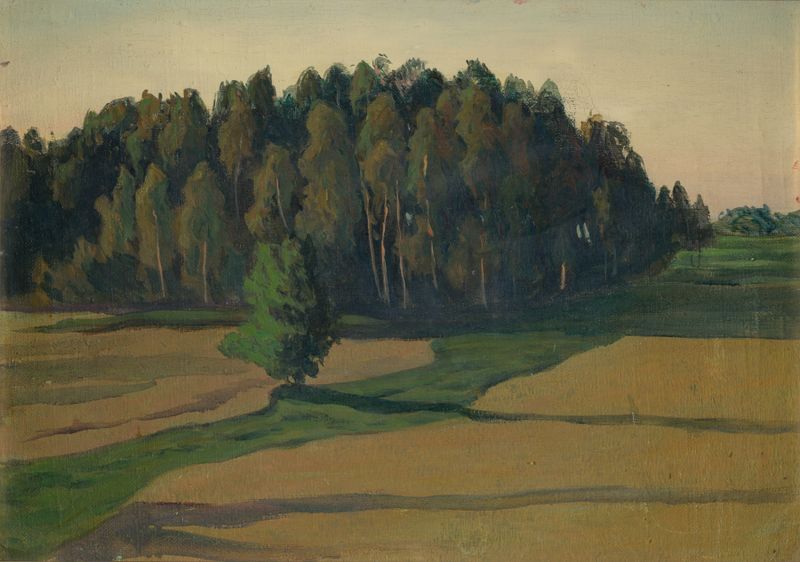
This thought lingers as you gaze upon the landscape, where the earth is both a canvas and a battleground for desire. The air hums with an unspoken yearning, a visceral connection between labor and nature, echoing the tensions of human ambition. Look to the center of the painting, where the ploughman guides his team of horses through the rich, dark soil, their powerful forms a stark contrast against the muted tones of the marshland. Notice how the ochre and deep green hues interweave, capturing the essence of autumn's decay while hinting at the vitality of life beneath.
The brushwork is both textured and fluid, evoking the rhythm of toil, as if you can feel the resonance of the plough cutting through the earth, inviting you deeper into the scene. In the background, the distant trees stand as a somber witness to the labor. Their silhouettes suggest a barrier between the natural world and human endeavor. The tension between the energetic foreground and the stillness behind hints at the bittersweet nature of progress, the desire for cultivation shadowed by the weight of exhaustion and uncertainty.
This duality reflects not only the struggle of the farmer but also the universal quest for purpose and fulfillment amid the cycle of growth and decay. In 1911, Autumn Ploughing in the Marshland emerged from Ester Almqvist’s studio in Sweden, a period marked by her exploration of rural themes alongside the burgeoning modernist movement. As she depicted landscapes infused with personal connection and poignant labor, Almqvist was navigating her own artistic identity, seeking to blend traditional techniques with evolving perspectives on nature and humanity’s place within it.