
Autumn River Scene, The Brook — History & Facts
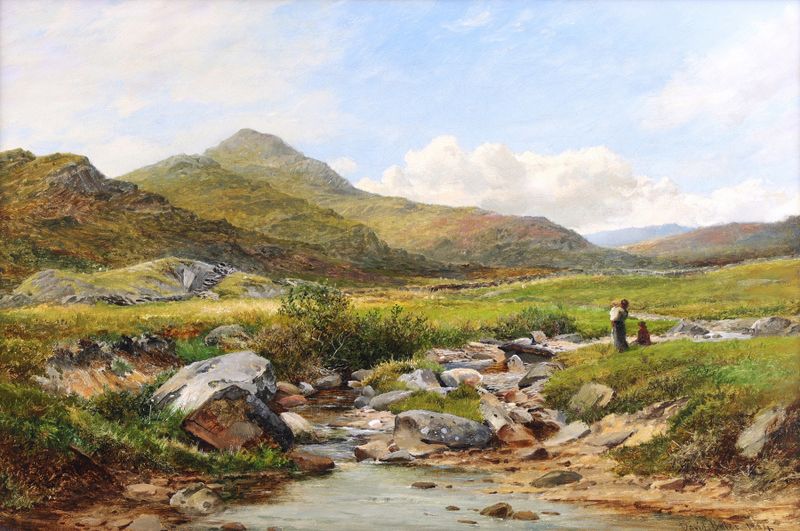
What if beauty was never meant to be finished? In Autumn River Scene by David Bates, the transient moment of nature unfolds into a realm of fear and fragility, leaving the viewer in quiet contemplation. Focus on the central flowing river, where the water’s surface shimmers with hints of gold and amber, reflecting the autumnal hues of the surrounding trees. Notice how the delicate brushwork captures the gentle ripples, creating a dynamic yet calming effect. The soft blend of colors—rich oranges juxtaposed against deep greens—invites you to linger, while the contrasting textures of smooth water and rugged foliage suggest the ever-changing nature of existence. In the quiet corners of the canvas, small details whisper of impending change.
The leaves, vibrant yet beginning to fall, hint at the fear of loss and the brevity of beauty. The serene river, a lifeline through the landscape, morphs into a symbol of time’s relentless passage, while the looming silhouettes of trees evoke a sense of both shelter and isolation. Each element reflects a tension between warmth and chill, life and decay, inviting a deeper emotional response. Created in 1889, Bates painted this work during a time marked by a growing interest in realism and an appreciation for the beauty of nature in American art.
Living in the Midwest, he was influenced by the changing seasons and the landscapes that surrounded him. This painting emerged when artists were increasingly exploring themes of transience, engaging with the world around them while capturing the essence of fleeting moments.
More Artworks by David Bates
Browse all →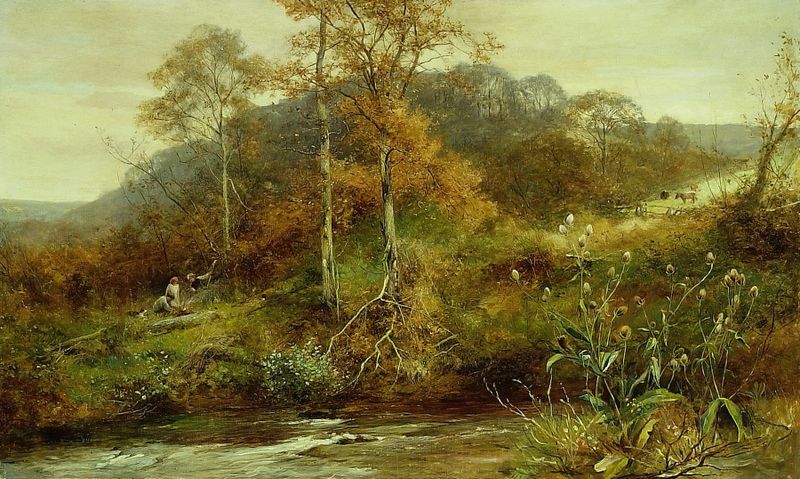
Autumn River Scene, The Brook
David Bates

A cornfield at West Malvern
David Bates
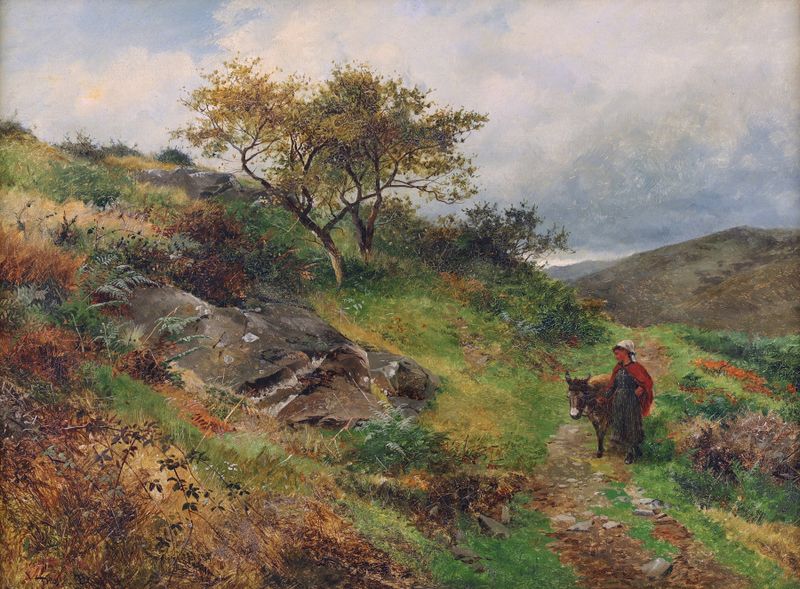
A Girl with a Donkey in a Mountain Landscape
David Bates

Gathering Firewood in Sutton Park, Birmingham
David Bates
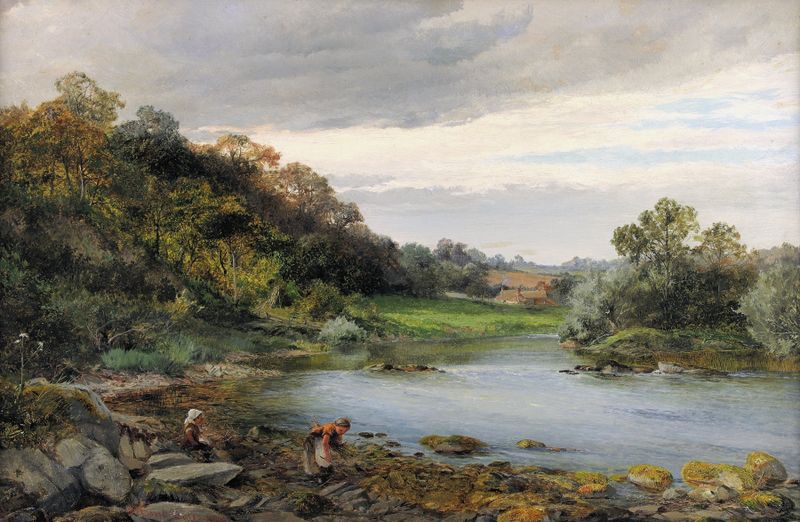
Children Collecting Firewood by a River
David Bates
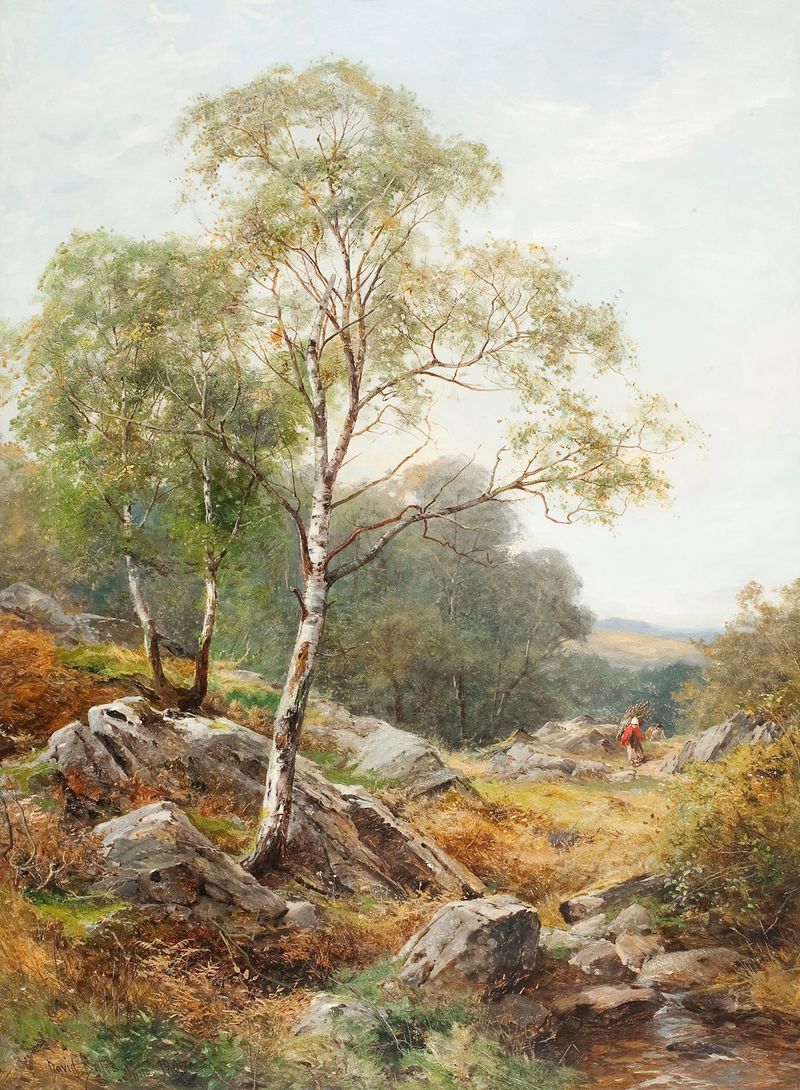
In Glen Falloch
David Bates
Mother and Children near Capel Curig, North Wales
David Bates





