
A Girl with a Donkey in a Mountain Landscape — History & Facts
The weight of grief clings to the canvas, urging us to linger, to feel. Look to the left at the gentle slope of the mountains, where the cool hues of blue and green blend seamlessly with the soft earth tones of the girl’s attire. The delicate yet determined figure stands in contrast to the heavy landscape, her posture both resolute and melancholic. Notice how the light falls upon her, illuminating a tender expression that speaks volumes of unspoken sorrow, creating a poignant dialogue between subject and setting. The juxtaposition of the girl and her donkey in a vast mountain landscape evokes a sense of solitude and loss.
The donkey, a symbol of steadfastness, mirrors her own quiet resilience amidst the emotional weight she carries. The scattered clouds overhead hint at the impermanence of life, while the expansive mountains seem to cradle her grief, both isolating her and offering a sanctuary. Each detail—the frayed edges of her hem, the gentle tug of the donkey's lead—intensifies the emotional complexity of the scene, transforming a simple moment into a profound meditation on longing and connection. In 1879, David Bates painted this work while residing in the artistic hub of France, where he sought to capture the raw essence of human experience.
The late 19th century was a transformative time in art, as realism began to challenge romantic ideals, reflecting the turbulence of societal changes. Bates, influenced by the natural landscape and the people inhabiting it, infused his work with a sense of authenticity, responding to the world around him with both sensitivity and insight.
More Artworks by David Bates
Browse all →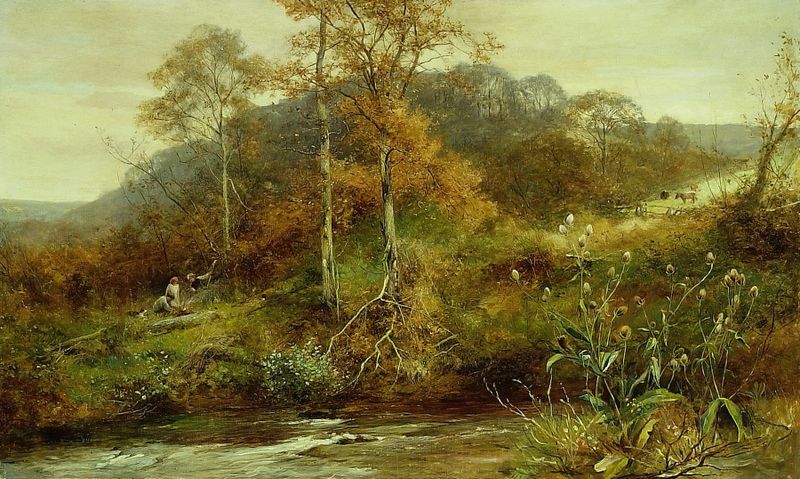
Autumn River Scene, The Brook
David Bates

A cornfield at West Malvern
David Bates

Autumn River Scene, The Brook
David Bates

Gathering Firewood in Sutton Park, Birmingham
David Bates
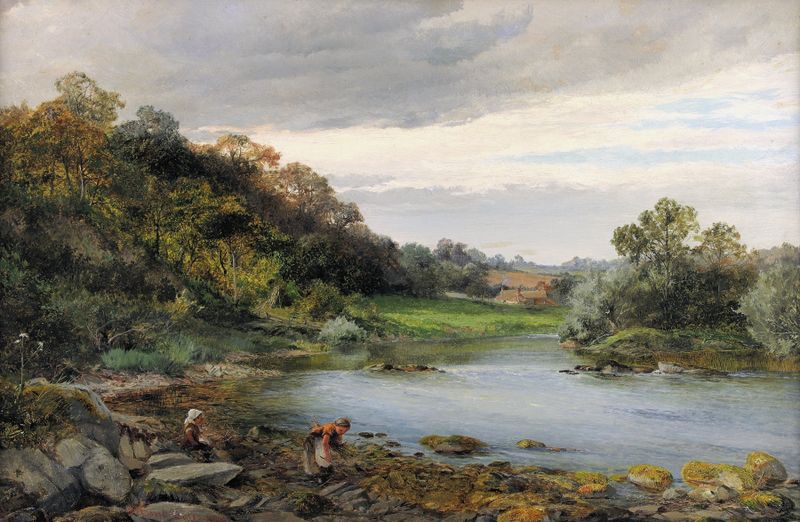
Children Collecting Firewood by a River
David Bates
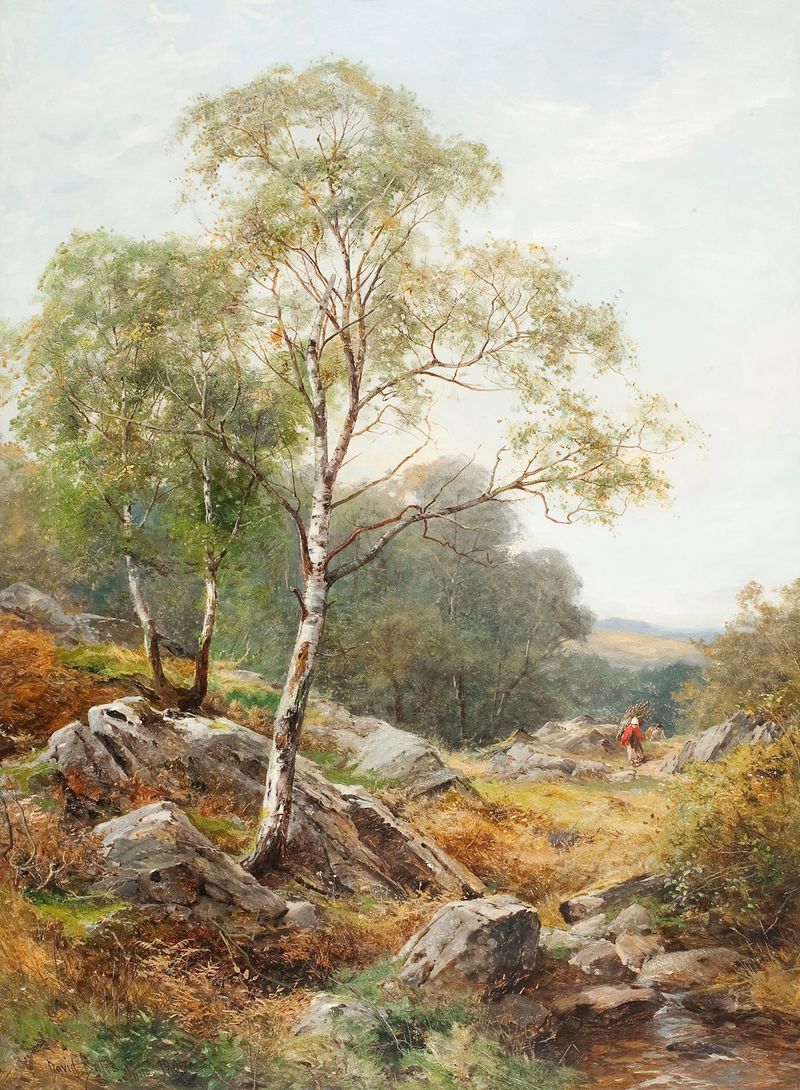
In Glen Falloch
David Bates
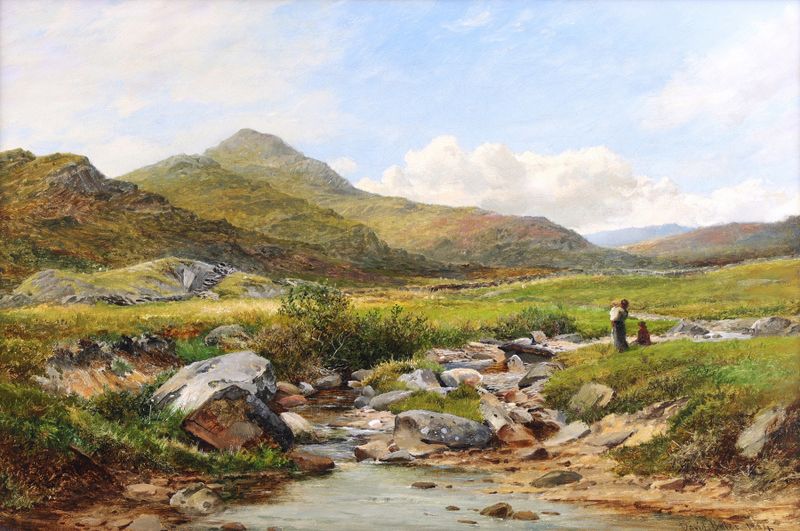
Mother and Children near Capel Curig, North Wales
David Bates





