Autumn, Sussex — History & Facts
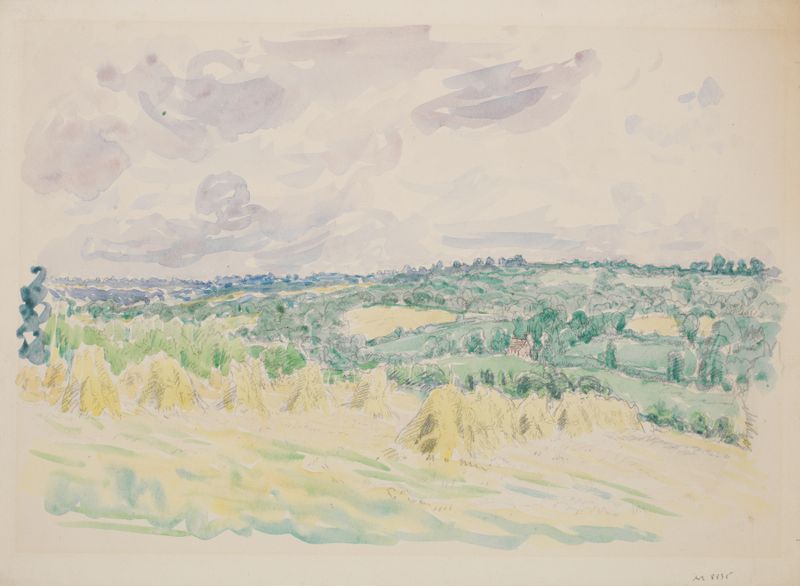
When did color learn to lie? In the quiet chaos of Autumn, Sussex, vibrant hues pulse with an unsettling energy, calling into question the very nature of reality. Look to the foreground, where a tangle of russet and gold leaves dances with the wind, each brushstroke a testament to the artist's mastery of color. The sky looms overhead, a turbulent gray that threatens to overshadow the warmth of autumn foliage, creating a striking contrast of serenity and foreboding. Notice how the gentle undulations of the landscape lead your gaze towards the horizon, drawing you deeper into the scene while evoking a sense of both comfort and unease. The interplay between the tumultuous sky and the warm earth hints at a duality—the inevitable change that autumn brings, yet the beauty that emerges from decay.
Small, seemingly insignificant details, like the scattered leaves in disarray, symbolize the chaos that underlies the beauty of nature. This tension between harmony and disorder evokes an emotional resonance, forcing us to confront the paradox of the season itself—beauty in transition, life in decline. In 1907, Gore painted this piece during a period marked by an exploration of color and form within the British landscape movement. Living and working in Sussex, he was inspired by the natural world around him as well as the burgeoning influences of modernism.
This artwork reflects not only his artistic journey but also a collective response to the rapidly changing world that surrounded him, where nature's beauty was inextricably linked to its inevitable transformation.