The Cornfield — History & Facts
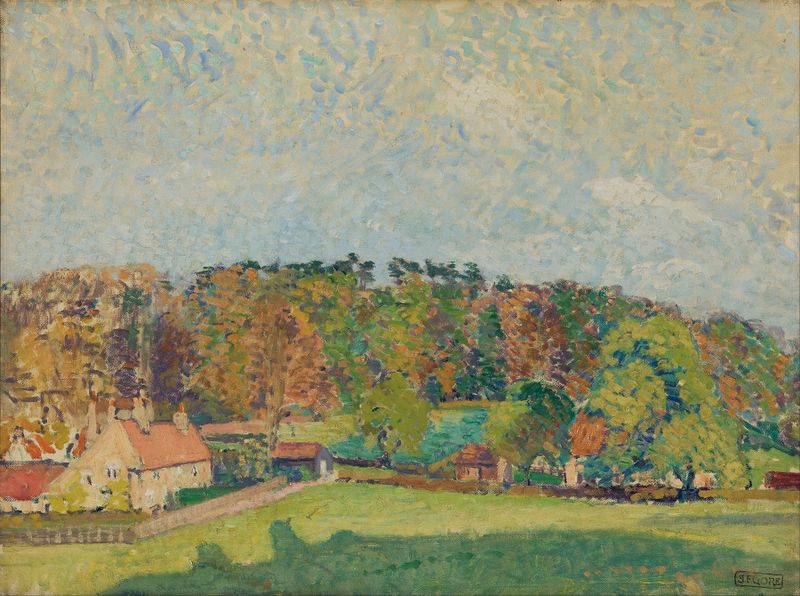
In the quiet embrace of a cornfield, a complex interplay of fate and nature unfolds, offering us a glimpse into the threads that weave life’s tapestry. Focus first on the vibrant greens and yellows, where golden stalks bend gently under the weight of the sun’s rays. The brushstrokes are alive, a rhythmic dance that brings movement to the canvas. Notice how the light plays off the vegetation, illuminating each ear of corn like a jewel, while shadows spill across the field, hinting at the lurking uncertainty beneath this idyllic scene.
This contrast between light and dark conveys the tension between serenity and the unpredictable nature of existence. Delve deeper into the emotional layers that lie beneath the surface. The cornstalks, though visually stunning, evoke a sense of longing and vulnerability, reminding us that beauty often carries the weight of unseen struggles. The artist’s choice to capture this moment in time suggests a profound awareness of life's transience, inviting the viewer to reflect on their own relationship with destiny and the hidden complexities it entails. During the late 19th century, this artist was working in England, a time marked by a growing interest in post-impressionist techniques and the exploration of everyday landscapes.
As Gore painted, he was influenced by the beauty of the English countryside and the changing perceptions of art, finding a harmonious balance between realism and emotional expression. This period also saw a shift in art toward personal interpretation, allowing him to infuse his work with an empathetic gaze upon nature and life.