
Łazienki Park, the view from the south — History & Facts
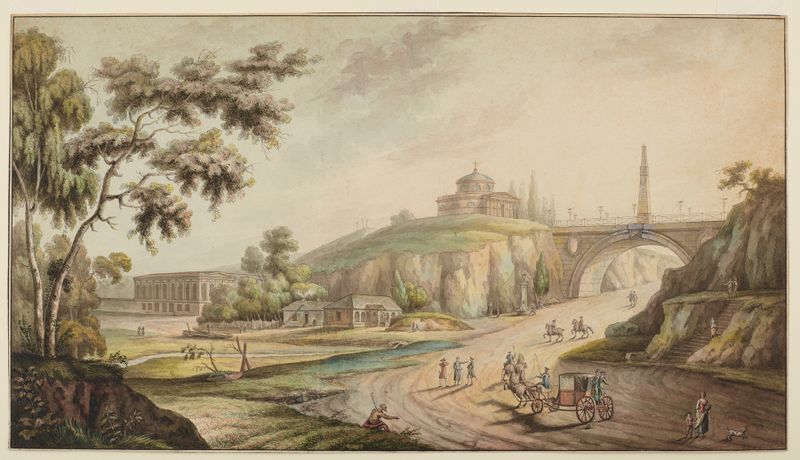
What secret hides in the quiet of the canvas? In the stillness captured by Zygmunt Vogel, light becomes a narrative thread, weaving together the serene beauty of Łazienki Park with whispers of history and emotion. Look to the left at the gently arching trees, their leaves catching the soft golden light of the setting sun. The composition guides your eye along the meandering path that leads toward the distant palace, its reflections shimmering in the tranquil water. Notice how the delicate brushwork creates a sense of movement in the foliage, while the harmonious palette of greens and blues evokes a peaceful atmosphere, inviting viewers to linger in this idyllic retreat. The contrasts in the painting reveal deeper meanings; the interplay between light and shadow suggests the ephemeral nature of beauty and time.
The figures, small against the vastness of the landscape, embody both solitude and connection—reminding us of our place within nature. The stillness of the scene invites contemplation, echoing themes of nostalgia and the passage of seasons, where moments of beauty are fleeting yet everlasting. In 1795, Zygmunt Vogel was immersed in the cultured circles of Warsaw, a city rich with artistic exchanges and political change. This period marked a time of turbulence for Poland, as the country faced partitions and loss of independence.
Painting Łazienki Park, the view from the south allowed him to capture a vision of tranquility, a refuge from the chaos surrounding him, while also contributing to the burgeoning Romantic movement that emphasized emotion and the sublime beauty of nature.
More Artworks by Zygmunt Vogel
Browse all →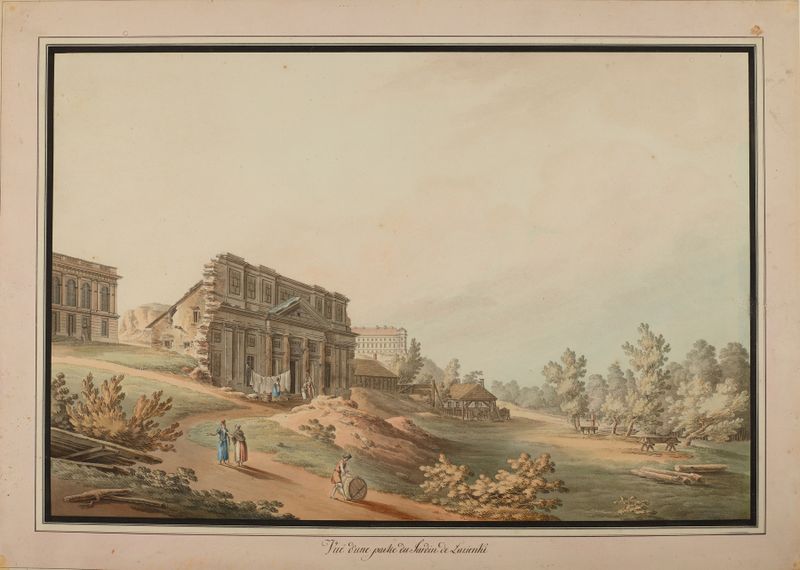
View of the park buildings in Łazienki Park
Zygmunt Vogel
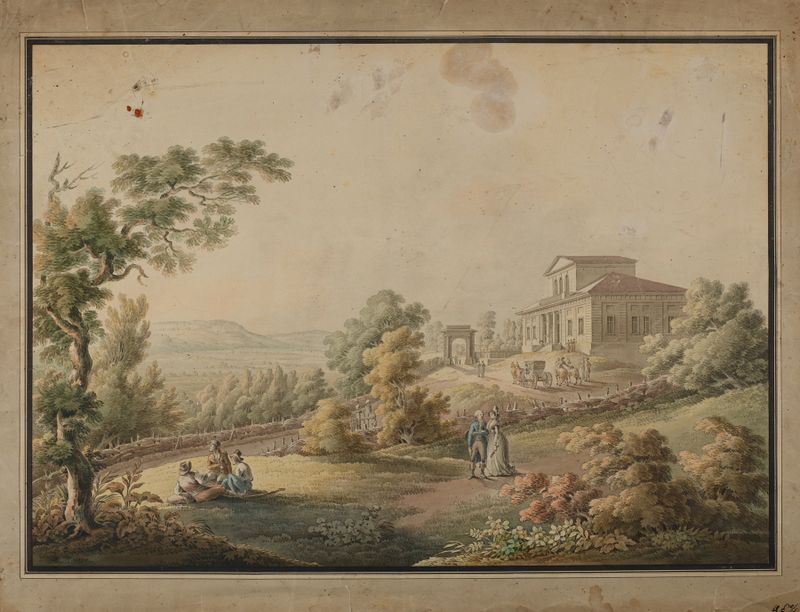
View of the manorial estate in Niegoszowice
Zygmunt Vogel
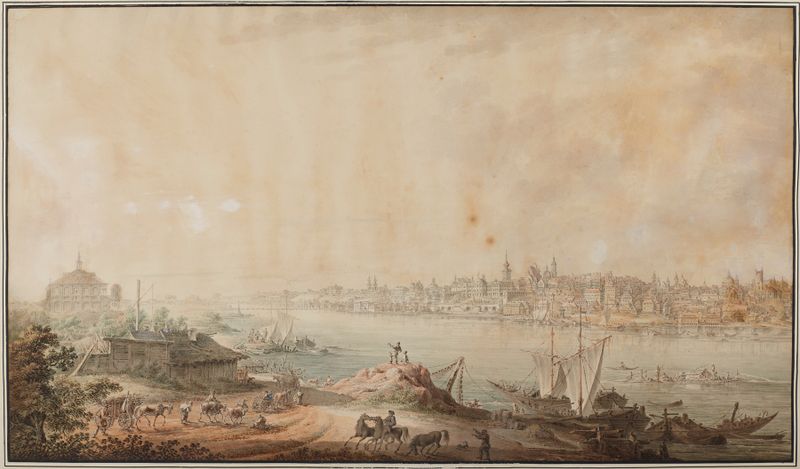
View of Warsaw from the side of the Loreto church in the Praga district
Zygmunt Vogel
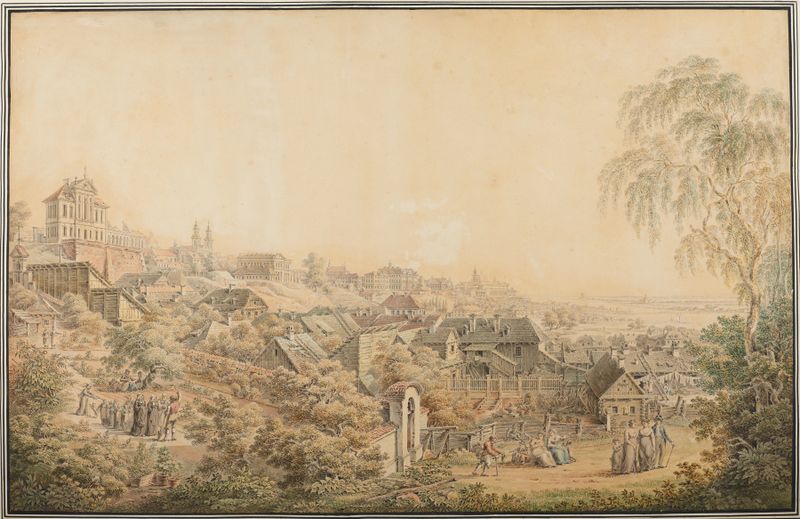
View of Warsaw from the side of the gardens in the Saint Casimir’s Monastery
Zygmunt Vogel
View of the Ujazdowski church
Zygmunt Vogel
Łazienki Park, the view with the Water Tank
Zygmunt Vogel





