Bacchanal in a Classical Landscape — History & Facts
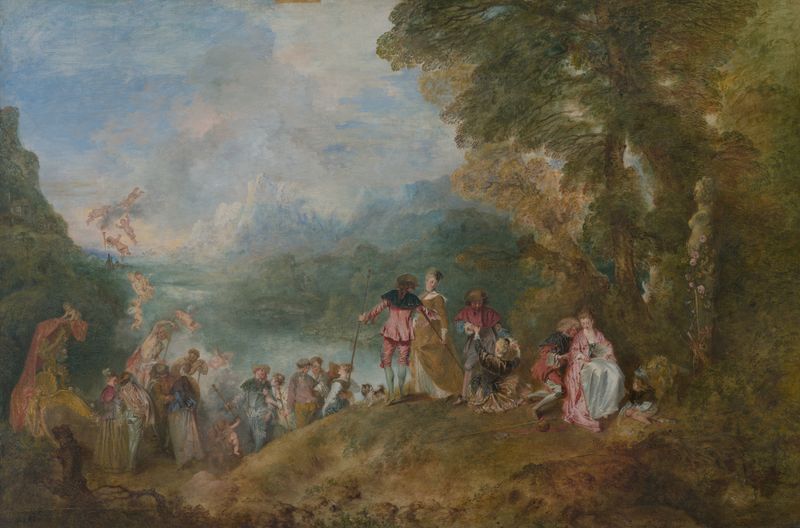
Where does light end, and longing begin? In Bacchanal in a Classical Landscape, movement dances upon the canvas, inviting the viewer into a world that teeters on the edge of ecstasy and nostalgia. Focus first on the swirling figures that populate the foreground, their bodies bending and intertwining in a celebration both free-spirited and sensuous. The play of light—soft and golden—illuminates their forms, contrasting against the lush, verdant hues of the background. Notice how the figures seem to breathe with life, each gesture a testament to joy and abandon, while the landscape around them is rendered with meticulous detail, creating a harmonious balance between humanity and nature. Beneath this festive surface, an undercurrent of tension emerges.
The figures, though seemingly united in their revelry, convey a sense of isolation within their collective joy—each lost in their own reverie. The juxtaposition of vibrant colors with muted shadows suggests a fleeting nature of happiness, as if the moment captured is both breathtaking and ephemeral. The backdrop, a classical landscape, hints at the weight of history and tradition, reminding us that even in bliss, one is never truly free of the past. At the turn of the 19th century, the artist found himself at a pivotal moment in his career.
Created in 1803, this piece reflects the transition in European art that embraced Romanticism, moving away from the rigid constraints of Neoclassicism. Living in France during a time of political and social upheaval, Bacler d'Albe navigated a world seeking expression in both form and emotion, mirroring the yearnings of his contemporaries as they explored themes of freedom, beauty, and the human spirit.