Bacchanal with a Statue of Ceres — History & Facts
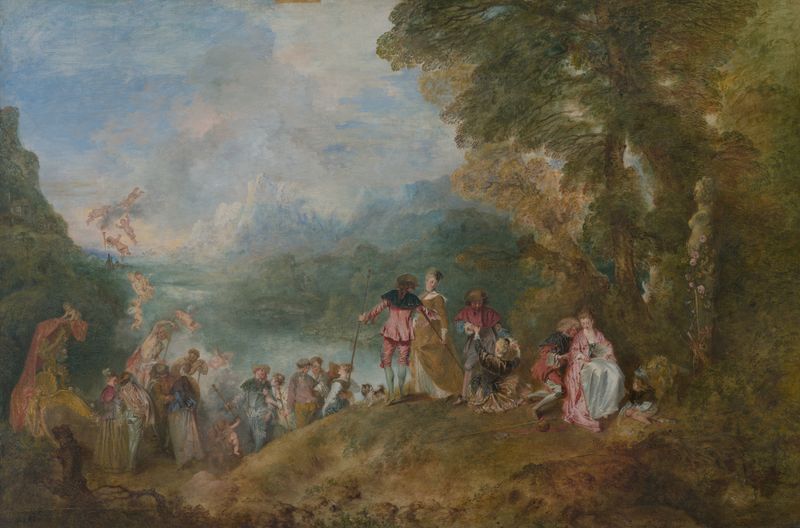
In the swirls of color and form, destiny intertwines with expression, inviting contemplation on the life we live and the passions we harbor. Look to the left at the vibrant figures, their bodies in dynamic poses, embodying the fervor of celebration. The lush greens intertwine with warm golds, drawing the eye toward the statue of Ceres, a steadfast figure amidst the revelry. Notice how the light captures the sheen of the garments, enhancing the contours and emphasizing the joyous movement—each brushstroke pulsating with life, as if the scene itself might leap off the canvas. In the center, the contrast between the ecstatic dancers and the serene, almost stoic statue evokes a tension between human emotion and the rigidity of fate.
This dichotomy suggests that while life may be ephemeral and chaotic, there remains an enduring force in the divine and the natural order. The inclusion of Ceres, the goddess of agriculture, subtly hints at themes of abundance and the passage of time, grounding the frenetic energy of the celebration in a broader narrative of harvest and destiny. Paul Grégoire painted Bacchanal with a Statue of Ceres in 1794, during a time of artistic upheaval in France, marked by the effects of the Revolution and a shift toward Neoclassicism. Grégoire, who had turned to painting amidst political and social turmoil, sought to blend classical themes with contemporary life, reflecting both his personal journey and the broader transformations shaping the art world.