Bacino di San Marco, Venice — History & Facts
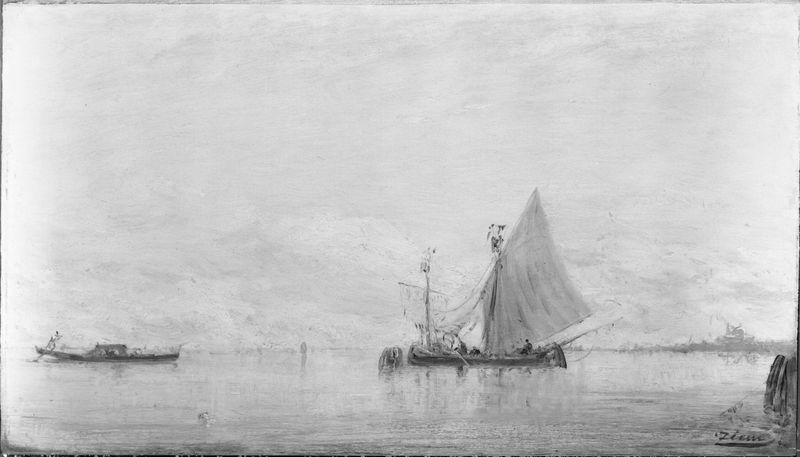
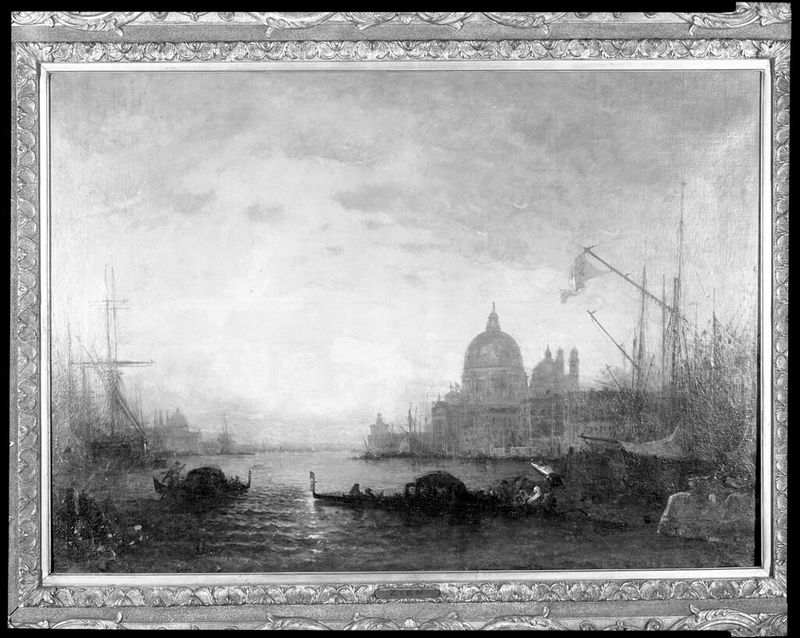
Can paint confess what words never could? In the silent expanse of a canvas, moments of truth unfold, revealing the depths of human experience and nature's beauty. Look to the left at the shimmering reflections in the water, where graceful gondolas glide lazily, their dark forms contrasting against the fiery hues of a sunset. Notice how the warm golden light bathes the architecture in a gentle embrace, highlighting the intricate details of St. Mark's Basilica, its domes and spires punctuating the horizon.
The artist's masterful brushwork captures the fluidity of the scene, inviting the viewer to lose themselves in the ebb and flow of the Venetian canal. The juxtaposition of tranquility and movement creates a poignant tension within the piece. The stillness of the water mirrors the serene yet bustling life of Venice, as figures dot the scene—each a testament to the interwoven stories of locals and tourists alike. These small, vibrant strokes embody the energy of the moment, while the pastel sky hints at the fleeting nature of both time and beauty, leaving a sense of longing and reflection. Created in the late 19th to early 20th century, this work emerged during a period of artistic exploration and innovation.
Ziem, who lived in Paris yet was deeply influenced by his travels to Italy, sought to capture the essence of places such as Venice amidst an evolving art landscape. His ability to evoke emotion through light and color was emblematic of a broader movement as artists began to embrace impressionistic techniques, striving to convey feelings over mere representation.