
Bad Weissenburg — History & Facts
In the still moments of silence, a world unfolds, inviting us to linger in its complexities. Look to the left at the intricately detailed architecture, each brushstroke reflecting the painstaking care that Aberli infused into his work. The buildings rise with a delicate elegance against a backdrop of softly painted hills, their muted hues whispering stories of the past. Notice the contrast between the vibrant greenery and the stone facades, highlighting the tension between nature and civilization, while the carefully applied layers of paint create a textured richness that draws the viewer closer. At first glance, one might only see a landscape; however, delve deeper, and the emotional tension reveals itself.
The ominous clouds looming above suggest a brewing storm, symbolizing the fragility of human endeavors in the face of nature’s might. This juxtaposition of tranquility and turmoil resonates on a broader scale, reflecting the uncertainties of the era. The meticulous detailing of the foreground, with figures lost in their own solitude, invites a contemplation of isolation amidst societal progress. Johann Ludwig Aberli created this piece during a time when Switzerland was navigating political and social change, capturing the essence of his surroundings in the late 18th century.
As an artist rooted in the tradition of landscape painting, he sought to blend realism with a hint of romanticism, navigating the artistic currents of a period marked by enlightenment and challenge. The painting stands as a testament to his skill and sensitivity as he engaged with the world around him.
More Artworks by Johann Ludwig Aberli
Browse all →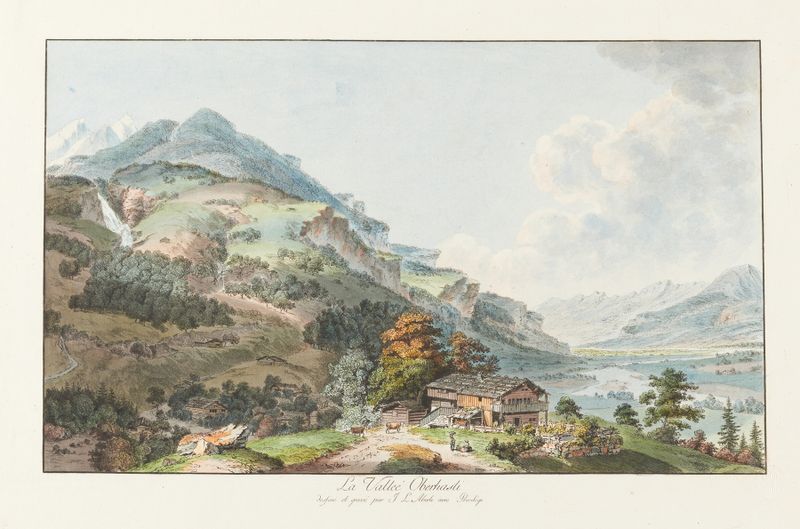
La Vallée Oberhasli
Johann Ludwig Aberli
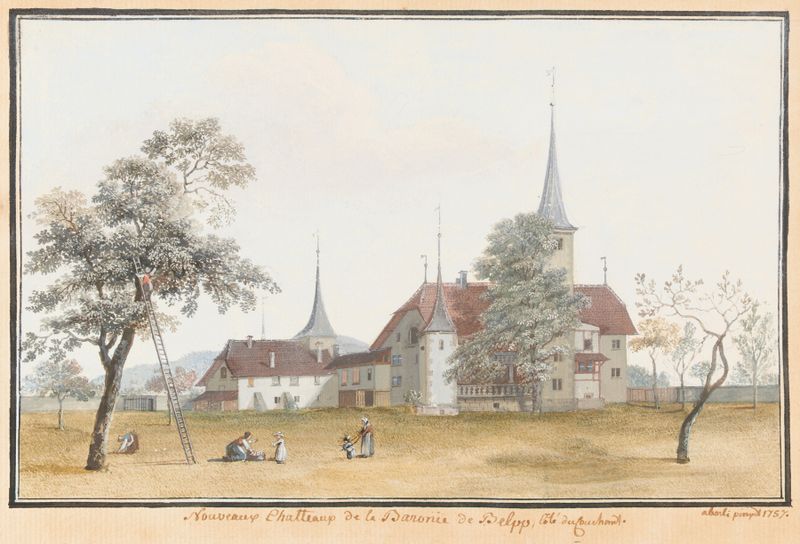
Nouveaux Chatteaux de la Baronie de Belpp; Côté du Couchant
Johann Ludwig Aberli
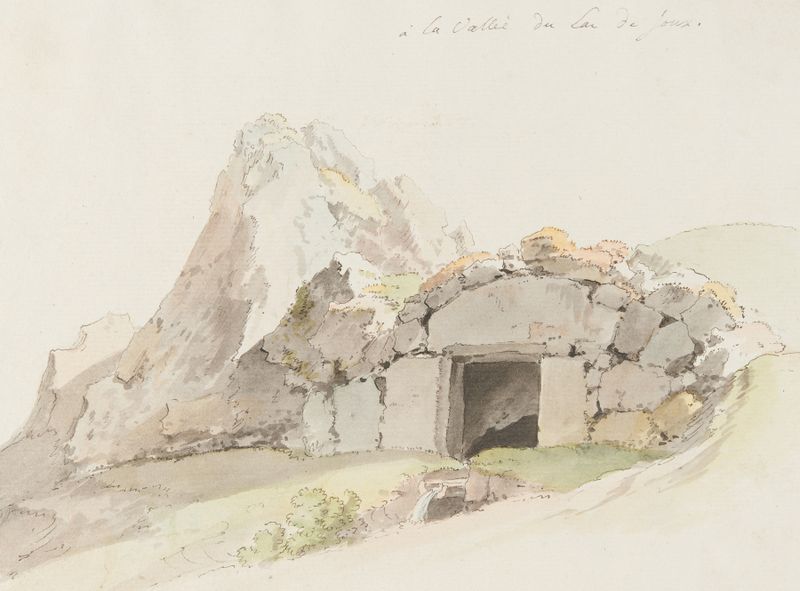
à la Vallèe du Lac de Joux
Johann Ludwig Aberli
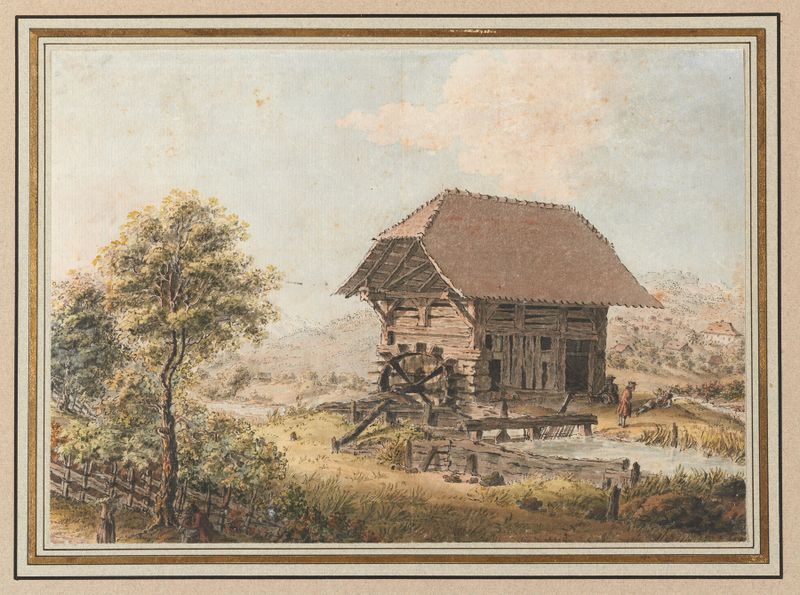
Ansicht einer Mühle im Berner Mittelland
Johann Ludwig Aberli
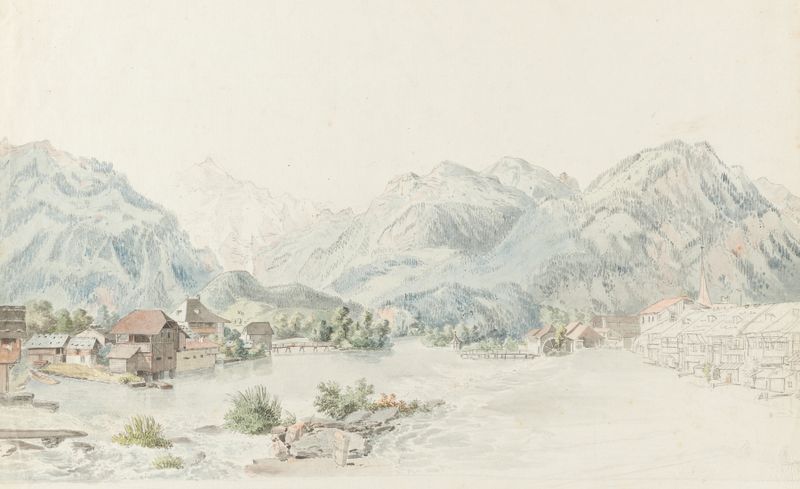
Ansicht von Unterseen
Johann Ludwig Aberli
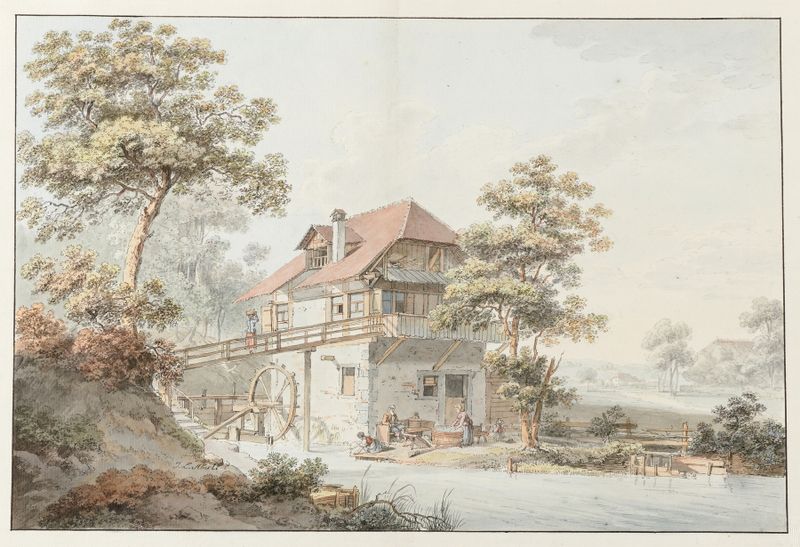
Ansicht einer Mühle im Berner Mittelland.
Johann Ludwig Aberli
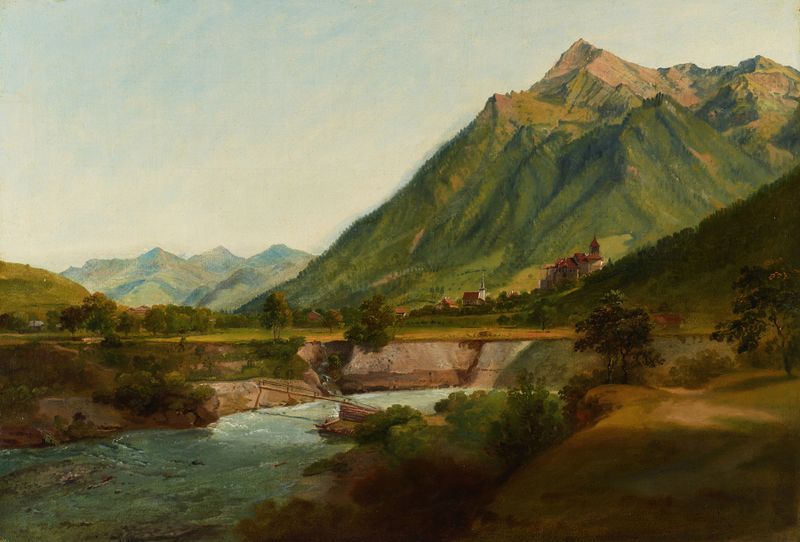
Vue du Château de Wimmis et des environs
Johann Ludwig Aberli
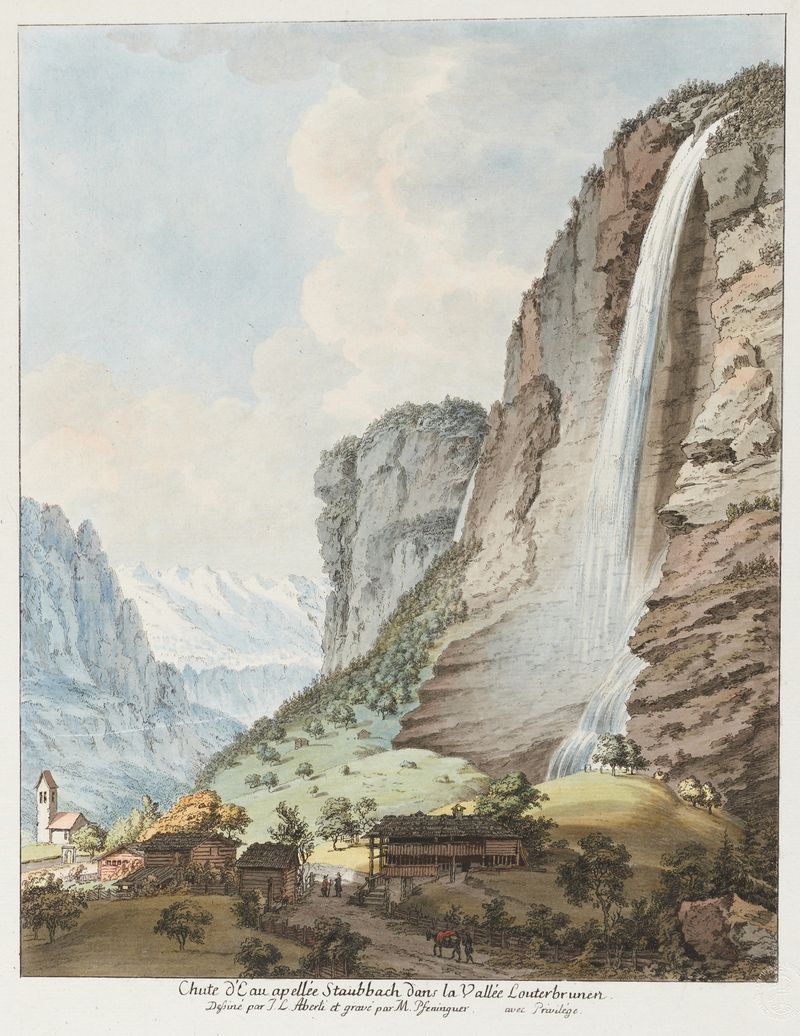
Chute d’Eau apellée Staubbach dans la Vallée Louterbrunnen
Johann Ludwig Aberli
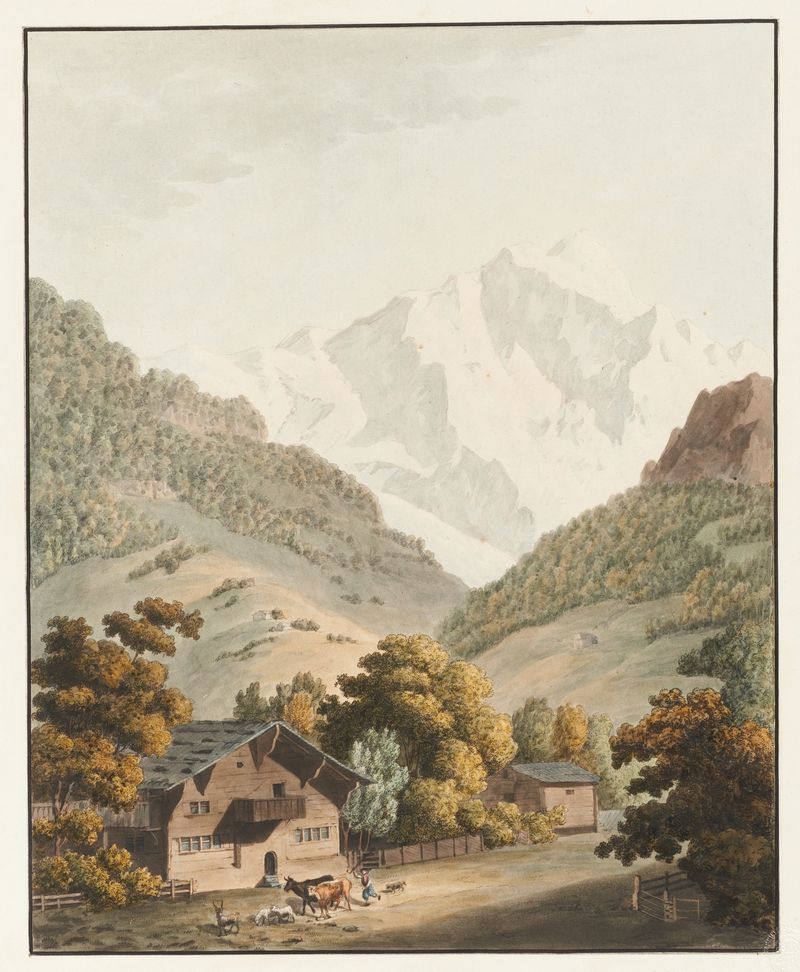
Vue du Jungfrau-Horn
Johann Ludwig Aberli
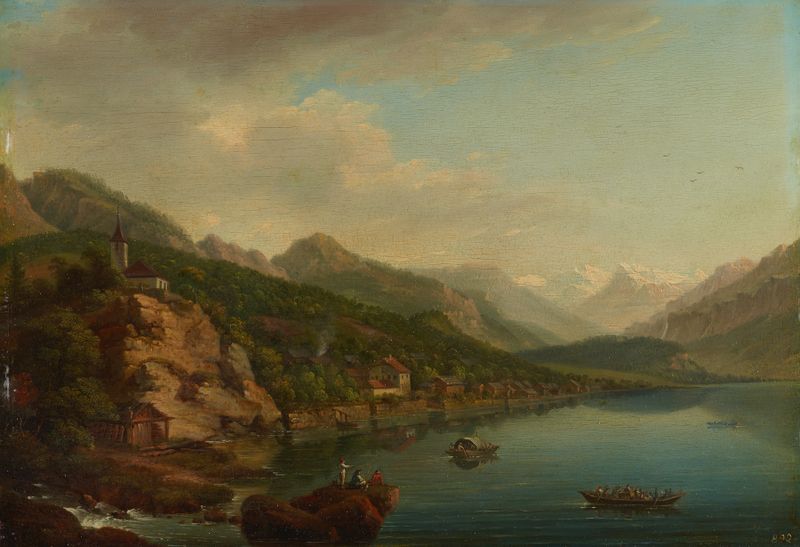
Vue du Village et du Lac de Brientz
Johann Ludwig Aberli
More Architecture Art
Browse all →
The statue of Liberty
Frédéric Auguste Bartholdi

View of Houses in Delft, Known as ‘The Little Street’
Johannes Vermeer

View of Houses in Delft, Known as ‘The Little Street’
Johannes Vermeer

The Cathedral in Rouen. The portal, Grey Weather
Claude Monet

The yellow house
Vincent van Gogh

The Church in Auvers-sur-Oise, View from the Chevet
Vincent van Gogh